
Cell Proliferation and Viability Detection Reagents
What is Cell Proliferation and How to Analyze it?
BrdU Staining Experiments 10 Tips for Success Quick Guide | Download PDF
Cell proliferation is the rapid expansion of a cell population due to cell growth and division. This cellular process has to be carefully regulated as the smallest alterations can result in an uncontrolled increase of cell numbers, and eventually cancer. To sustain homeostasis and ultimately prevent carcinogenesis, uncontrolled cell proliferation is often counteracted by an increase in apoptosis.
In eukaryotes the cell cycle can be grouped into three major stages:
- Interphase (a growth period, comprising of G1, S and G2 phase, in which the cell duplicates its DNA)
- Mitotic phase (the chromosomes get separated into two sets in preparation for division; M phase consists of 4 stages: prophase, metaphase, anaphase, telophase)
- Cytokinesis (division to form two daughter cells)
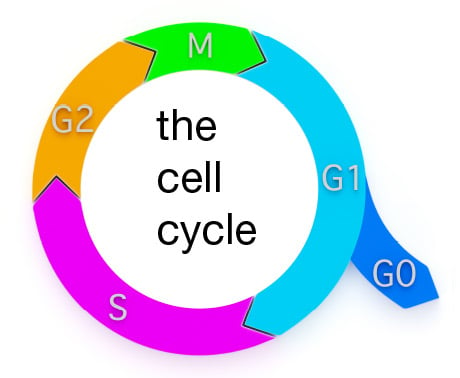
Schematic representation of the cell cycle. Ki-67 is expressed during G1, S, G2 and M phases.
PCNA is present from G1 through to G2. MCM 2 is critical for replication in G1 while the BrdU method recognizes replicating cells during S phase.
Cell cycle deregulation and impaired cell cycle checkpoints are two of the most common causes of aberrant cell proliferation. Cell proliferation can be measured by quantifying protein levels of key proliferation markers such as Ki-67, proliferating cell nuclear antigen (PCNA) and minichromosome maintenance 2 (MCM2), and also by measuring incorporation of Bromodeoxyuridine (BrdU).
BrdU is a thymidine analog, which is incorporated into the newly synthesized DNA of proliferating cells instead of thymidine when added to cell culture media. The incorporated BrdU can be detected and measured with the help of BrdU specific antibodies.
Learn more about cell proliferation assessments and the key cell proliferation biomarkers Ki-67, MCM2 and PCNA in our mini-review:
Understanding the Eukaryotic Cell Cycle - a Biological and Experimental OverviewTop Cell Proliferation Products
alamarBlue Reagent
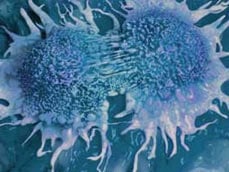 alamarBlue Assays are a convenient and quick way to measure cell proliferation and cytotoxicity in human and animal cell lines, bacteria, and fungi.
Key advantages over traditional MTT and XTT assays include:
- Increased sensitivity - as few as 50 cells can be detected
- Excellent stability - allowing for continuous reading over several days in culture
- Safety - nontoxic to cells, users, and the environment
Access the alamarBlue Reagent page for FAQs, online calculators, example calculations, references, protocols, or download the alamarBlue brochure.
Find Out MoreMouse Monoclonal Anti-BrdU Antibody
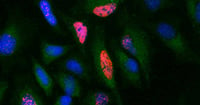 Mouse Anti-BrdU Antibody, clone Bu20a is one of the most commonly used anti-BrdU antibodies. The product is supported by comprehensive protocols for use in flow cytometry and immunocytochemistry, and 10 publications.
Applications: Flow Cytometry, Immunocytochemistry, Immunofluorescence
Citations: >15
Excellent resolution of ten cell generations using CytoTrack Green 511/525 (A) compared to CFDA-SE (B).
Find Out More about BrdUProliferation Dyes
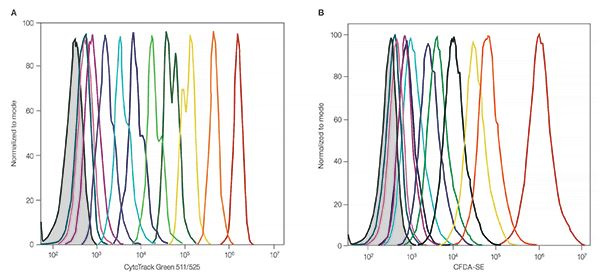 CytoTrack Dyes allow you to measure cell proliferation in live cells.
As the labeled cells divide, the concentration of the dye is halved and the proliferation can be measured based upon the varying levels of fluorescence in subsequent generations.
These dyes are available in a range of excitation and emission spectra for convenient incorporation into multicolor flow cytometry panels
CFDA-SE and CytoTrack DyesRelated Resources
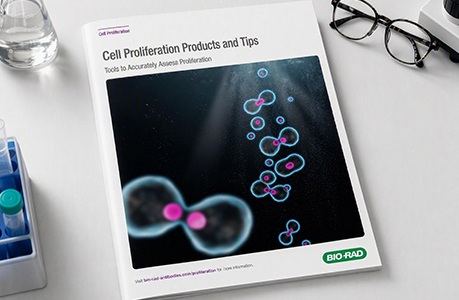
Cell Proliferation Products and Tips
Cell proliferation is a homeostatic process that involves the rapid growth and division of cells. If not properly controlled, it can lead to an unchecked increase in cell numbers, which may result in diseases such as cancer. Therefore, evaluating proliferation is crucial across various scientific fields.
This guide provides the knowledge you need to effectively study cell proliferation in your assays.