
Measuring Proliferation by Flow Cytometry
Proliferation
Cell proliferation is the expansion of cells or a population of cells in response to a stimulus. The cellular processes of the cell cycle, and therefore cell division, are tightly regulated to prevent uncontrolled proliferation and malignancy.
Analysis of cell proliferation, or lack thereof, can be important to monitor immune responses, drug toxicity and efficacy, cellular senescence, stem cell renewal, apoptosis, and in cell therapy development such as CAR T cells. It can also be a routine measurement in tissue culture to determine general cell health.
Using Flow Cytometry to Measure Proliferation
Whilst there are many techniques available to determine and measure the level of proliferation and to analyze the cell cycle in bulk populations, flow cytometry has some advantages. These include the speed and number of cells that can be analyzed at any moment, the ability to quantify proliferation levels, as well as the ability to interrogate specific populations within a mixed culture or sample such as peripheral blood. Furthermore, flow cytometry allows the combination of cell proliferation detection with other techniques, such as immunophenotyping or even sorting populations of interest.
Whilst simple changes in forward and side scatter will indicate proliferative or cell cycle changes in a cell population, specific methods are more common. Cell proliferation can be measured in several different ways using both direct and indirect detection methods. Direct methods include measuring DNA content, staining with antibodies against proliferation markers, or measuring the incorporated thymidine analog BrdU. Alternatively, proliferation can be measured indirectly using cytoplasmic dyes.
Cell Cycle Determination and DNA Staining
The proportion of cells within each stage of the cell cycle can be determined using DNA binding dyes, such as PI, 7-AAD, Hoechst 33342, and DAPI (see table 1 for excitation and emission details), that bind in a stoichiometric manner. This way cells in G2, which have twice as much DNA as cells in G1, will fluoresce twice as brightly (Figure 1). To ensure good staining the cells should be fixed in cold 70% ethanol. However, this can interfere with other staining protocols so some optimization may be required. Cell cycle analysis is usually measured on a linear scale, unlike most flow cytometry which uses a logarithmic scale, as the differences in fluorescence are usually smaller. It is important to gate out any doublets from the data and the data can be improved by using a low flow rate on the cytometer. Many flow cytometry software programs now offer algorithms to accurately estimate the cell cycle phases.

Fig. 1. Cell cycle analysis. Jurkat cells were fixed in 70% cold ethanol, treated with RNAse, and stained with PI to reveal the stages of the cell cycle. Data were acquired on the ZE5 Cell Analyzer.
Table 1. DNA dyes
DNA Dye |
Ex Max (nm) |
Em Max (nm) |
DNA/RNA Binding |
Catalog Number |
|---|---|---|---|---|
|
DAPI |
359 |
461 |
DNA and RNA |
|
|
Hoechst 33342 |
350 |
461 |
DNA and RNA |
|
|
PI |
535 |
617 |
DNA and RNA |
|
|
7-AAD |
546 |
647 |
DNA |
Antibodies
Staining with antibodies allows the detection of specific proteins involved in different times of cell division and proliferation. Ki-67 is expressed during G1, S, G2, and M phases, PCNA is present from G1 through to G2, and MCM 2 is critical for replication in G1. Alternatively, antibodies can be used to measure nucleoside incorporation during cell division to detect cells in S phase. More information on these proteins and their role in the cell cycle and proliferation can be found in our mini review.
BrdU is a thymidine analog, which is incorporated into the newly synthesized DNA of proliferating cells instead of thymidine when added to cell culture media. The incorporated BrdU can be detected and measured with the help of fluorescently labeled BrdU specific antibodies. When combined with a DNA stain such as Hoechst 33342, PI, or DAPI, the relative proportion of cells in S-phase can be determined (Figure 2). See Table 2 below for the anti BrdU antibodies available from Bio-Rad.
Table 2. Anti BrdU Antibodies
Specificity |
Validated Applications |
Format |
Catalog Number |
|---|---|---|---|
|
Rat anti BrdU |
IF, P |
Pur |
|
|
Rat anti BrdU |
F, P |
Pur |
|
|
Mouse anti BrdU |
C, F*, IC*, IF, P |
Pur, FITC |
|
|
Human anti BrdU |
F, IF, P |
Pur |
|
|
Rabbit anti BrdU |
F*, IC, IF*, P |
Pur |
|
|
Human anti BrdU |
F, P |
Pur |
|
|
Human anti BrdU |
F, P |
Pur |
|
|
Human anti BrdU |
F, IF, P |
Pur |
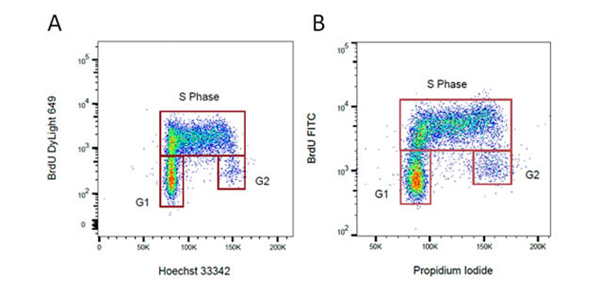
Fig. 2. BrdU staining for proliferation.
Proliferating cells were stained for incorporated BrdU against total DNA content using A, Hoechst or B, Propidium Iodide. BrdU was detected by labeling a mouse primary Anti-BrdU Antibody (MCA2483) with the appropriate secondary antibody attached to a fluorophore. Data were acquired on the ZE5 Cell Analyzer.
Cytoplasmic Dyes
An indirect method to determine proliferation utilizes cytoplasmic dyes, such as CFDA-SE or CytoTrack Cell Proliferation Assays. Cells are incubated with these protein binding dyes and, as the labeled cells divide, the concentration of the dye is halved and the proliferation measured based on the reduced levels of fluorescence in subsequent generations. The advantage of these dyes is that they are non-toxic, available in a wide variety of colors, and excited by several lasers, so they can be combined with immunophenotyping, an example of which is seen in Figure 3. A further benefit is these assays can be performed without fixing the sample, which can alter cell features or fluorophore signal.

Fig. 3. Indirect cell proliferation measurement. CytoTrack Green (1351203) staining profiles in CD3+, CD4+, and CD8+ cell populations following cell activation. Undivided cells are the population on the right. Each cell division shows a loss of fluorescence intensity of CytoTrack, with the populations moving to the left as cells divide. PBMCs were stimulated using Bio-Rad anti-CD3 and anti-CD28 antibodies. Data were acquired on the ZE5 Cell Analyzer.
Table 3. Summary
Reagents |
Direct or Indirect Measurement |
What is Measured |
Stage of Cell Cycle |
|---|---|---|---|
|
DAPI, Hoechst, 7-AAD, PI |
Direct |
DNA level |
G0/1, S, G2M |
|
Ki67 |
Direct |
Ki67 protein level |
G1, S, G2M |
|
MCM2 |
Direct |
MCM2 protein level |
G1 |
|
PCNA |
Direct |
PCNA protein level |
G1, S, G2M |
|
BrdU |
Direct |
Thymidine analogue incorporation |
S |
|
CFDA |
Indirect |
Cytoplasmic dye concentration |
N/A |
|
CytoTrack |
Indirect |
Cytoplasmic dye concentration |
N/A |
Related Resources
- Apoptosis range
- Autophagy range
- BrdU staining protocols
- T cell activation protocols
- BrdU detection reagents
- alamarBlue
- Cell proliferation markers
- Anti Ki67 detection reagents
Popular Resources
Blog: Sample Preparation in Flow Cytometry — Tips & Tricks
In this blog, we provide tips and advice on generating a high-quality sample for flow cytometry.
Quick Guide: How to Implement an Effective Flow Cytometry Gating Strategy
Download this quick guide to learn how to develop effective flow cytometry gating strategies, avoid common pitfalls such as false positives and missed rare populations, and generate reliable, reproducible data through a systematic approach to panel design and analysis.