CD31 antibody | WM59
Mouse anti Human CD31
- Product Type
- Monoclonal Antibody
- Clone
- WM59
- Isotype
- IgG1
- Specificity
- CD31
 Antibody Quality and Performance Guarantee


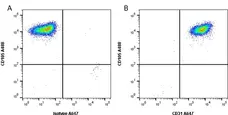
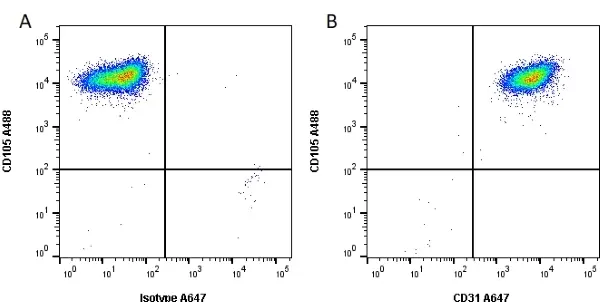
Figure B. Alexa Fluor® 488 conjugated Mouse anti Human CD105 antibody, clone SN6 (MCA1557A488) and Alexa Fluor® 647 conjugated Mouse anti Human CD31 antibody, clone WM59 (MCA1738A647). All experiments performed on HUVECs gated on live single cells, in the presence of 10% human serum.
Data acquired on the ZE5 Cell analyser.
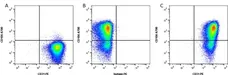
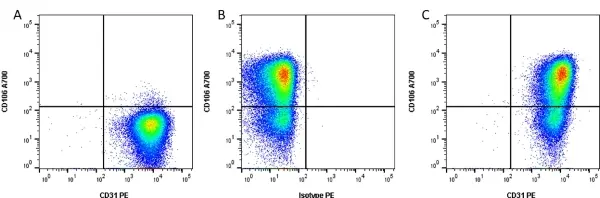
Figure B. Cells stimulated with TNFα for 19 hours were stained with Alexa Fluor® 700 conjugated Mouse anti Human CD106 antibody, clone 1.G11B1 (MCA907A700) and PE conjugated Mouse IgG1 isotype control (MCA928PE).
Figure C. Cells stimulated with TNFa for 19 hours were stained with Alexa Fluor® 700 conjugated Mouse anti Human CD106 antibody, clone 1.G11B1 (MCA907A700) and PE conjugated Mouse anti Human CD31 antibody, clone WM59 (MCA1738PE). All experiments performed on HUVECs gated on single cells in the presence of 10% human serum.
Data acquired on the ZE5 Cell analyser.
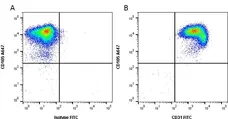
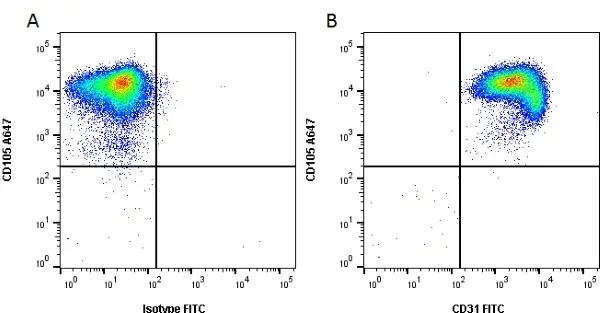
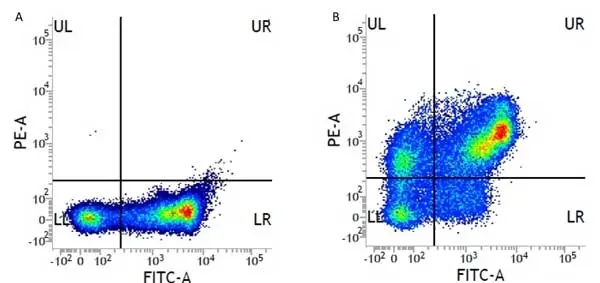
Figure B. Alexa Fluor® 647 conjugated Mouse anti Human CD105 antibody, clone SN6 (MCA1557A647) and FITC conjugated Mouse anti Human CD31 (MCA1738F). All experiments performed on HUVEC cells gated on live single cells in the presence of 10% human serum.
Data acquired on the ZE5 Cell analyser.
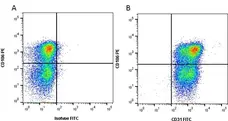
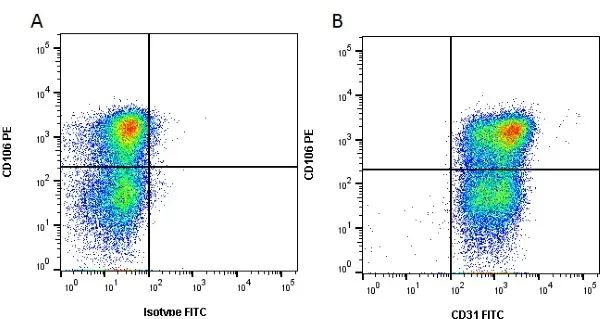
Figure B. RPE conjugated Mouse anti Human CD106 antibody, clone 1.G11B1 (MCA907PE) and FITC conjugated Mouse anti Human CD31 antibody, clone WM59 (MCA1738F). All experiments performed on HUVEC cells stimulated with TNFα for 19 hr, gated on live single cells in the presence of 10% human serum.
Data acquired on the ZE5 Cell analyser.
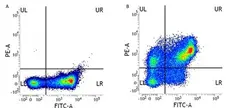
Figure B. FITC conjugated Mouse anti Human CD11b antibody, clone ICRF44 (MCA551F) and RPE conjugated Mouse anti Human CD31 antibody, clone WM59 (MCA1738PE). All experiments performed on red cell lysed Human peripheral blood gated on all mononuclear cells in the presence of Human SeroBlock (BUF070A).
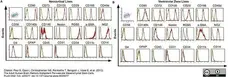
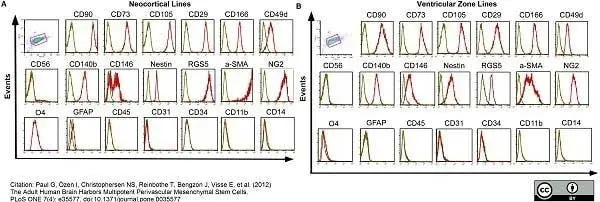
Mouse anti Human CD31 antibody, clone WM59 (MCA1738) used for the detection of CD31 positive cells by flow cytometry.
Image caption:
Brain-derived cell lines express markers for mesenchymal stem cells and pericytes but not for glial or neuronal precursors. (A) Representative histogram of flow cytometry analysis of cortical line and (B) ventricular zone line. Progenitors from all donors and both regions highly express MSC (CD90, CD73, CD105, CD29, CD166 and CD49d) and pericyte markers (CD140b/PDGFR-β, RGS5, CD146, Nestin, α-SMA and NG2). They do not express hematopoietic (CD45), endothelial (CD31, CD34), microglial (CD14, CD11), glial or neuronal precursor cell markers (GFAP, O4) or myofibroblast markers (CD56), (green = isotype, red = respective marker).
From: Paul G, Özen I, Christophersen NS, Reinbothe T, Bengzon J, et al. (2012)
The Adult Human Brain Harbors Multipotent Perivascular Mesenchymal Stem Cells.
PLoS ONE 7(4): e35577.
This image is from an open access article distributed under the terms of a Creative Commons Attribution License.
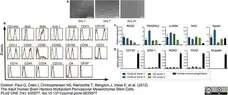
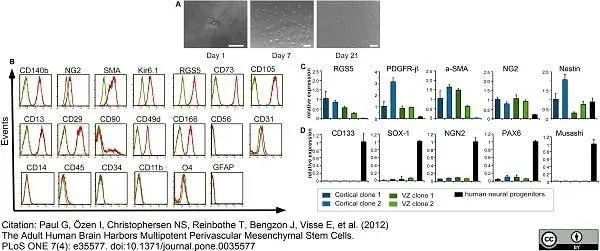
Mouse anti Human CD31 antibody, clone WM59 (MCA1738) used for the detection of CD31 positive cells by flow cytometry.
Image caption:
Characterisation of clonal perivascular MSC progenitor lines. (A) Single cell in vitro a few hours after plating, and culture at 7 and 21 days, respectively. Scale bar 50 μm. (B) Clonally derived MSC show the same antigen profile as detected for polyclonal lines with pericyte and MSC markers but neither neuronal nor glial precursor cell markers (O4, GFAP) (example here cortical clone; green = isotype, red = respective marker).(C) QPCR comparing clones derived from the ventricular zone (n = 2), and the cortex (n = 2) to a human neuronal progenitor cell line MesC2.10. Data show the relative higher expression of mRNA for RGS5, PDGFR-β and α-SMA in the MSC clones compared to the control. As expected, Nestin mRNA was present in perivascular MSC clones and neural progenitors at comparable amounts. NG2 mRNA was slightly higher expressed in the MSC clones compared to the control. (D) Importantly, neural progenitors markers such as CD133, SOX1, NGN2, PAX6 and Musashi were highly expressed in the positive control but not detectable in MSC clones.
From: Paul G, Özen I, Christophersen NS, Reinbothe T, Bengzon J, et al. (2012)
The Adult Human Brain Harbors Multipotent Perivascular Mesenchymal Stem Cells.
PLoS ONE 7(4): e35577.
This image is from an open access article distributed under the terms of Creative Commons Attribution License.
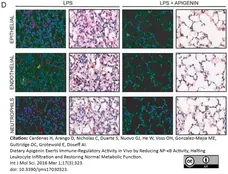
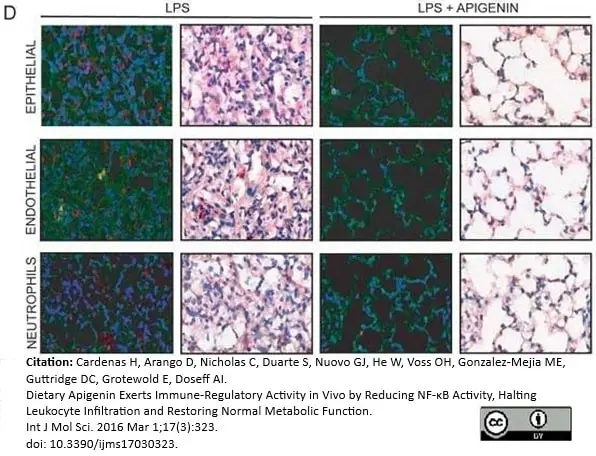
Mouse anti Human CD31 monoclonal antibody, clone WM59 (MCA1738) used for the detection of CD31 expressing lung endothelium by immunofluorescence
Image caption:
Apigenin reduces LPS-induced apoptosis in the lungs. Lungs from mice treated with LPS, control, apigenin (Api) or apigenin 3 h prior to LPS (Api + LPS) were obtained at 24 h. (D) Lung tissue immuno-histochemistry using antibodies specific for active caspase-3 in combination with anti-CD31, anti-cytokeratin or anti-7/4 antibodies specific for endothelia, epithelia and neutrophils, respectively. Scale bars, 100 μm.
From: Cardenas, H.; Arango, D.; Nicholas, C.; Duarte, S.; Nuovo, G.J.; He, W.; Voss, O.H.; Gonzalez-Mejia, M.E.; Guttridge, D.C.; Grotewold, E.; Doseff, A.I.
Dietary Apigenin Exerts Immune-Regulatory Activity in Vivo by Reducing NF-κB Activity, Halting Leukocyte Infiltration and Restoring Normal Metabolic Function.
Int J Mol Sci. 2016, 17, 323.
This image is from an open access article distributed under the terms of a Creative Commons Attribution License.
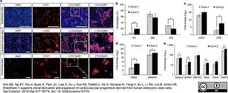
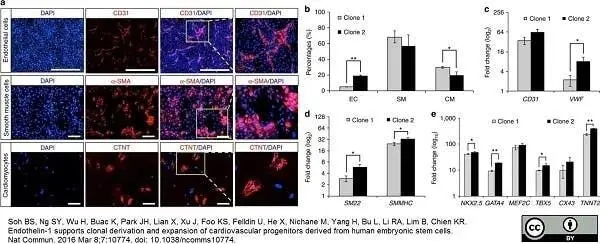
Mouse anti Human CD31 monoclonal antibody, clone WM59 (MCA1738) used for the detection of CD31 expressing cells in cardiovacular procegitor cell cultures by immunofluorescence.
Image caption:
In vitro differentiation of ISL1+ CVP clones into cardiomyocytes, as well as endothelial and smooth muscle cells. Undifferentiated ISL1+ CVP clones were maintained in medium supplemented with EDN1 and WNT3A. Differentiation of the CVPs into various cardiac lineages was achieved using protocols described under material and method. (a) Immunocytochemistry demonstrating the presence of endothelial cell (EC; CD31+), smooth muscle cell (SM; SMMHC+) and cardiomyocyte (CM; CTNT+) on differentiation with various differentiation media. EC was stained with mouse anti-CD31 primary antibody while SM and CM were stained with mouse anti-SMMHC and mouse anti-CTNT, respectively, at 1:100 dilutions. Cell nuclei (blue) were stained with 4,6-diamindino-2-phenylindole (DAPI). Scale bar, 100 μm. (b) Graphical representation illustrating differentiation efficiencies of ISL1+ CVP into various cardiac lineages. Flow cytometric analyses for EC (CD31+), SM (SMMHC+) and CM (CTNT+) differentiation were performed on two progenitor clones (clones 1 and 2). Bars, s.d. of n=3 experiments. *P<0.05 and **P<0.001, evaluated by Student's t-test. (c–e) Quantitative PCR confirming the expression of CD31 and VWF (EC markers); SM22 and SMMHC (SM markers); and NKX2.5, GATA4, MEF2C, TBX5, CX43 and TNNT2 (CM markers) when ISL1+ CVP clones were differentiated into the various cardiac lineages. Gene expressions were normalized to the respective undifferentiated ISL1+ CVP clones. n=3 experiments. *P<0.05 and **P<0.01, evaluated by Student's t-test.
From: Soh BS, Ng SY, Wu H, Buac K, Park JH, Lian X, Xu J, Foo KS, Felldin U, He X, Nichane M, Yang H, Bu L, Li RA, Lim B, Chien KR.
Endothelin-1 supports clonal derivation and expansion of cardiovascular progenitors derived from human embryonic stem cells.
Nat Commun. 2016 Mar 8;7:10774.
This image is from an open access article distributed under the terms of a Creative Commons Attribution License.
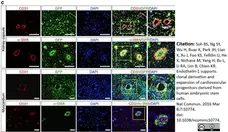
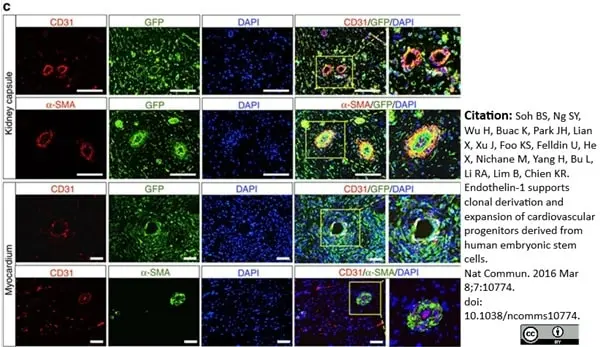
Mouse anti Human CD31 monoclonal antibody, clone WM59 (MCA1738) used for the detection of CD31 expressing cells in cardiovacular procegitor cell cultures by immunofluorescence.
Image caption:
ISL1+ CVP differentiates and forms human–mouse chimeric circulatory system in vivo.(c) Representative immunofluorescent image of muscularized blood vessels in xenografts (both kidney capsule and myocardium). Rings of endothelial cells were stained positive for CD31 (stained red). The arteries were surrounded by additional ring of smooth muscle cells that were stained positive for α-SMA. Cell nuclei (blue) were stained with DAPI. Scale bar, 50 μm.
From: Soh BS, Ng SY, Wu H, Buac K, Park JH, Lian X, Xu J, Foo KS, Felldin U, He X, Nichane M, Yang H, Bu L, Li RA, Lim B, Chien KR.
Endothelin-1 supports clonal derivation and expansion of cardiovascular progenitors derived from human embryonic stem cells.
Nat Commun. 2016 Mar 8;7:10774.
This image is from an open access article distributed under the terms of a Creative Commons Attribution License.
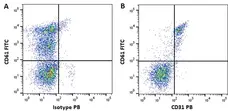
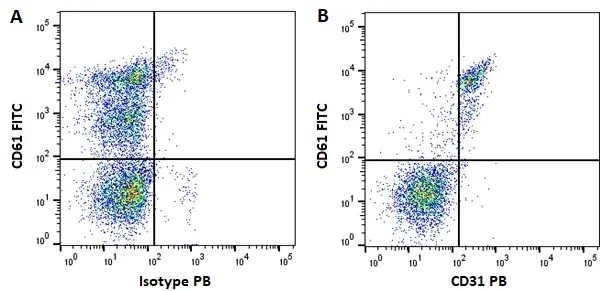
Figure B. FITC conjugated Mouse anti Human CD61 antibody, clone Y2/51 (MCA2588F) and Pacific Blue® conjugated Mouse anti Human CD31 (MCA1738PB). All experiments performed on human blood gated on live single platelets, in the presence of 10% human serum.
Data acquired on the ZE5 Cell analyser.
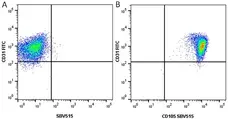
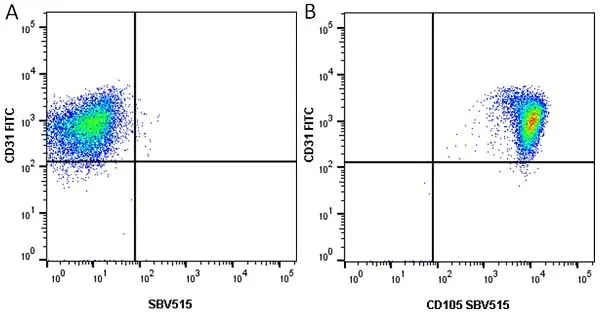
Figure B. FITC conjugated Mouse anti Human CD31 antibody, clone WM59 (MCA1738F) and StarBright Violet 515 conjugated Mouse anti Human CD105 antibody, clone SN6 (MCA1557SBV515). All experiments performed on HUVECs gated on live single cells, in the presence of 10% human serum.
Data acquired on the ZE5 Cell analyser.
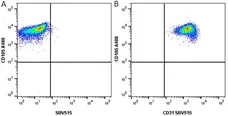
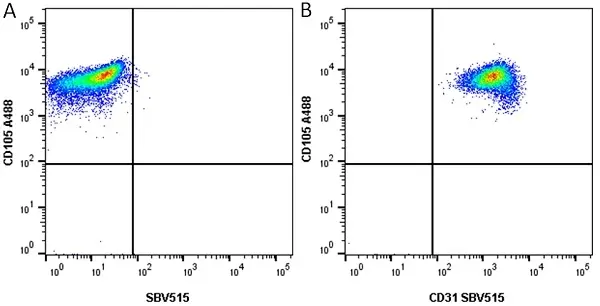
Figure B. Alexa Fluor® 488 conjugated Mouse anti Human CD105 antibody, clone SN6 (MCA1557A488) and StarBright Violet 515 conjugated Mouse anti Human CD31 antibody, clone WM59 (MCA1738SBV515). All experiments performed on HUVECs gated on live single cells, in the presence of 10% human serum.
Data acquired on the ZE5 Cell analyser.
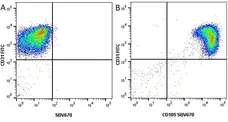
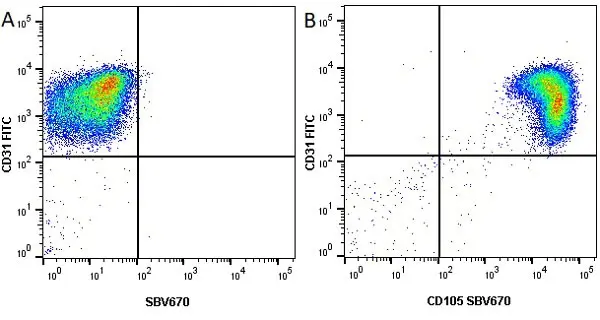
Figure B. FITC conjugated Mouse anti Human CD31 antibody, clone WM59 (MCA1738F) and StarBright Violet 670 conjugated Mouse anti Human CD105 antibody, clonne SN6 (MCA1557SBV670). All experiments performed on HUVECs gated on live single cells, in the presence of 10% human serum.
Data acquired on the ZE5 Cell analyser.
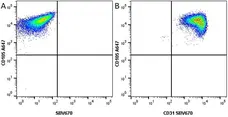
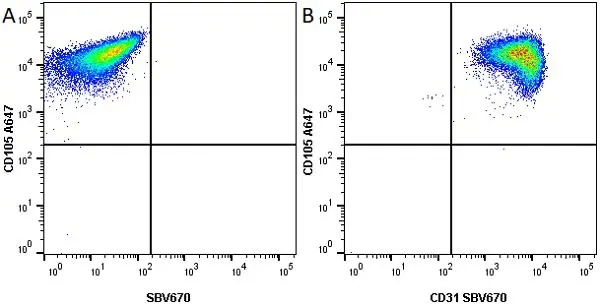
Figure B. Alexa Fluor® 647 conjugated Mouse anti Human CD105 antibody, clone SN6 (MCA1557A647) and StarBright Violet 670 conjugated Mouse anti Human CD31 antibody, clone WM59 (MCA1738SBV670). All experiments performed on HUVECs gated on live single cells, in the presence of 10% human serum.
Data acquired on the ZE5 Cell analyser.
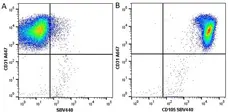
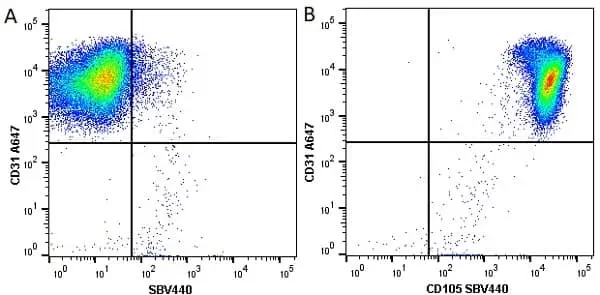
Figure B. Alexa Fluor® 647 conjugated Mouse anti Human CD31 antibody, clone WM59 (MCA1738A647) and StarBright Violet 440 conjugated Mouse anti Human CD105 antibody, clone SN6 (MCA1557SBV440). All experiments performed on HUVECs gated on live single cells, in the presence of 10% human serum.
Data acquired on the ZE5 Cell analyser.
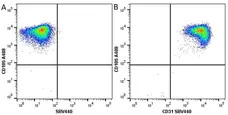
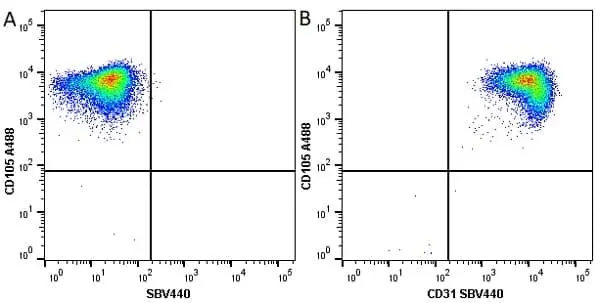
Figure B. Alexa Fluor® 488 conjugated Mouse anti Human CD105 antibody, clone SN6 (MCA1557A488) and StarBright Violet 440 conjugated Mouse anti Human CD31 antibody, clone WM59 (MCA1738SBV440). All experiments performed on HUVECs gated on live single cells, in the presence of 10% human serum.
Data acquired on the ZE5 Cell analyser.
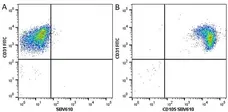
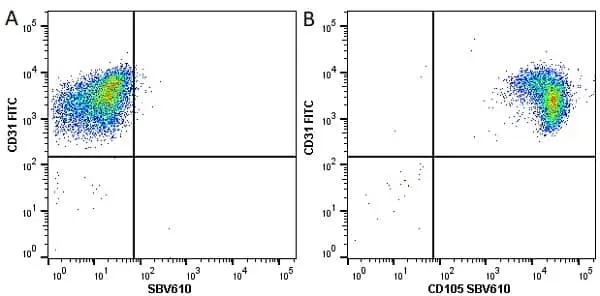
Figure B. FITC conjugated Mouse anti Human CD31 antibody, clone WM59 (MCA1738F) and StarBright Violet 610 conjugated Mouse anti Human CD105 antibody, clone SN6 (MCA1557SBV610). All experiments performed on HUVECs gated on live single cells, in the presence of 10% human serum.
Data acquired on the ZE5 Cell analyser.
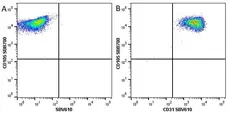
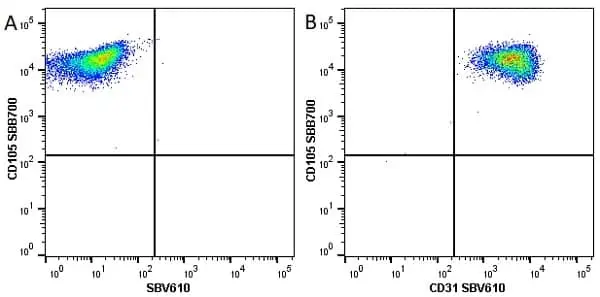
Figure B. StarBright Blue 700 conjugated Mouse anti Human CD105 antibody, clone SN6 (MCA1557SBB700) and StarBright Violet 610 conjugated Mouse anti Human CD31 antibody, clone WM59 (MCA1738SBV610). All experiments performed on HUVECs gated on live single cells, in the presence of 10% human serum.
Data acquired on the ZE5 Cell analyser.
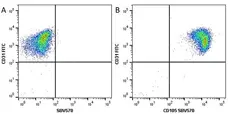
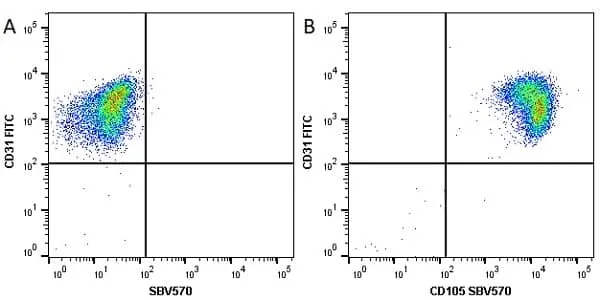
Figure B. FITC conjugated Mouse anti Human CD31 antibody, clone WM59 (MCA1738F) and StarBright Violet 570 conjugated Mouse anti Human CD105 antibody, clone SN6 (MCA1557SBV570). All experiments performed on HUVECs gated on live single cells, in the presence of 10% mouse serum.
Data acquired on the ZE5 Cell analyser.
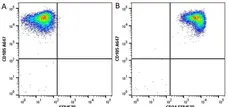
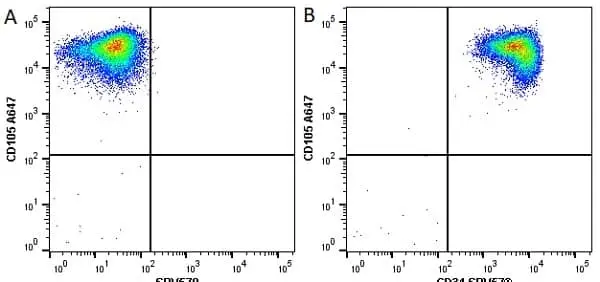
Figure B. Alexa Fluor® 647 conjugated Mouse anti Human CD105 antibody, clone SN6 (MCA1557A647) and StarBright Violet 570 conjugated Mouse anti Human CD31 antibody, clone WM59 (MCA1738SBV570). All experiments performed on HUVECs gated on live single cells, in the presence of 10% mouse serum.
Data acquired on the ZE5 Cell analyser.
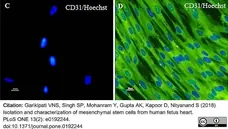
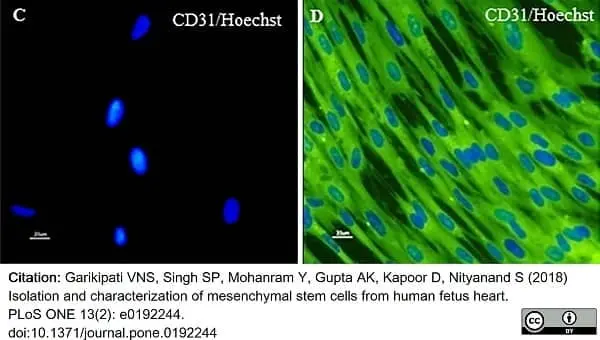
Mouse anti Human CD31 monoclonal antibody, clone WM59 (MCA1738) used to label differentiating hfC-MSC's in vitro by immunofluorescence.
Image caption:
Differentiation of hfC-MSCs into cardiovascular cells.
Representative immunocytochemistry images (40X, 20μm) showing differentiation of human fetal cardiac stem cells (hfC-MSCs) into Endothelial cells (D: CD31); Data shown are from three independent experiments at passage 3–5. Control cells: left. Differentiated cells: right.
From: Citation: Garikipati VNS, Singh SP, Mohanram Y, Gupta AK, Kapoor D, Nityanand S (2018)
Isolation and characterization of mesenchymal stem cells from human fetus heart.
PLoS ONE 13(2): e0192244.
doi:10.1371/journal.pone.0192244
This image is from an open access article distributed under terms of a Creative Commons Attribution License.
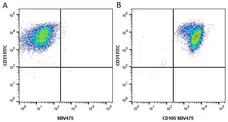
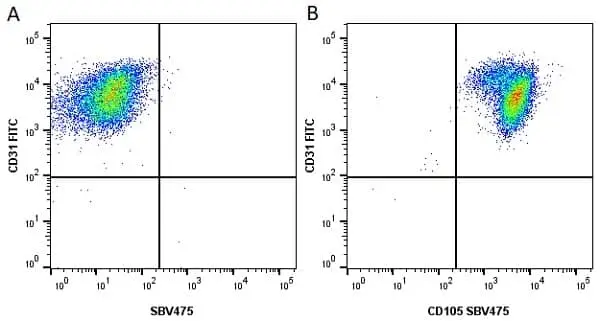
Figure B. FITC conjugated Mouse anti Human CD31 antibody, clone WM59 (MCA1738F) and StarBright Violet 475 conjugated Mouse anti Human CD105 antibody, clone SN6 (MCA1557SBV475). All experiments performed on HUVECs gated on live single cell lymphocytes, in the presence of 10% human serum.
Data acquired on the ZE5 Cell analyser.
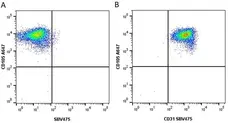
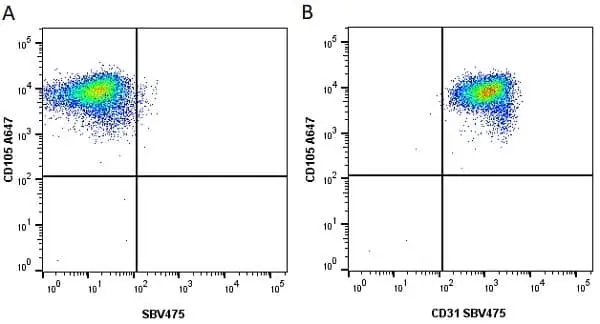
Figure B. Alexa Fluor® 647 conjugated Mouse anti Human CD105 antibody, clone SN6 (MCA1557A647) and StarBright Violet 475 conjugated Mouse anti Human CD31 antibody, clone WM59 (MCA1738SBV475). All experiments performed on HUVECs gated on live single cell lymphocytes, in the presence of 10% human serum.
Data acquired on the ZE5 Cell analyser.
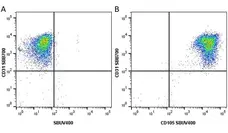
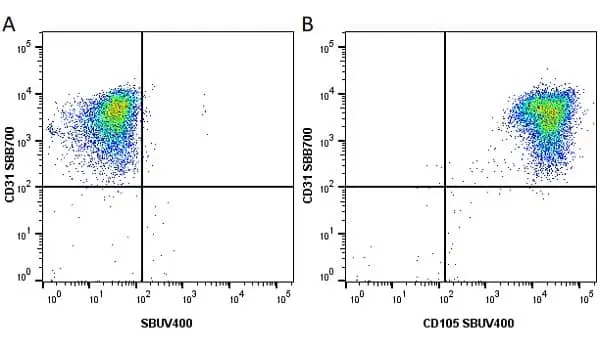
Figure B. StarBright Blue 700 conjugated Mouse anti Human CD31 antibody, clone WM59 (MCA1738SBB700) and StarBright UltraViolet 400 conjugated Mouse anti Human CD105 antibody, clone SN6 (MCA1557SBUV400). All experiments performed on HUVECs gated on live single cells, in the presence of 10% human serum.
Data acquired on the ZE5 Cell analyser.
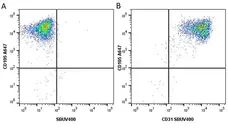
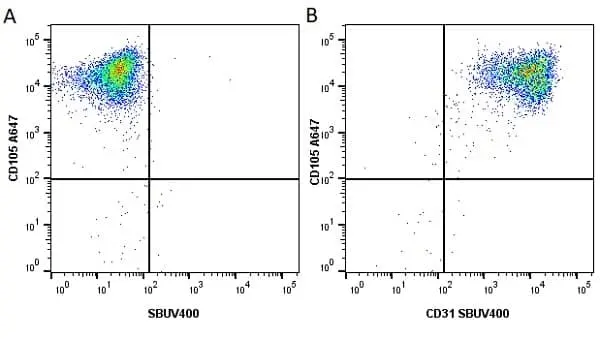
Figure B. Alexa Fluor® 647 conjugated Mouse anti Human CD105 antibody, clone SN6 (MCA1557A647) and StarBright UltraViolet 400 conjugated Mouse anti Human CD31 antibody, clone WM59 (MCA1738SBUV400). All experiments performed on HUVECs gated on live single cells, in the presence of 10% human serum.
Data acquired on the ZE5 Cell analyser.
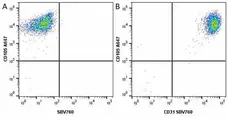
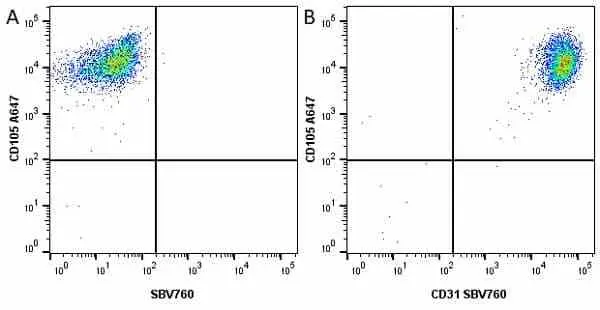
Figure B. Alexa Fluor® 647 conjugated Mouse anti Human CD105 antibody, clone SN6 (MCA1557A647) and and StarBright Violet 760 conjugated Mouse anti Human CD31 antibody, clone WM59 (MCA1738SBV760). All experiments performed on HUVECs gated on live single cells, in the presence of 10% human serum.
Data acquired on the ZE5 Cell analyser.
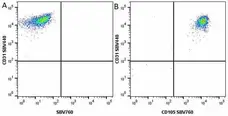
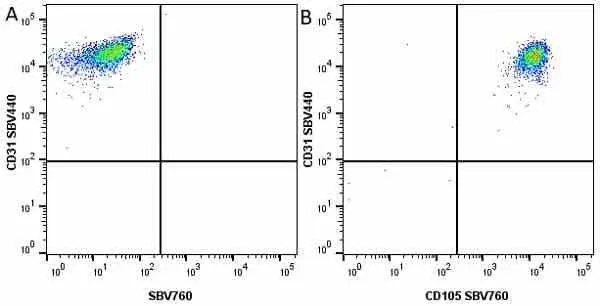
Figure B. StarBright Violet 440 conjugated Mouse anti Human CD31 antibody, clone WM59 (MCA1738SBV440) and StarBright Violet 760 conjugated Mouse anti Human CD105 antibody, clone SN6 (MCA1557SBV760). All experiments performed on HUVECs gated on live single cells, in the presence of 10% human serum.
Data acquired on the ZE5 Cell analyser.
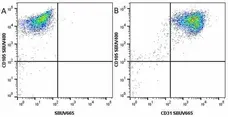
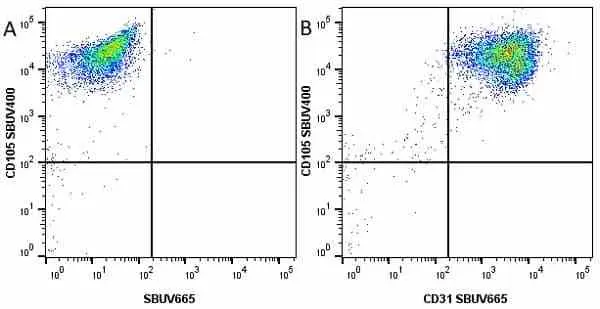
Figure B. StarBright UltraViolet 400 conjugated Mouse anti Human CD105 antibody, clone SN6 (MCA1557SBUV400) and StarBright UltraViolet 665 conjugated Mouse anti Human CD31 antibody, clone WM59 (MCA1738SBUV665). All experiments performed on HUVECs gated on live single cells, in the presence of 10% human serum.
Data acquired on the ZE5 Cell analyser.
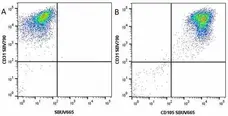
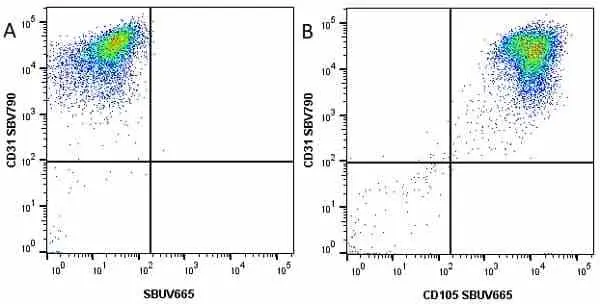
Figure B. StarBright Violet 790 conjugated Mouse anti Human CD31 antibody, clone WM59 (MCA1738SBV790) and StarBright UltraViolet 665 conjugated Mouse anti Human CD105 antibody, clone SN6 (MCA1557SBUV665). All experiments performed on HUVECs gated on live single cells, in the presence of 10% human serum.
Data acquired on the ZE5 Cell analyser.
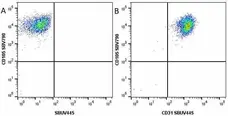
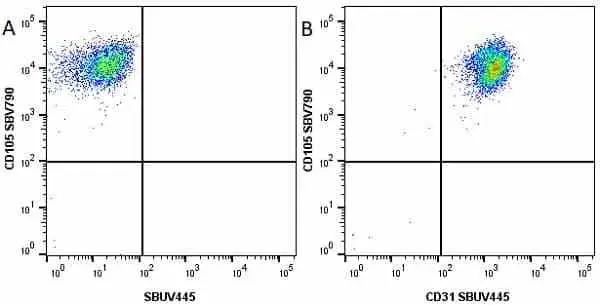
Figure B. Starbright Violet 790 conjugated Mouse anti Human CD105 antibody, clone SN6 (MCA1557SBV790) and StarBright UltraViolet 445 conjugated Mouse anti Human CD31 antibody, clone WM59 (MCA1738SBUV445) All experiments performed on HUVECs gated on live single cells, in the presence of 10% human serum.
Data acquired on the ZE5 Cell analyser.
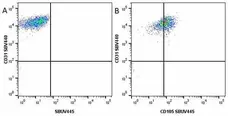
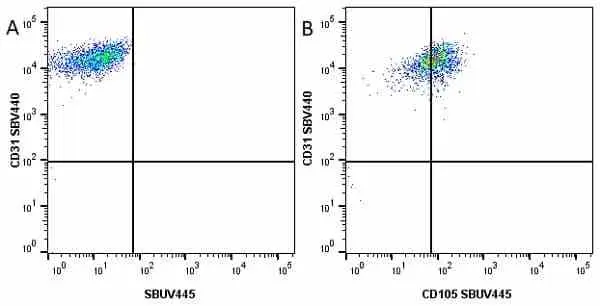
Figure B. Starbright Violet 440 conjugated Mouse anti Human CD31 antibody, clone WM59 (MCA1738SBV440) and StarBright UltraViolet 445 conjugated Mouse anti Human CD105 antibody, clone SN6 (MCA1557SBUV445) All experiments performed on HUVECs gated on live single cells, in the presence of 10% human serum.
Data acquired on the ZE5 Cell analyser.
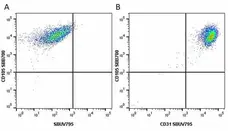
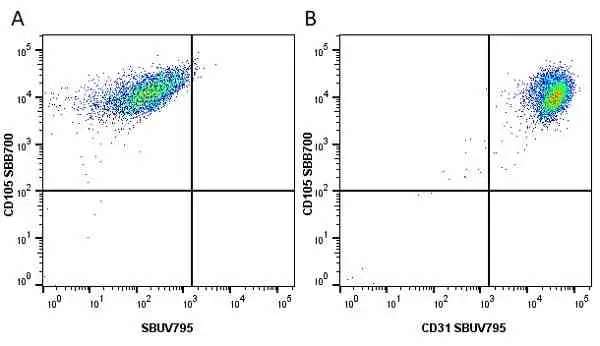
Figure B. StarBright Blue 700 conjugated Mouse anti Human CD105 antibody, clone SN6 (MCA1557SBB700) and StarBright UltraViolet 795 conjugated Mouse anti human CD31 antibody, clone WM59 (MCA1738SBUV795). All experiments performed on HUVECs gated on live single cells, in the presence of 10% human serum.
Data acquired on the ZE5 Cell analyser.
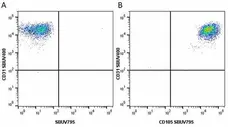
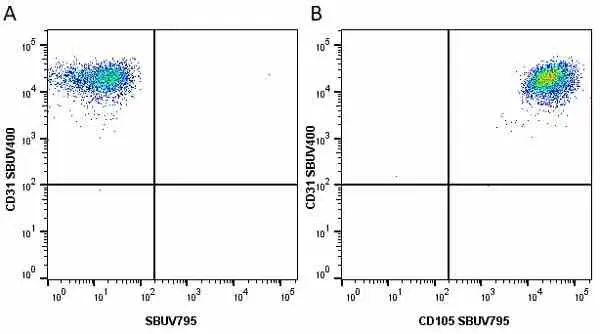
Figure B. StarBright UltraViolet 400 conjugated Mouse anti Human CD31 antibody, clone WM59 (MCA1738SBUV400) and StarBright UltraViolet 795 conjugated Mouse anti Human CD105 antibody, clone SN6 (MCA1557SBUV795). All experiments performed on HUVECs gated on live single cells, in the presence of 10% human serum.
Data acquired on the ZE5 Cell analyser.
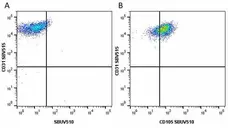
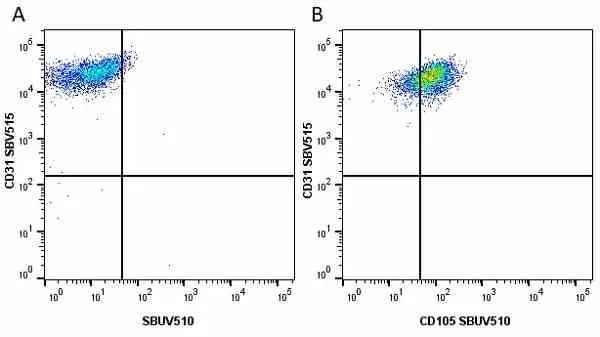
Figure B. StarBright Violet 515 conjugated Mouse anti Human CD31 antibody, clone WM59 (MCA1738SBV515) and StarBright UltraViolet 510 conjugated Mouse anti Human CD105 antibody, clone SN6 (MCA1557SBUV510). All experiments performed on HUVECs gated on live single cells, in the presence of 10% human serum.
Data acquired on the ZE5 Cell analyser.
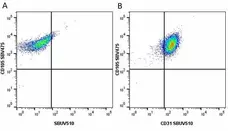
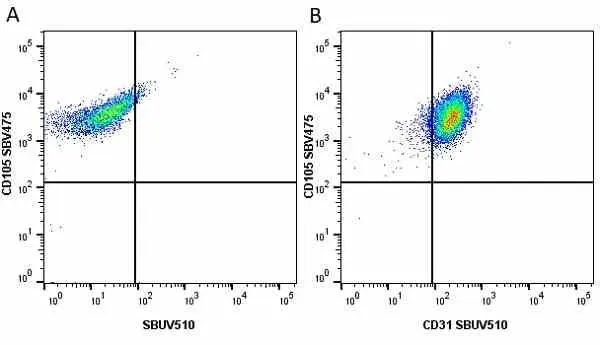
Figure B. StarBright Violet 475 conjugated Mouse anti Human CD105 antibody, clone SN6 (MCA1557SBV475) and StarBright UltraViolet 510 conjugated Mouse anti Human CD31 antibody, clone WM59 (MCA1738SBUV510). All experiments performed on HUVECs gated on live single cells, in the presence of 10% human serum.
Data acquired on the ZE5 Cell analyser.
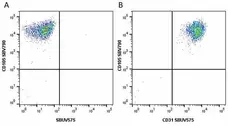
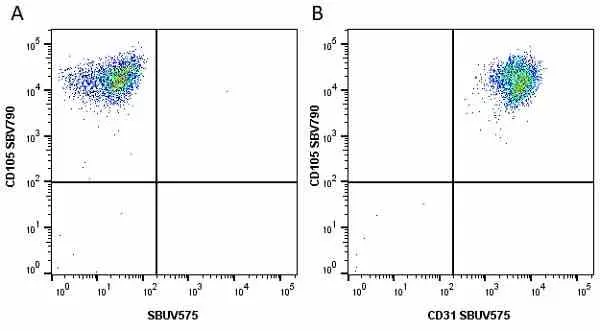
Figure B. StarBright Violet 790 conjugated Mouse anti Human CD105 antibody, clone SN6 (MCA1557SBV790) and StarBright UltraViolet 575 conjugated Mouse anti Human CD31 antibody, clone WM59 (MCA1738SBUV575). All experiments performed on HUVECs gated on live single cells, in the presence of 10% human serum.
Data acquired on the ZE5 Cell analyser.
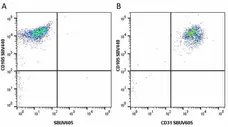
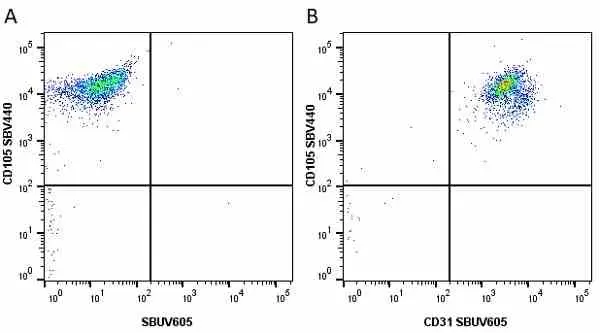
Figure B. StarBright Violet 440 conjugated Mouse anti Human CD105 antibody, clone SN6 (MCA1557SBV440) and StarBright UltraViolet 605 conjugated Mouse anti Human CD31 antibody, clone WM59 (MCA1738SBUV605). All experiments performed on HUVECs gated on live single cells, in the presence of 10% human serum.
Data acquired on the ZE5 Cell analyser.
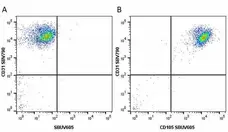
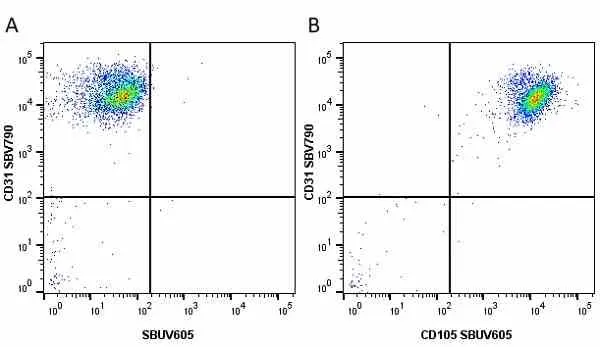
Figure B. StarBright Violet 790 conjugated Mouse anti Human CD31 antibody, clone WM59 (MCA1738SBV790) and StarBright UltraViolet 605 conjugated Mouse anti Human CD105 antibody, clone SN6 (MCA1557SBUV605). All experiments performed on HUVECs gated on live single cells, in the presence of 10% human serum.
Data acquired on the ZE5 Cell analyser.
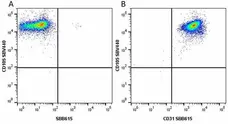
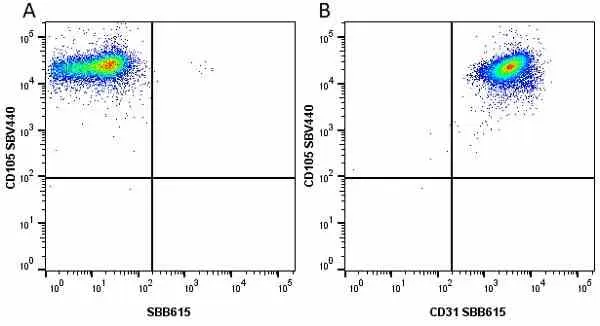
Figure B. StarBright Violet 440 conjugated Mouse anti Human CD105 antibody, clone SN6 (MCA1557SBV440) and StarBright Blue 615 conjugated Mouse anti Human CD31 antibody, clone WM59 (MCA1738SBB615). All experiments performed on HUVECs gated on live single cells, in the presence of 10% human serum.
Data acquired on the ZE5 Cell analyser.
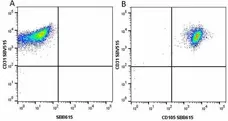
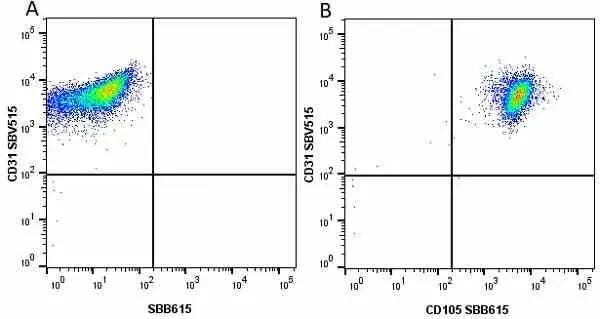
Figure B. StarBright Violet 515 conjugated Mouse anti Human CD31 antibody, clone WM59 (MCA1738SBV515) and StarBright Blue 615 conjugated Mouse anti Human CD105 antibody, clone SN6 (MCA1557SBB615). All experiments performed on HUVECs gated on live single cells, in the presence of 10% human serum.
Data acquired on the ZE5 Cell analyser.
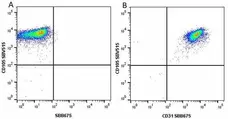
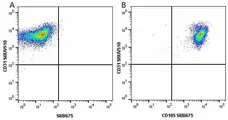
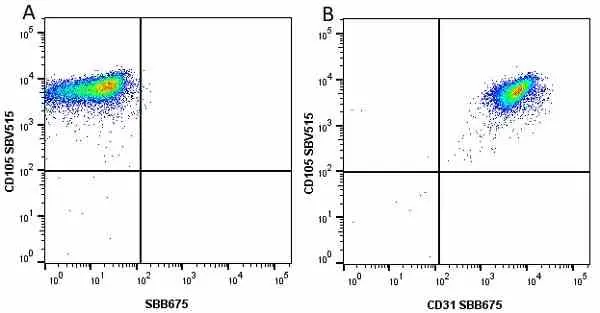
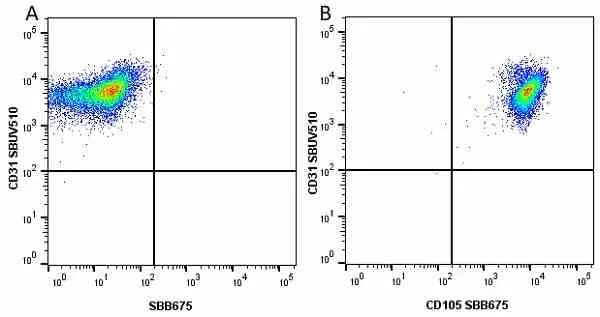
Figure B. StarBright UltraViolet 510 conjugated Mouse anti Human CD31 antibody, clone WM59 (MCA1738SBUV510) and StarBright Blue 675 conjugated Mouse anti Human CD105 antibody, clone SN6 (MCA1557SBB675). All experiments performed on HUVECs gated on live single cells, in the presence of 10% human serum.
Data acquired on the ZE5 Cell analyser.
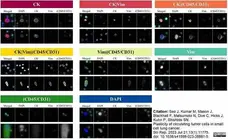
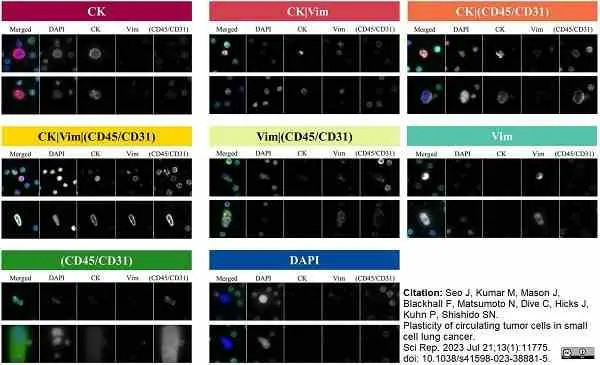
Alexa Fluor® 647 conjugated Mouse anti Human CD31 monoclonal antibody, clone WM59 (MCA1738A647) used to label rare cells in liquid biopsies by immunfluorescence.
Image caption:
Circulating rare cells identified in the peripheral blood from SCLC patient samples using HDSCA3.0 with the Landscape assay. (A) Representative cell images of each cell group. Each row shows a composite image plus each of the four channels separately; DAPI in blue, CK in red, Vim in white, (CD45/CD31) in green.
From: Seo J, Kumar M, Mason J, Blackhall F, Matsumoto N, Dive C, Hicks J, Kuhn P, Shishido SN.
Plasticity of circulating tumor cells in small cell lung cancer.
Sci Rep. 2023 Jul 21;13(1):11775.
doi: 10.1038/s41598-023-38881-5.
This image is from an open access article distributed under terms of a Creative Commons Attribution License.
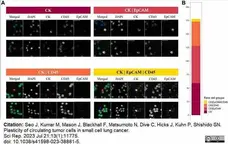
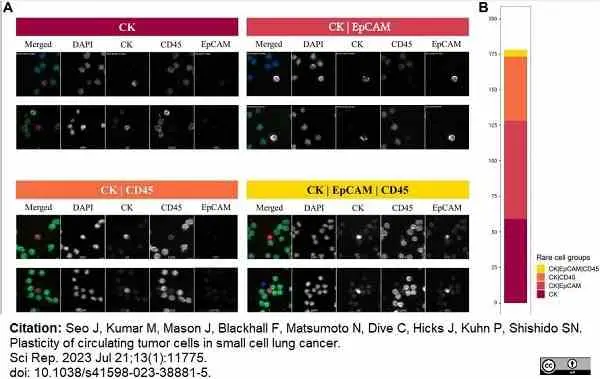
Alexa Fluor® 647 conjugated Mouse anti Human CD31 monoclonal antibody, clone WM59 (MCA1738A647) used to label rare cells in liquid biopsies by immunfluorescence.
Image caption:
Detected cells from UM-001 using the EpCAM assay. (A) Representative cell images of each cell group. Each row shows a composite image plus each of the four channels separately: DAPI in blue, CK in red, CD45 in green, and EpCAM in white. (B) The number of total rare cells per mL is provided. Each rare cell group is annotated with four different colors which are shown in the bottom right of the figure.
From: Seo J, Kumar M, Mason J, Blackhall F, Matsumoto N, Dive C, Hicks J, Kuhn P, Shishido SN.
Plasticity of circulating tumor cells in small cell lung cancer.
Sci Rep. 2023 Jul 21;13(1):11775.
doi: 10.1038/s41598-023-38881-5.
This image is from an open access article distributed under terms of a Creative Commons Attribution License.
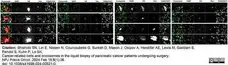
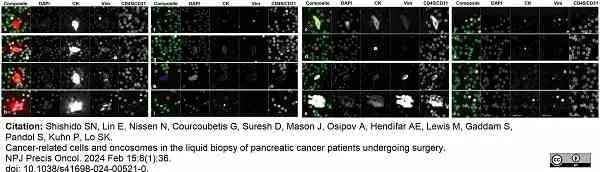
Alexa Fluor 647 conjugated Mouse anti Human CD31 antibody, clone WM59 (MCA1738A647) used to label cells in liquid biopsies from PDAC patients.
Image caption:
Representative gallery of rare events detected in samples collected from patients diagnosed with PDAC.
For each rare event the composite image is provided followed by the individual biomarker fluorescent channels which are indicated by the headers. a Epi.CTC; b Mes.CTC (top: single cell; middle: cluster of 2; bottom: cluster of 4); c DAPI|CK|Vim|CD45/CD31; d DAPI|CK|CD45/CD31; e DAPI|Vim|CD45/CD31 (top: single cell; bottom: cluster); f DAPI|Vim; g DAPI|CK|CD45/CD31; h DAPI-only; I CK oncosome; j CK|Vim oncosome; k CK|CD45/CD31 oncosomes; l CK|Vim|CD45/CD31 oncosome (top: distal, bottom: proximal). Blue: DAPI, Red: CK, White: Vim, Green: CD45/CD31. Images taken at 100X magnification. Scale bar = 10 μm.
From: Shishido SN, Lin E, Nissen N, Courcoubetis G, Suresh D, Mason J, Osipov A, Hendifar AE, Lewis M, Gaddam S, Pandol S, Kuhn P, Lo SK.
Cancer-related cells and oncosomes in the liquid biopsy of pancreatic cancer patients undergoing surgery.
NPJ Precis Oncol. 2024 Feb 15;8(1):36.
doi: 10.1038/s41698-024-00521-0.
This image is from an open access article distributed under terms of a Creative Commons Attribution License.
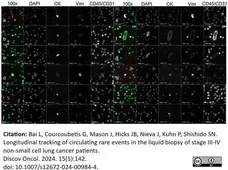
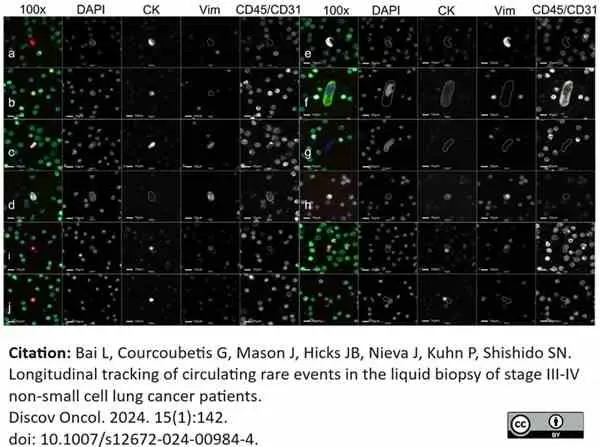
Alexa Fluor 647 conjugated Mouse anti Human CD31 monoclonal antibody, clone WM59 (MCA1738A647) used to detect CD31 positive events in liquid biopsy evaluation by immunofluorescence.
Image caption:
Representative images of rare events detected in the NSCLC patient blood samples. Images taken at 100x magnification. (a–h) Rare cells and (i–l) oncosomes. DAPI: blue, cytokeratin (CK): red, Vim: white, CD45/CD31: green (a): Epithelial like CTCs (Epi.CTCs), (b): CK|CD45/CD31 cell, (c): CK|Vim|CD45/CD31 cell, (d): Vim|CD45/CD31 cell, (e): Vim only cell, (f): CD45/CD31 cell, (g): DAPI only cell, (h): Mesenchymal like CTCs (Mes.CTCs), (i): Onc proximal to cell, (j): Onc alone
From: Bai L, Courcoubetis G, Mason J, Hicks JB, Nieva J, Kuhn P, Shishido SN.
Longitudinal tracking of circulating rare events in the liquid biopsy of stage III-IV non-small cell lung cancer patients.
Discov Oncol. 2024 May 3;15(1):142.
doi: 10.1007/s12672-024-00984-4.
This image is from an open access article distributed under terms of a Creative Commons Attribution License.
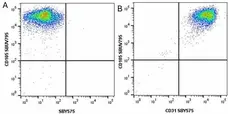
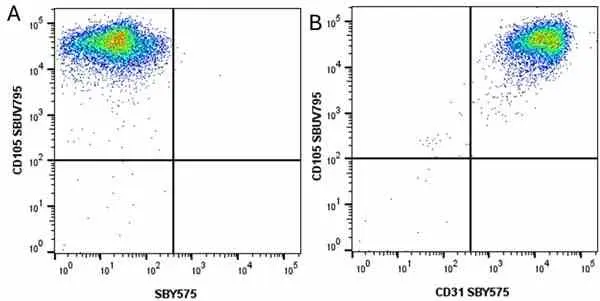
Figure B. StarBright UltraViolet 795 conjugated Mouse anti Human CD105 antibody, clone SN6 (MCA1557SBUV795) and StarBright Yellow 575 conjugated Mouse anti Human CD31 antibody, clone WM59 (MCA1738SBY575). All experiments performed on HUVECs gated on live single cells, in the presence of 10% human serum.
Data acquired on the ZE5 Cell analyser.
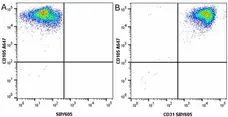
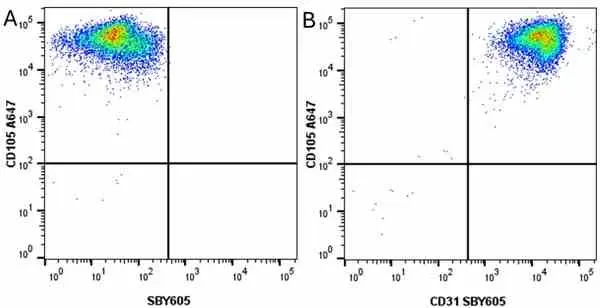
Figure B. Alexa Fluor® 647 conjugated Mouse anti Human CD105 antibody, clone SN6 (MCA1557A647) and StarBright Yellow 605 conjugated Mouse anti Human CD31 antibody, clone WM59 (MCA1738SBY605). All experiments performed on HUVECs gated on live single cells, in the presence of 10% human serum.
Data acquired on the ZE5 Cell analyser.
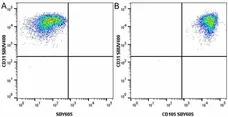
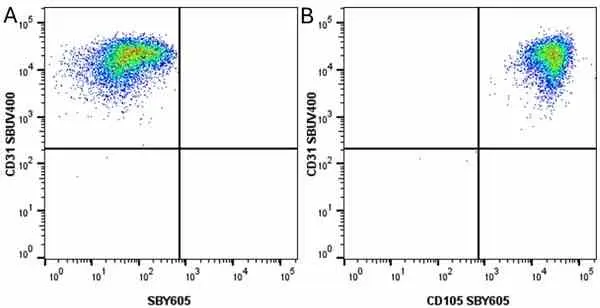
Figure B. StarBright UltraViolet 400 conjugated Mouse anti Human CD31 antibody, clone WM59 (MCA1738SBUV400) and StarBright Yellow 605 conjugated Mouse anti Human CD105 antibody, clone SN6 (MCA1557SBY605). All experiments performed on HUVECs gated on live single cells, in the presence of 10% human serum.
Data acquired on the ZE5 Cell analyser.
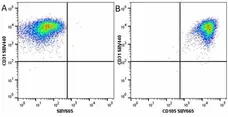
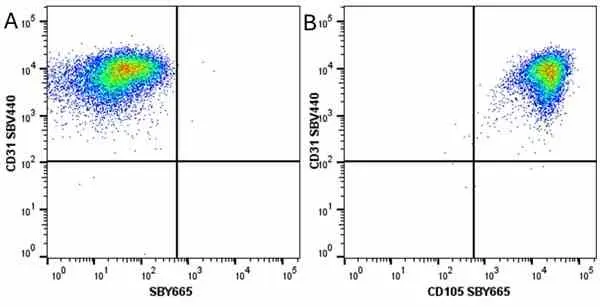
Figure B. StarBright Violet 440 conjugated Mouse anti Human CD31 antibody, clone WM59 (MCA1738SBV440) and StarBright Yellow 665 conjugated Mouse anti Human CD105 antibody, clone SN6 (MCA1557SBY665). All experiments performed on HUVECs gated on live single cells, in the presence of 10% human serum.
Data acquired on the ZE5 Cell analyser.
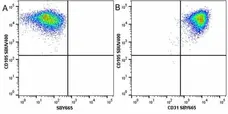
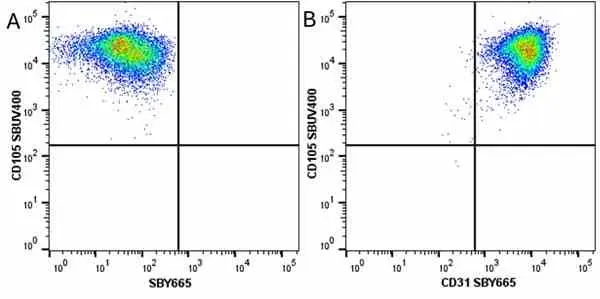
Figure B. StarBright UltraViolet 400 conjugated Mouse anti Human CD105 antibody, clone SN6 (MCA1557SBUV400) and StarBright Yellow 665 conjugated Mouse anti Human CD31 antibody, clone WM59 (MCA1738SBY665). All experiments performed on HUVECs gated on live single cells, in the presence of 10% human serum.
Data acquired on the ZE5 Cell analyser.
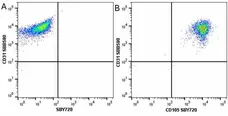
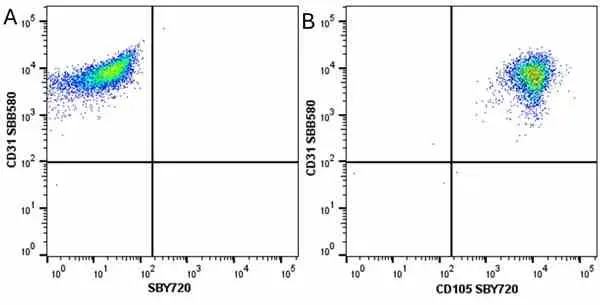
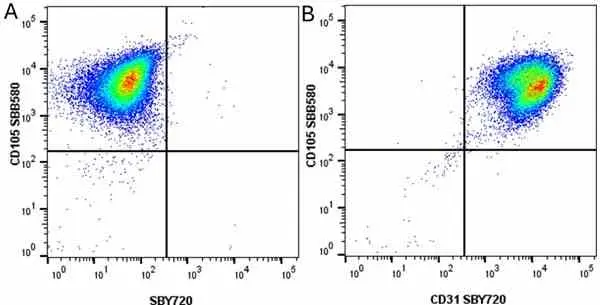
Figure B. StarBright Blue 580 conjugated Mouse anti Human CD31 antibody, clone WM59 (MCA1738SBB580) and StarBright Yellow 720 conjugated Mouse anti Human CD105 antibody, clone SN6 (MCA1557SBY720). All experiments performed on HUVECs gated on live single cells, in the presence of 10% human serum.
Data acquired on the ZE5 Cell analyser.
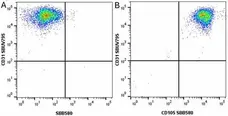
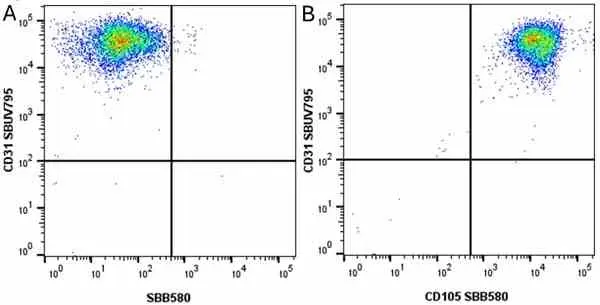
Figure B. StarBright UltraViolet 795 conjugated Mouse anti Human CD31 antibody, clone WM59 (MCA1738SBUV795) and StarBright Blue 580 conjugated Mouse anti Human CD105 antibody, clone WM59 (MCA1557SBB580). All experiments performed on HUVECs gated on live single cells, in the presence of 10% human serum.
Data acquired on the ZE5 Cell analyser.
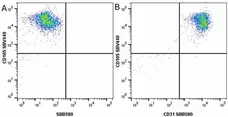
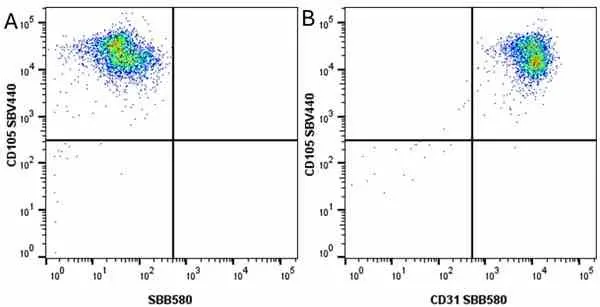
Figure B. StarBright Violet 440 conjugated Mouse anti Human CD105 antibody, clone SN6 (MCA1557SBV440) and StarBright Blue 580 conjugated Mouse anti Human CD31 antibody, clone WM59 (MCA1738SBB580). All experiments performed on HUVECs gated on live single cells, in the presence of 10% human serum.
Data acquired on the ZE5 Cell analyser.
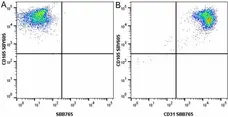
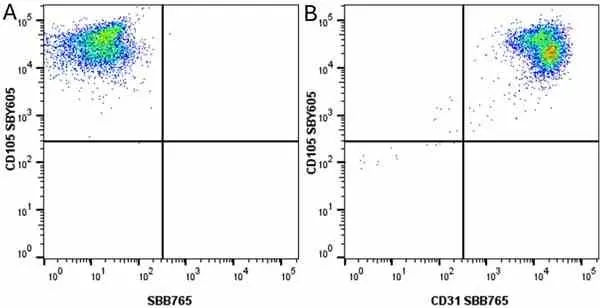
Figure B. StarBright Yellow 605 conjugated Mouse anti Human CD105 antibody, clone SN6 (MCA1557SBY605) and StarBright Blue 765 conjugated Mouse anti Human CD31 antibody, clone WM59 (MCA1738SBB765). All experiments performed on HUVECs gated on live single cells, in the presence of 10% human serum.
Data acquired on the ZE5 Cell analyser.
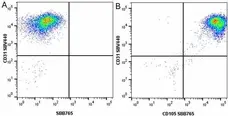
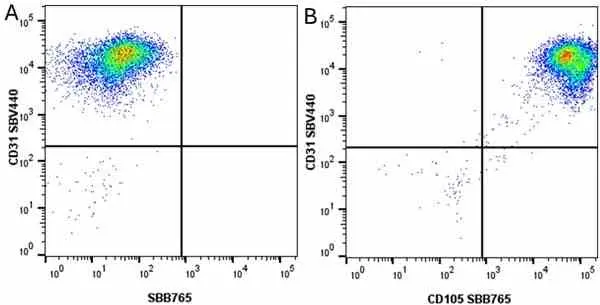
Figure B. StarBright Violet 440 conjugated Mouse anti Human CD31 antibody, clone WM59 (MCA1738SBV440) and StarBright Blue 765 conjugated Mouse anti Human CD105 antibody, clone SN6 (MCA1557SBB765). All experiments performed on HUVECs gated on live single cells, in the presence of 10% human serum.
Data acquired on the ZE5 Cell analyser.
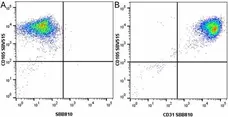
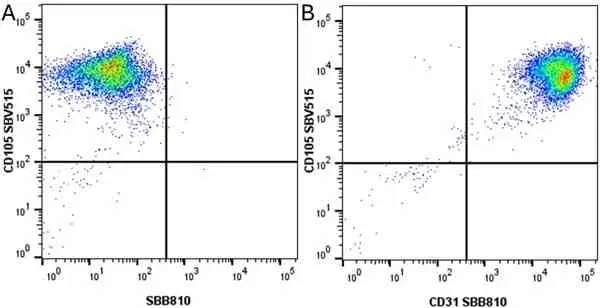
Figure B. StarBright Violet 515 conjugated Mouse anti Human CD105 antibody, clone SN6 (MCA1557SBV515) and StarBright Blue 810 conjugated Mouse anti Human CD31 antibody, clone WM59 (MCA1738SBB810). All experiments performed on HUVECs gated on live single cells, in the presence of 10% human serum.
Data acquired on the ZE5 Cell analyser.
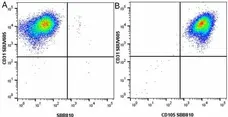
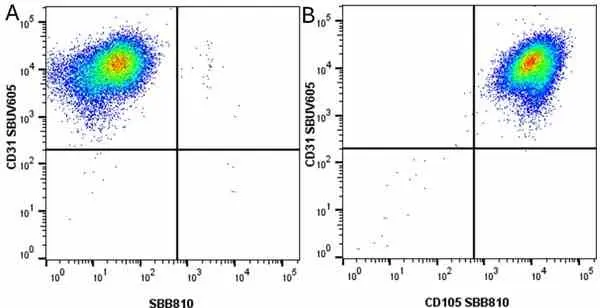
Figure B. StarBright UltraViolet 605 conjugated Mouse anti Human CD31 antibody, clone WM59 (MCA1738SBUV605) and StarBright Blue 810 conjugated Mouse anti Human CD105 antibody, clone SN6 (MCA1557SBB810). All experiments performed on HUVECs gated on live single cells, in the presence of 10% human serum.
Data acquired on the ZE5 Cell analyser.
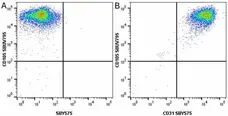
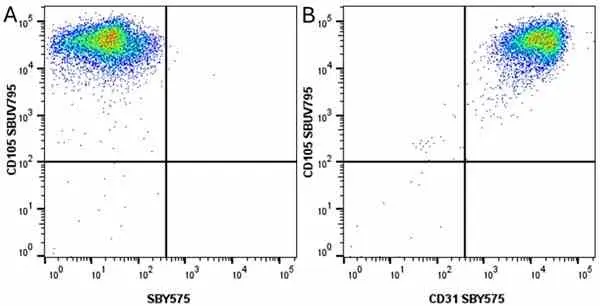
Figure B. StarBright UltraViolet 795 conjugated Mouse anti Human CD105 antibody, clone SN6 (MCA1557SBUV795) and StarBright Yellow 575 conjugated Mouse anti Human CD31 antibody, clone WM59 (MCA1738SBY575). All experiments performed on HUVECs gated on live single cells, in the presence of 10% human serum.
Data acquired on the ZE5 Cell analyser.
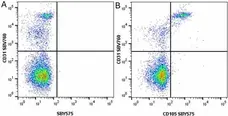
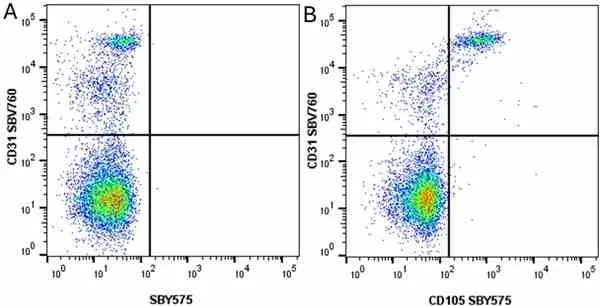
Figure B. StarBright Violet 760 conjugated Mouse anti Human CD31 antibody, clone WM59 (MCA1738SBV760) and StarBright Yellow 575 conjugated Mouse anti Human CD105 antibody, clone SN6 (MCA1557SBY575). All experiments performed on red cell lysed Human blood gated on live single cell lymphocytes, in the presence of 10% Human serum.
Data acquired on the ZE5 Cell analyser.
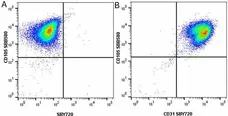
Data acquired on the ZE5 Cell analyser.
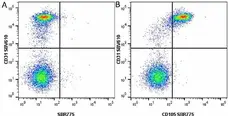
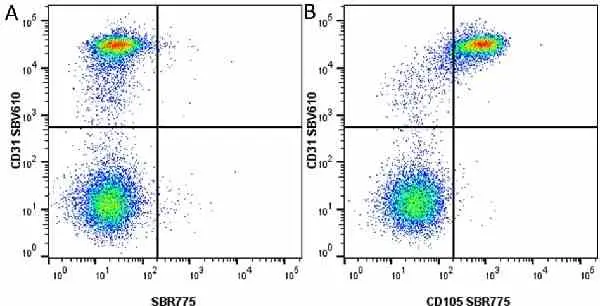
Figure B. StarBright Violet 610 conjugated Mouse anti Human CD31 antibody, clone WM59 (MCA1738SBV610) and StarBright Red 775 conjugated Mouse anti Human CD105 antibody, clone SN6 (MCA1557SBR775). All experiments performed on red cell lysed human blood gated on live single cell monocytes, in the presence of 10% human serum.
Data acquired on the ZE5 Cell analyser.
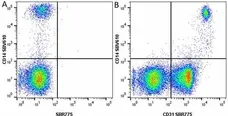
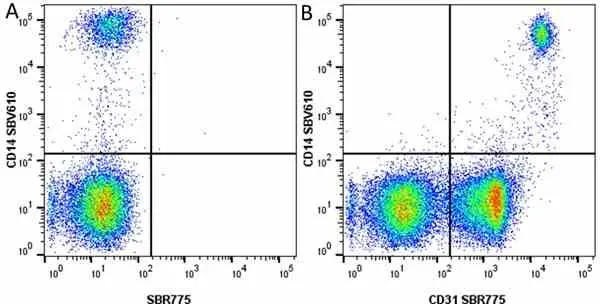
Figure B. StarBright Violet 610 conjugated Mouse anti Human CD14 antibody, clone TüK4 (MCA1568SBV610) and StarBright Red 775 conjugated Mouse anti Human CD31 antibody, clone WM59 (MCA1738SBR775). All experiments performed on red cell lysed human blood gated on live single monocnuclear cells, in the presence of 10% human serum.
Data acquired on the ZE5 Cell analyser.
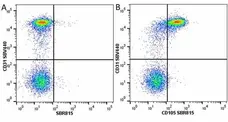
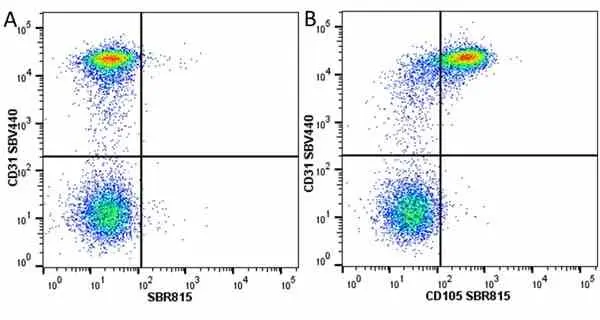
Figure B. StarBright UltraViolet 440 conjugated Mouse anti Human CD31 antibody, clone WM59 (MCA1738SBV440) and StarBright Red 815 conjugated Mouse anti Human CD105 antibody, clone SN6 (MCA1557SBR815). All experiments performed on red cell lysed human blood gated on live single cell lymphocytes, in the presence of 10% human serum.
Data acquired on the ZE5 Cell analyser.
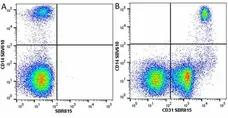
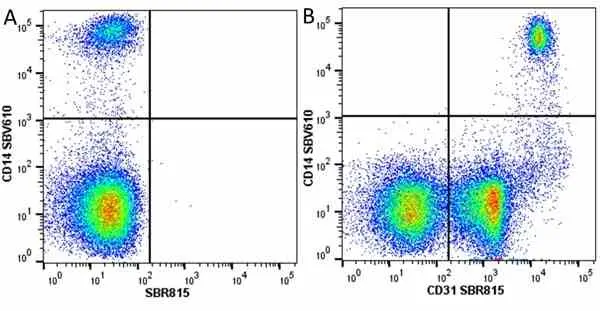
Figure B. StarBright Blue 610 conjugated Mouse anti Human CD14 antibody, clone TüK4 (MCA1568SBV610) and StarBright Red 815 conjugated Mouse anti Human CD31 antibody, clone WM59 (MCA1738SBR815). All experiments performed on red cell lysed human blood gated on live single cell lymphocytes, in the presence of 10% human serum.
Data acquired on the ZE5 Cell analyser.
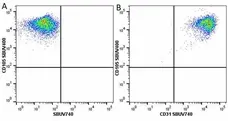
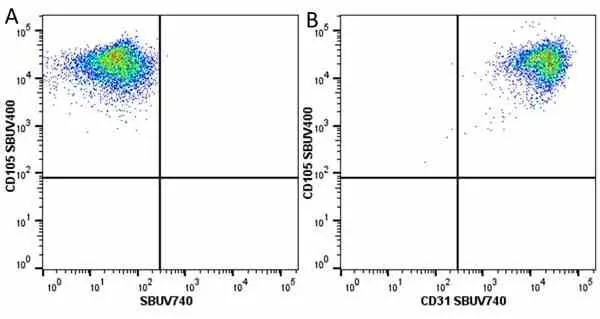
Figure B. StarBright UltraViolet 400 conjugated Mouse anti Human CD105 antibody, clone SN6 (MCA1557SBV610) and StarBright UltraViolet 740 conjugated Mouse anti Human CD31 antibody, clone WM59 (MCA1738SBUV740). All experiments performed on HUVECs gated on live single cells, in the presence of 10% human serum.
Data acquired on the ZE5 Cell analyser.
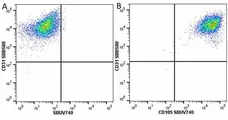
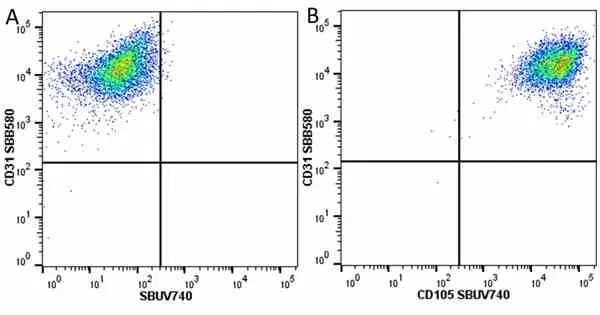
Figure B. StarBright Blue 580 conjugated Mouse anti Human CD31 antibody, clone WM59 (MCA1738SBB580) and StarBright UltraViolet 740 conjugated Mouse anti Human CD105 antibody, clone SN6 (MCA1557SBUV740). All experiments performed on HUVECs gated on live single cells, in the presence of 10% human serum.
Data acquired on the ZE5 Cell analyser.
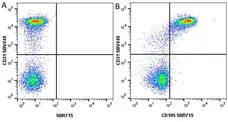
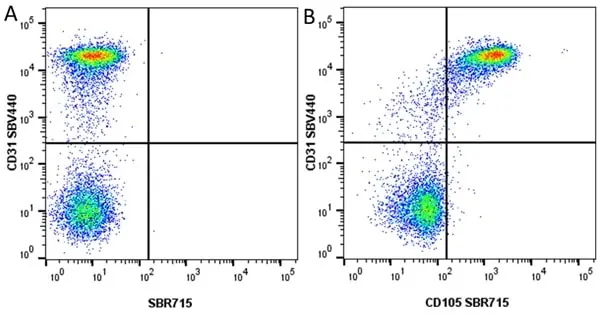
Figure B. StarBright Violet 440 conjugated Mouse anti Human CD31 antibody, clone WM59 (MCA1738SBV440) and StarBright Red 715 conjugated Mouse anti Human CD105 antibody, clone SN6 (MCA1557SBR715). All experiments performed on human blood gated on live single cell monocytes, in the presence of 10% human serum.
Data acquired on the ZE5 Cell analyser.
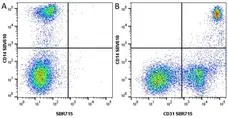
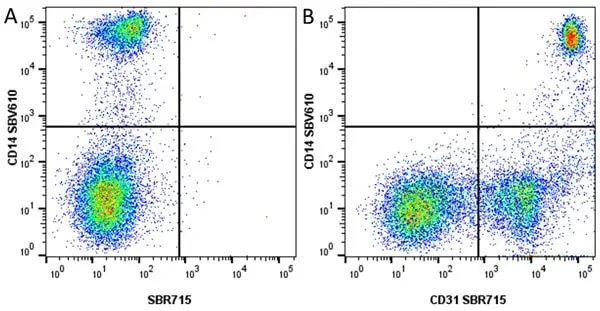
Figure B. StarBright Violet 610 conjugated Mouse anti Human CD14 antibody, clone TüK4 (MCA1568SBV610) and StarBright Red 715 conjugated Mouse anti Human CD31 antibody, clone WM59 (MCA1738SBR715). All experiments performed on human blood gated on live single cell monocytes, in the presence of 10% human serum.
Data acquired on the ZE5 Cell analyser.
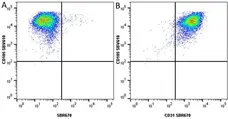
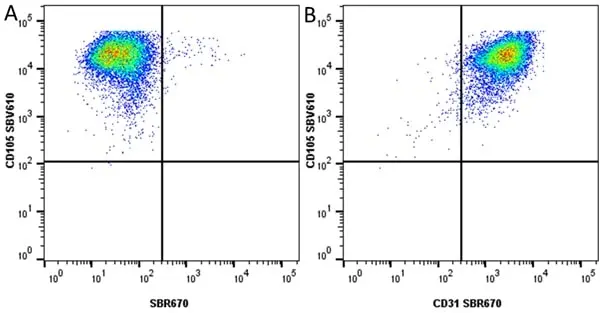
Figure B. StarBright Violet 610 conjugated Mouse anti Human CD105 antibody, clone SN6 (MCA1557SBV610) and StarBright Red 670 conjugated Mouse anti Human CD31 antibody, clone WM59 (MCA1738SBR670). All experiments performed on HUVECs gated on live single cells, in the presence of 10% human serum.
Data acquired on the ZE5 Cell analyser.
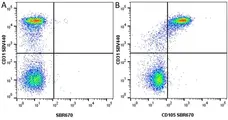
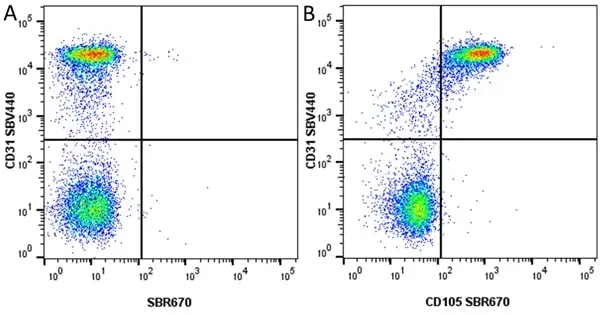
Figure B. StarBright Violet 440 conjugated Mouse anti Human CD31 antibody, clone WM59 (MCA1738SBV440) and StarBright Red 670 conjugated Mouse anti Human CD105 antibody, clone SN6 (MCA1557SBR670). All experiments performed on red cell lysed human blood gated on live single cell monocytes, in the presence of 10% human serum.
Data acquired on the ZE5 Cell analyser.
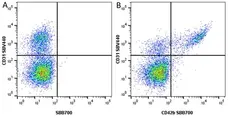
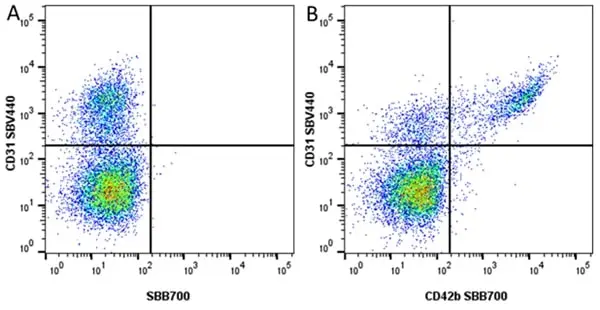
Figure B. StarBright Violet 440 conjugated Mouse anti Human CD31 antibody, clone WM59 (MCA1738SBV440) and StarBright Blue 700 conjugated Mouse anti Human CD42b antibody, clone AK2 (MCA740SBB700).
All experiments performed on red cell lysed human blood gated on live platelets, in the presence of 10% human serum. Data acquired on the ZE5 Cell Analyzer.
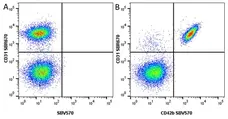
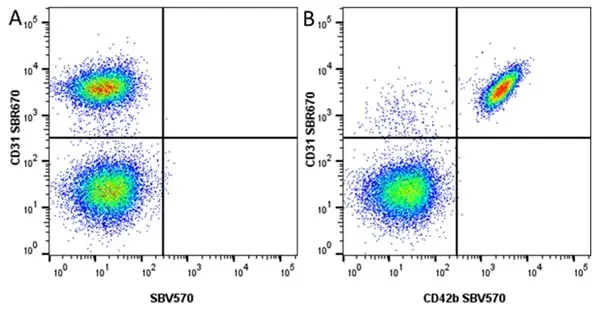
Figure B. StarBright Red 670 conjugated Mouse anti Human CD31 antibody, clone WM59 (MCA1738SBR670) and StarBright Violet 570 conjugated Mouse anti Human CD42b antibody, clone AK2 (MCA740SBV570).
All experiments performed on red cell lysed human blood gated on live platelets, in the presence of 10% human serum. Data acquired on the ZE5 Cell analyser.
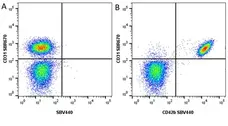
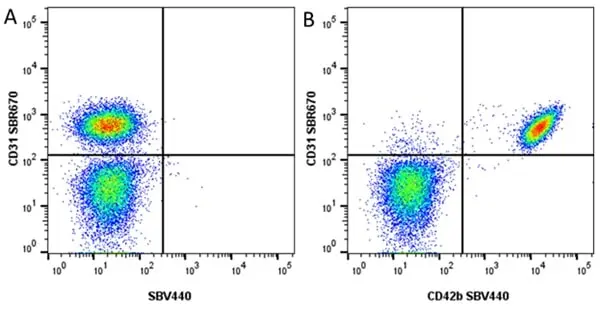
Figure B. StarBright Red 670 conjugated Mouse anti Human CD31 antibody, clone WM59 (MCA1738SBR670) and StarBright Violet 440 conjugated Mouse anti Human CD42b antibody, clone AK2 (MCA740SBV440). All experiments performed on red cell lysed human blood gated on live platelets, in the presence of 10% human serum.
Data acquired on the ZE5 Cell analyser.
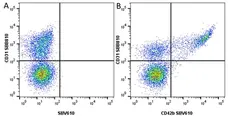
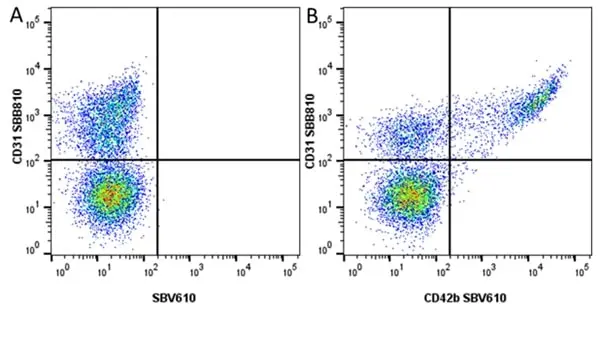
Figure B. StarBright Blue 810 conjugated Mouse anti Human CD31 antibody, clone WM59 (MCA1738SBB810) and StarBright Violet 610 conjugated Mouse anti Human CD42b antibody, clone AK2 (MCA740SBV610). All experiments performed on red cell lysed human blood gated on live platelets, in the presence of 10% human serum.
Data acquired on the ZE5 Cell analyser.
Filter by Application:
F IF Reset| Mouse anti Human CD31 antibody, clone WM59, recognizes CD31, also known as platelet endothelial cell adhesion molecule 1 (PECAM-1), endoCAM and GPIIA'. CD31 is a single-pass type I transmembrane glycoprotein belonging to the immunoglobulin superfamily, bearing six Ig-like domains. It is expressed on the surface of endothelial cells, platelets, monocytes, neutrophils, and some types of T-cells. CD31 forms homotypic and heterotypic interactions, including with CD38 and CD117. It is involved in various cellular processes, including the mediation of adhesion and transmigration of leukocytes across the endothelium, angiogenesis, wound healing, inflammation, and thrombosis. CD31 is used to identify vascular tumors, such as angiosarcoma and hemangioma, and endothelial cells in normal and pathological tissues. CD31 expression is also a marker of endothelial dysfunction and atherosclerosis, and can be modulated by various factors, such as cytokines, shear stress, and hypoxia. Mutations in the PECAM1 gene encoding CD31 can cause platelet-type bleeding disorder 11, a rare condition characterized by mild to moderate bleeding tendency. The binding epitope for mouse anti human CD31 antibody, clone WM59, has been mapped to the Ig-like domain 2 (Fawcett et al. 1995). Mouse anti human CD31 antibody, clone WM59, is also available as a recombinant antibody (TZA1738). |
- Target Species
- Human
- Species Cross-Reactivity
-
Target Species Cross Reactivity Cynomolgus monkey Rhesus Monkey - N.B. Antibody reactivity and working conditions may vary between species.
- Product Form
- Purified IgG - liquid
- Preparation
- Purified IgG prepared by affinity chromatography on Protein A from tissue culture supernatant
- Buffer Solution
- Phosphate buffered saline
- Preservative Stabilisers
- 0.09% sodium azide (NaN3)
- Carrier Free
- Yes
- Approx. Protein Concentrations
- IgG concentration 1.0mg/ml
- Regulatory
- For research purposes only
- Guarantee
- 12 months from date of despatch
This product is shipped at ambient temperature. It is recommended to aliquot and store at -20°C on receipt. When thawed, aliquot the sample as needed. Keep aliquots at 2-8°C for short term use (up to 4 weeks) and store the remaining aliquots at -20°C.
Avoid repeated freezing and thawing as this may denature the antibody. Storage in frost-free freezers is not recommended.
Avoid repeated freezing and thawing as this may denature the antibody. Storage in frost-free freezers is not recommended.
This product has been reported to work in the following applications. This information is derived from testing within our laboratories, peer-reviewed publications or personal communications from the originators. Please refer to references indicated for further information. For general protocol recommendations, please visit the antibody protocols page.
| Application Name | Verified | Min Dilution | Max Dilution |
|---|---|---|---|
| Flow Cytometry |  |
1/50 | 1/100 |
| Immunofluorescence | |
||
| Immunoprecipitation | |
Where this product has not been tested for use in a particular technique this does not necessarily exclude its use in such procedures. Suggested working dilutions are given as a guide only. It is recommended that the user titrates the product for use in their own system using appropriate negative/positive controls.
- Flow Cytometry
- Use 10μl of the suggested working dilution to label 106 cells in 100μl
| Description | Product Code | Applications | Pack Size | List Price | Your Price | Quantity | |
|---|---|---|---|---|---|---|---|
| Mouse IgG1 Negative Control | MCA928 | F | 100 Tests |

|
Log in | ||
| List Price | Your Price | ||||||
|
|
Log in | ||||||
| Description | Mouse IgG1 Negative Control | ||||||
References for CD31 antibody
-
Paul, G. et al. (2012) The adult human brain harbors multipotent perivascular mesenchymal stem cells.
PLoS One. 7: e35577. -
Urquhart, P. et al. (2007) Carbon monoxide-releasing molecules modulate leukocyte-endothelial interactions under flow.
J Pharmacol Exp Ther. 321 (2): 656-62. -
Reedquist, K.A. et al. (2000) The small GTPase, Rap1, mediates CD31-induced integrin adhesion.
J Cell Biol. 148: 1151-8. -
Vernon-Wilson, E.F. et al. (2007) CD31 delays phagocyte membrane repolarization to promote efficient binding of apoptotic cells.
J Leukoc Biol. 82: 1278-88. -
Hilbe W et al. (2003) Immunohistochemical typing of non-small cell lung cancer on cryostat sections: correlation with clinical parameters and prognosis.
J Clin Pathol. 56 (10): 736-41. -
Stein, A. et al. (2010) Local erythropoietin and endothelial progenitor cells improve regional cardiac function in acute myocardial infarction.
BMC Cardiovasc Disord. Sep; 10:43. -
Woollard, K.J. et al. (2002) Direct modulatory effect of C-reactive protein on primary human monocyte adhesion to human endothelial cells.
Clin Exp Immunol. 130: 256-62. -
Theberge, A.B. et al. (2015) Microfluidic multiculture assay to analyze biomolecular signaling in angiogenesis.
Anal Chem. 87 (6): 3239-46.
View The Latest Product References
-
Hilbe W et al. (2004) CD133 positive endothelial progenitor cells contribute to the tumour vasculature in non-small cell lung cancer.
J Clin Pathol. 57 (9): 965-9. -
Palakkan, A.A. et al. (2015) Polarisation and functional characterisation of hepatocytes derived from human embryonic and mesenchymal stem cells.
Biomed Rep. 3 (5): 626-636. -
Newey SE et al. (2014) The hematopoietic chemokine CXCL12 promotes integration of human endothelial colony forming cell-derived cells into immature vessel networks.
Stem Cells Dev. 23 (22): 2730-43. -
Fabre-Mersseman V et al. (2011) CD4⁺ recent thymic emigrants are infected by HIV in vivo, implication for pathogenesis.
AIDS. 25 (9): 1153-62. -
Patten PE et al. (2008) CD38 expression in chronic lymphocytic leukemia is regulated by the tumor microenvironment.
Blood. 111 (10): 5173-81. -
Katz SC et al. (2004) Liver sinusoidal endothelial cells are insufficient to activate T cells.
J Immunol. 173 (1): 230-5. -
Pfisterer K et al. (2015) CD90(+) human dermal stromal cells are potent inducers of FoxP3(+) regulatory T cells.
J Invest Dermatol. 135 (1): 130-41. -
Hale, S.J. et al. (2015) CXCR2 modulates bone marrow vascular repair and haematopoietic recovery post-transplant.
Br J Haematol. 169 (4): 552-64. -
Muthana, M. et al. (2015) Directing cell therapy to anatomic target sites in vivo with magnetic resonance targeting.
Nat Commun. 6: 8009. -
Schuster, C. et al. (2015) Development of Blood and Lymphatic Endothelial Cells in Embryonic and Fetal Human Skin.
Am J Pathol. 185 (9): 2563-74. -
Somers, E. et al. (2016) Vascular Defects and Spinal Cord Hypoxia in Spinal Muscular Atrophy.
Ann Neurol. 79 (2): 217-30. -
Soh, B.S. et al. (2016) Endothelin-1 supports clonal derivation and expansion of cardiovascular progenitors derived from human embryonic stem cells.
Nat Commun. 7: 10774. -
GarikipatiV, N.S. et al. (2018) Isolation and characterization of mesenchymal stem cells from human fetus heart.
PLoS One. 13 (2): e0192244. -
Duque, J.C. et al. (2019) Vascularization of the arteriovenous fistula wall and association with maturation outcomes.
J Vasc Access. : 1129729819863584. [Epub ahead of print] -
Kim, J.S. et al. (2021) Randomization to Omega-3 Fatty Acid Supplementation and Endothelial Function in COPD: The COD-Fish Randomized Controlled Trial.
Chronic Obstr Pulm Dis. 8(1): 41-53. -
Bye, A.P. et al. (2018) Immobilization of Nonactivated Unfixed Platelets for Real-Time Single-Cell Analysis.
Methods Mol Biol. 1812: 1-11. -
Chai, S. et al. (2022) Identification of epithelial and mesenchymal circulating tumor cells in clonal lineage of an aggressive prostate cancer case.
NPJ Precis Oncol. 6 (1): 41. -
Bettin, L. et al. (2023) Co-stimulation by TLR7/8 ligand R848 modulates IFN-γ production of porcine γδ T cells in a microenvironment-dependent manner.
Dev Comp Immunol. 138: 104543. -
Seo, J. et al. (2023) Plasticity of circulating tumor cells in small cell lung cancer.
Sci Rep. 13 (1): 11775. -
Shishido, S.N. et al. (2024) Cancer-related cells and oncosomes in the liquid biopsy of pancreatic cancer patients undergoing surgery.
NPJ Precis Oncol. 8 (1): 36. -
Bai, L. et al. (2024) Longitudinal tracking of circulating rare events in the liquid biopsy of stage III-IV non-small cell lung cancer patients.
Discov Oncol. 15 (1): 142.
Further Reading
-
DeLisser, H.M. et al. (1994) Molecular and functional aspects of PECAM-1/CD31.
Immunol Today. 15 (10): 490-5.

View more products with CD31 specificity
Please Note: All Products are "FOR RESEARCH PURPOSES ONLY"
View all Anti-Human ProductsAlways be the first to know.
When we launch new products and resources to help you achieve more in the lab.
Yes, sign me up