Alexa Fluor 647 Conjugated Antibodies
Overview
Alexa Fluor® 647 dyes, part of our Alexa Fluor fluorescent conjugates range, give you a superior far-red fluorophore that is commonly used in flow cytometry and immunofluorescence / confocal microscopy applications.
Sometimes referred to as AF647, Alexa Fluor 647 dyes are:
- Bright and stable
- Excited by a helium-neon laser or a red diode laser
- Usually detected in the same fluorescence channel as Cy5
- Alternative for Cy5 conjugates
- Brighter and more photostable than Cy5
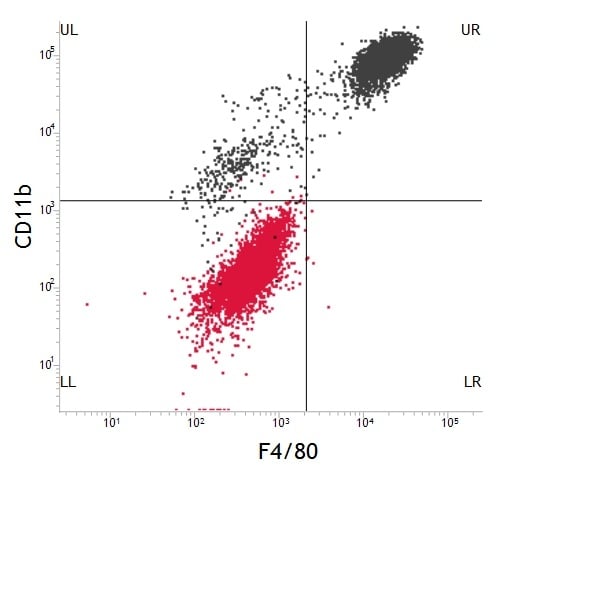
Fig. 1. Dot Blot showing FSC/SSC gated mouse peritoneal macrophages dual stained with F4/80 antibody, FITC (MCA497F) at a 1/5 dilution and CD11b antibody (MCA74A647) at a 1/5 dilution. Isotype control pair in red. Fc receptors were blocked by mouse Seroblock (BUF041B).
Technical Features of Alexa Fluor 488 Dye
| Fluorochrome | Maximal absorbance (nm) | Maximal emission (nm) | Flow cytometry | Confocal microscopy | Color |
|---|---|---|---|---|---|
| Alexa Fluor 647 | 650 | 665 | Yes | Yes | Near-IR |
Antibodies Conjugated to Alexa Fluor 647
Bio-Rad offers primary antibodies conjugated to Alexa Fluor 647 across human, hamster, mouse, and rat catalog ranges.
Alexa Fluor 647 dye molecules have the ability to bind to proteins in high molar ratios without considerable self-quenching. This results in the formation of more radiant conjugates and improved detection sensitivity. Due to these properties, it is an outstanding option for the highly sensitive detection of biological structures that are present in low quantities.
Please use the filters to sort the attributes in the table below in order to find the antibody that fits your exact requirements. If you need any further assistance please do not hesitate to contact us.
AF647 Conjugated Antibodies
| Description | Target | Format | Clone | Applications | Citations | Code |
|---|
Fluorophore Dyes
Other dye formats available in our flow cytometry range include:
More details on emission and excitation values can be found on our Fluorophores page.
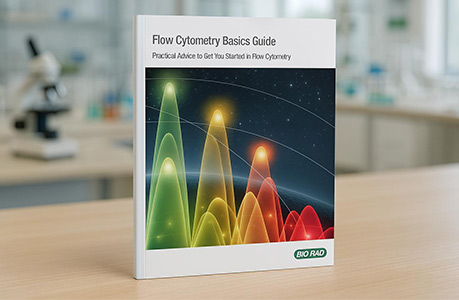
Flow Cytometry Basics Guide
Practical advice to get you started in flow cytometry
Keep up to date with recent advances by downloading our popular Flow Cytometry Basics Guide, which not only provides practical advice and best practice examples when planning multicolor experiments, but also a basic overview of all the important flow cytometry principles.
This comprehensive guide is split into nine easy-to-read chapters covering 54 pages, making this ideal for beginners wanting to gain confidence when planning experiments, and can also be used as a teaching aid.