Mono-ADP-Ribose antibody | AbD41122
anti Mono-ADP-Ribose
- Product Type
- Monoclonal Antibody
- Clone
- AbD41122
- Isotype
- Fab antibody
- Specificity
- Mono-ADP-Ribose
 Antibody Quality and Performance Guarantee

Recombinant Antibodies


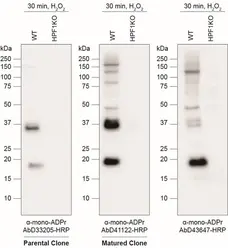
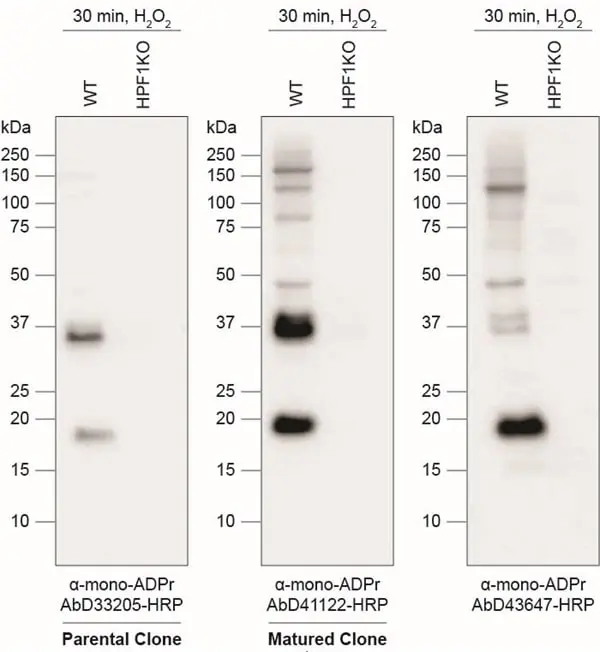
Image courtesy of the Matić research group (Max Planck Institute for Biology of Ageing).
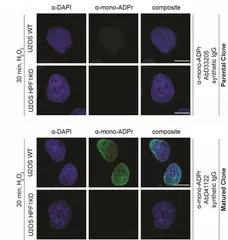
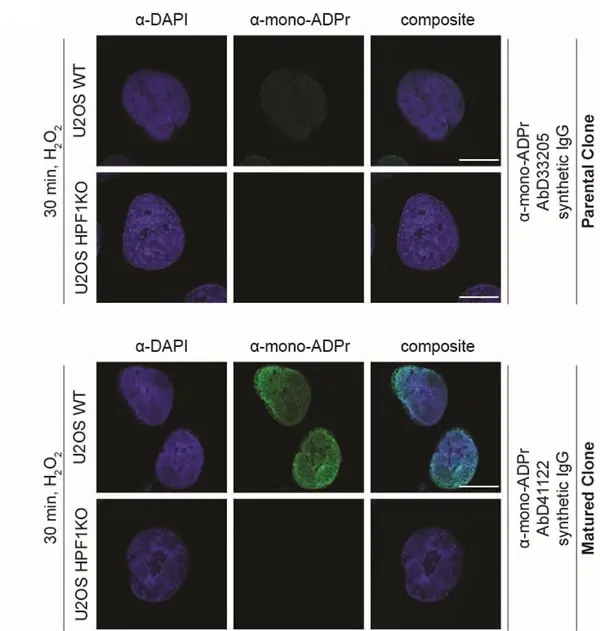
Image courtesy of the Matić research group (Max Planck Institute for Biology of Ageing).
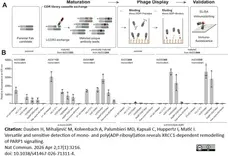
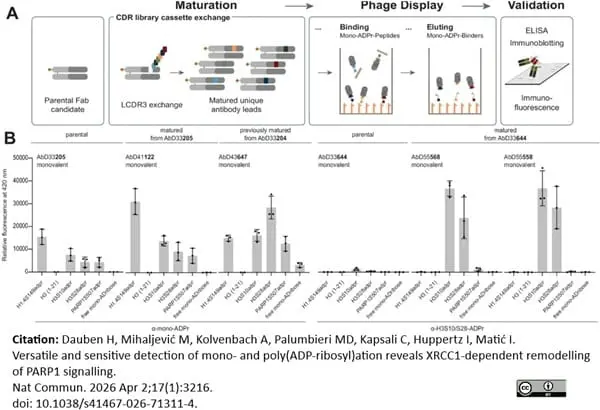
Human anti mono ADP ribose antibody, clone AbD41122 (TZA0118) conjugated to HRP via spycatcher HRP (TZC002P) used to detect ADP ribose by FLIA.
Image caption:
A Schematic illustration of the affinity maturation process. Illustrations generated in Adobe Illustrator. Schematics adapted from Dauben et al.20. B ELISA analysis of antibody specificities using the indicated antibodies (2 μg/mL) and biotinylated peptides (61 nM). Bars represent the arithmetic mean of 3 independent experiments. Error bars represent SD. C Left: Dot Blot analysis of isolated RNA from U2OS cells before and after glucose starvation. Right: Enzymatic digestion control of isolated RNA. Detection was done in parallel, resulting in comparable signal intensities. N = 3.
From: Dauben H, Mihaljević M, Kolvenbach A, Palumbieri MD, Kapsali C, Huppertz I, Matić I.
Versatile and sensitive detection of mono- and poly(ADP-ribosyl)ation reveals XRCC1-dependent remodelling of PARP1 signalling.
Nat Commun. 2026 Apr 2;17(1):3216.
doi: 10.1038/s41467-026-71311-4.
This image is from an open access article distributed under terms of a Creative Commons Attribution License.
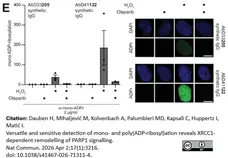
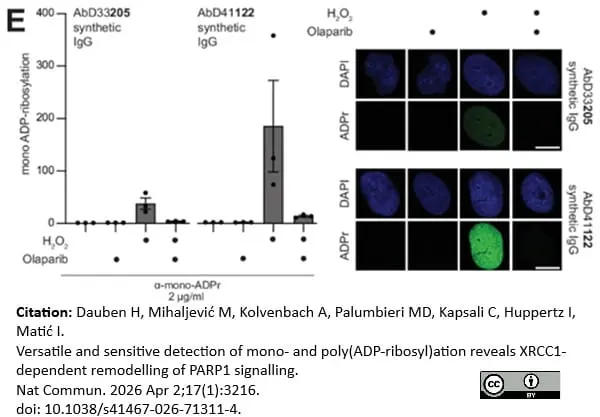
Human anti mono ADP ribose antibody, clone AbD41122 (TZA0118) used to detect ADP ribose by immunofluorescence.
Image caption:
E Immunofluorescent staining of mono-ADPr in 2 mM H2O2-treated WT U2OS cells with and without 1 μM Olaparib treatment using the indicated antibodies. Detection was done in parallel, resulting in comparable signal intensities. Signals are normalised to WT untreated conditions. Error bars represent SEM. Combined Analysis of 3 Biological Replicates. Representative Images from 1 Biological Replicate. Scale bar, 10 μM.
Nat Commun. 2026 Apr 2;17(1):3216.
doi: 10.1038/s41467-026-71311-4.
This image is from an open access article distributed under terms of a Creative Commons Attribution License.
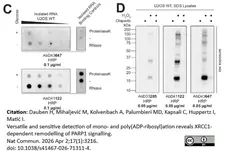
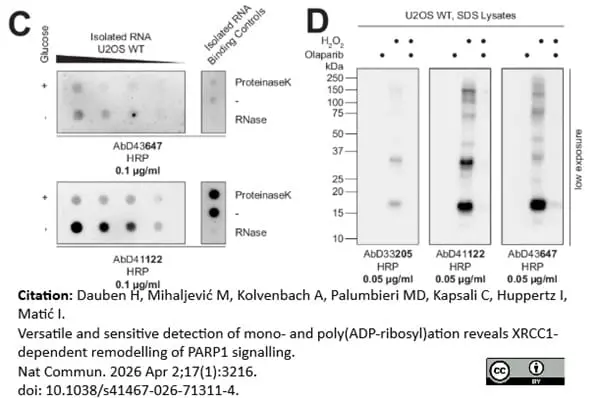
Human anti poly ADP ribose antibody, clone AbD41122 (TZA0118) conjugated to HRP via spycatcher HRP (TZC002P) used to detect ADP ribose by western and dot blotting.
Image caption:
C Left: Dot Blot analysis of isolated RNA from U2OS cells before and after glucose starvation. Right: Enzymatic digestion control of isolated RNA. Detection was done in parallel, resulting in comparable signal intensities. N = 3. D Immunoblot analysis of SDS cell extracts from 2 mM H2O2-treated wild-type (WT) U2OS cells with and without 1 μM Olaparib treatment with the indicated antibodies. Detection was done in parallel, resulting in comparable signal intensities. Red colour represents a saturated signal. N = 3.
From: Dauben H, Mihaljević M, Kolvenbach A, Palumbieri MD, Kapsali C, Huppertz I, Matić I.
Versatile and sensitive detection of mono- and poly(ADP-ribosyl)ation reveals XRCC1-dependent remodelling of PARP1 signalling.
Nat Commun. 2026 Apr 2;17(1):3216.
doi: 10.1038/s41467-026-71311-4.
This image is from an open access article distributed under terms of a Creative Commons Attribution License.
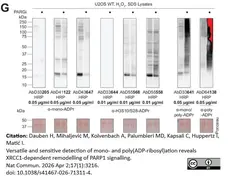
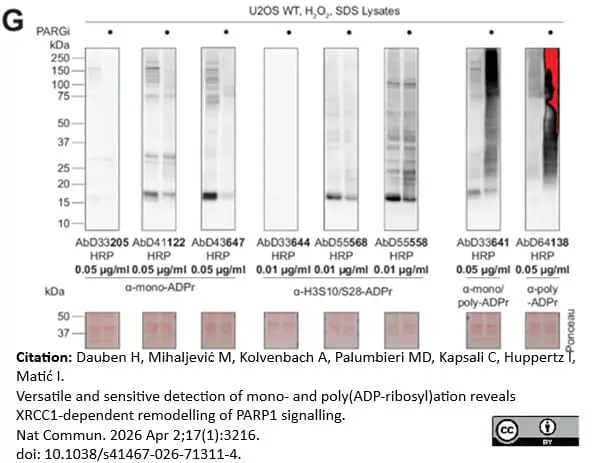
Human anti mono ADP ribose antibody, clone AbD41122 (TZA0118) conjugated to HRP via spycatcher HRP (TZC002P) used to detect ADP ribose by western blotting.
Image caption:
G. Immunoblot analysis of SDS cell extracts from 2 mM H2O2-treated wild-type (WT) U2OS cells with and without 1 μM PARG inhibition treatment with the indicated antibodies. Detection was done in parallel, resulting in comparable signal intensities. Red colour represents a saturated signal. N = 3.
From: Dauben H, Mihaljević M, Kolvenbach A, Palumbieri MD, Kapsali C, Huppertz I, Matić I.
Versatile and sensitive detection of mono- and poly(ADP-ribosyl)ation reveals XRCC1-dependent remodelling of PARP1 signalling.
Nat Commun. 2026 Apr 2;17(1):3216.
doi: 10.1038/s41467-026-71311-4.
This image is from an open access article distributed under terms of a Creative Commons Attribution License.
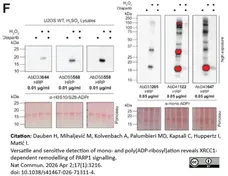
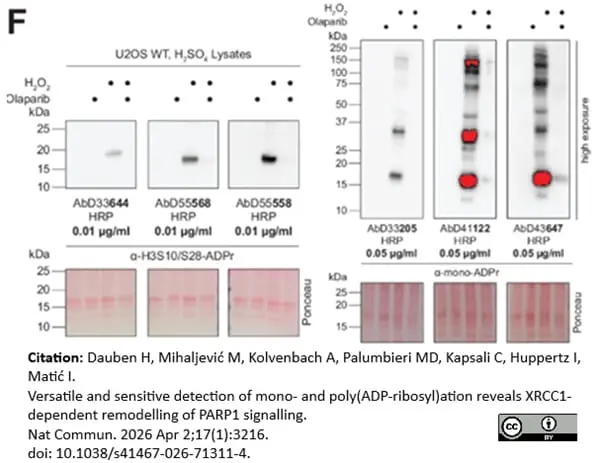
Human anti mono ADP ribose antibody, clone AbD41122 (TZA0118) conjugated to HRP via spycatcher HRP (TZC002P) used to detect ADP ribose by western blotting.
Image caption:
F. Immunoblot analysis of H2SO4 cell extracts from 2 mM H2O2-treated wild-type (WT) U2OS cells with and without 1 μM Olaparib treatment with H3S10/S28-ADPr site-specific antibodies. Detection was done in parallel, resulting in comparable signal intensities. N = 3.
From: Dauben H, Mihaljević M, Kolvenbach A, Palumbieri MD, Kapsali C, Huppertz I, Matić I.
Versatile and sensitive detection of mono- and poly(ADP-ribosyl)ation reveals XRCC1-dependent remodelling of PARP1 signalling.
Nat Commun. 2026 Apr 2;17(1):3216.
doi: 10.1038/s41467-026-71311-4.
This image is from an open access article distributed under terms of a Creative Commons Attribution License.
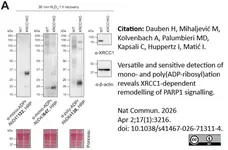
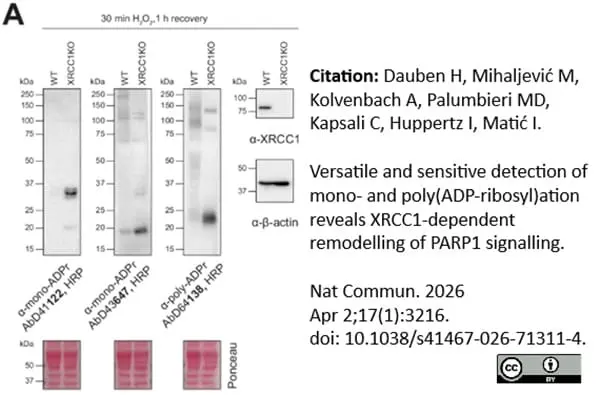
Human anti mono ADP ribose antibody, clone AbD41122 (TZA0118) conjugated to HRP via spycatcher HRP (TZC002P) used to detect ADP ribose by western blotting.
Image caption:
A Immunoblot analysis of SDS cell extracts from 30 min 150 μM H2O2-treated followed by 1 h drug-free medium recovered wild-type (WT) and XRCC1KO hTERT RPE1 cells with the indicated antibodies. N = 4.
From: Dauben H, Mihaljević M, Kolvenbach A, Palumbieri MD, Kapsali C, Huppertz I, Matić I.
Versatile and sensitive detection of mono- and poly(ADP-ribosyl)ation reveals XRCC1-dependent remodelling of PARP1 signalling.
Nat Commun. 2026 Apr 2;17(1):3216.
doi: 10.1038/s41467-026-71311-4.
This image is from an open access article distributed under terms of a Creative Commons Attribution License.
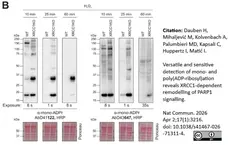
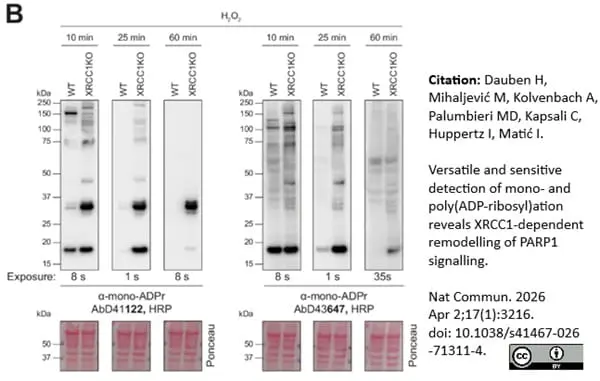
Human anti mono ADP ribose antibody, clone AbD41122 (TZA0118) conjugated to HRP via spycatcher HRP (TZC002P) used to detect ADP ribose by western blotting.
Image caption:
B. Immunoblot analysis of SDS cell extracts from continuously 150 μM H2O2-treated wild-type (WT) and XRCC1KO hTERT RPE1 cells for the indicated time points with the indicated antibodies. Time points are shown in separate panels because different exposure times were required to accurately capture signal intensities, as indicated. N = 5.
From: Dauben H, Mihaljević M, Kolvenbach A, Palumbieri MD, Kapsali C, Huppertz I, Matić I.
Versatile and sensitive detection of mono- and poly(ADP-ribosyl)ation reveals XRCC1-dependent remodelling of PARP1 signalling.
Nat Commun. 2026 Apr 2;17(1):3216.
doi: 10.1038/s41467-026-71311-4.
This image is from an open access article distributed under terms of a Creative Commons Attribution License.
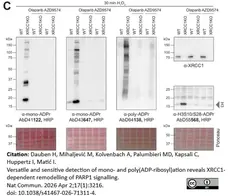
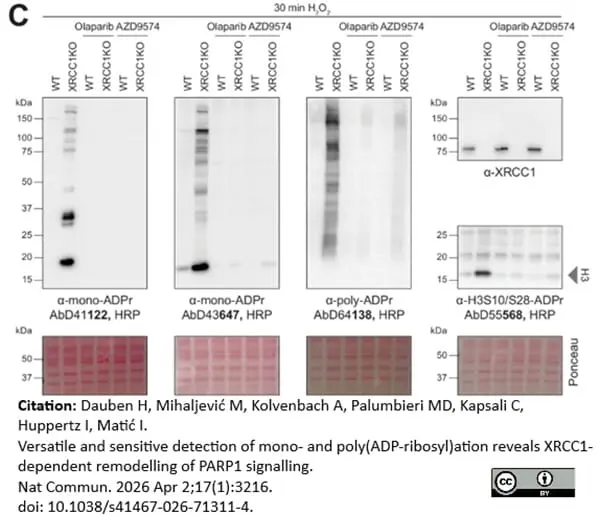
Human anti mono ADP ribose antibody, clone AbD41122 (TZA0118) conjugated to HRP via spycatcher HRP (TZC002P) used to detect ADP ribose by western blotting.
Image caption:
C. Immunoblot analysis of SDS cell extracts from 150 μM H2O2-treated wild-type (WT) and XRCC1KO hTERT RPE1 cells with and without PARP1 inhibition (1 μM Olaparib or 10 nM AZD9574) for the indicated time points with the indicated antibodies. N = 3.
Nat Commun. 2026 Apr 2;17(1):3216.
doi: 10.1038/s41467-026-71311-4.
This image is from an open access article distributed under terms of a Creative Commons Attribution License.
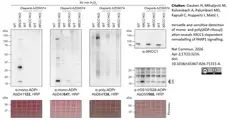
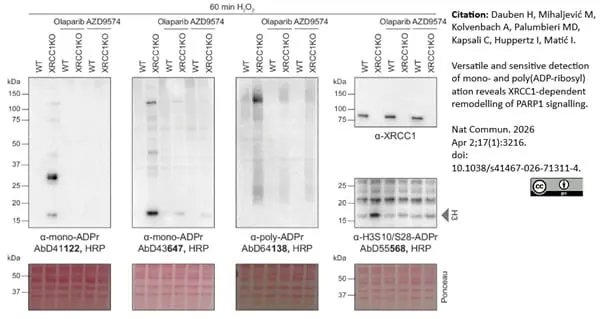
Human anti mono ADP ribose antibody, clone AbD41122 (TZA0118) conjugated to HRP via spycatcher HRP (TZC002P) used to detect ADP ribose by western blotting.
Image caption:
C. Immunoblot analysis of SDS cell extracts from 150 μM H2O2-treated wild-type (WT) and XRCC1KO hTERT RPE1 cells with and without PARP1 inhibition (1 μM Olaparib or 10 nM AZD9574) for the indicated time points with the indicated antibodies. N = 3.
Nat Commun. 2026 Apr 2;17(1):3216.
doi: 10.1038/s41467-026-71311-4.
This image is from an open access article distributed under terms of a Creative Commons Attribution License.
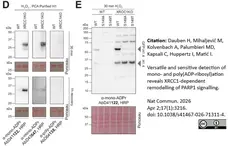
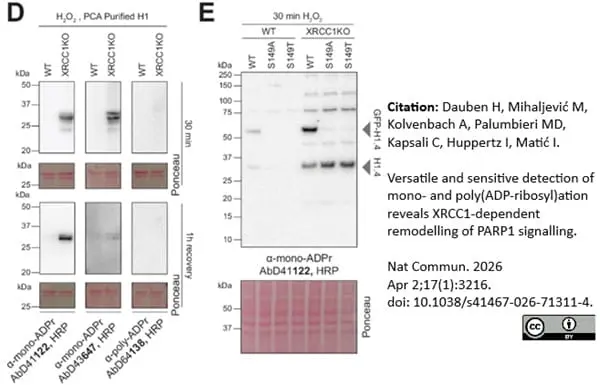
Human anti mono ADP ribose antibody, clone AbD41122 (TZA0118) conjugated to HRP via spycatcher HRP (TZC002P) used to detect ADP ribose by western blotting.
Image caption:
D. Immunoblot analysis of isolated Histone H1 using three step perchloric acid (PCA) lysis of WT and XRCC1KO hTERT RPE1 cells after 30 min 150 μM H2O2-treated followed or not by 1 h drug free medium recovery. N = 3. E Immunoblot analysis of WT and XRCC1KO hTERT RPE1 cells after 30 min 150 μM H2O2-treated with H1.4-GFP overexpression. N = 3.
From: Dauben H, Mihaljević M, Kolvenbach A, Palumbieri MD, Kapsali C, Huppertz I, Matić I.
Versatile and sensitive detection of mono- and poly(ADP-ribosyl)ation reveals XRCC1-dependent remodelling of PARP1 signalling.
Nat Commun. 2026 Apr 2;17(1):3216.
doi: 10.1038/s41467-026-71311-4.
This image is from an open access article distributed under terms of a Creative Commons Attribution License.
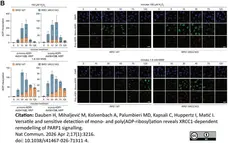
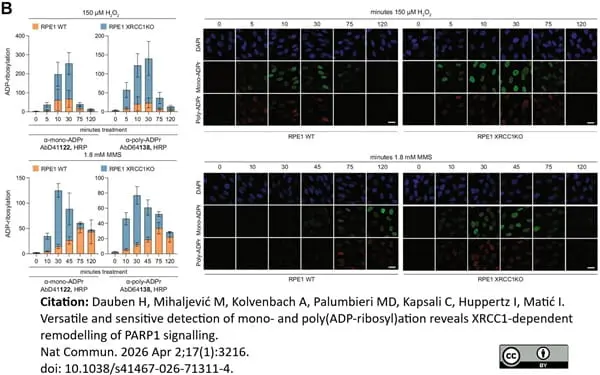
Human anti mono ADP ribose antibody, clone AbD41122 (TZA0118) used to detect ADP ribose by immunofluorescence.
Image caption:
B. Immunofluorescent co-staining of mono- and poly-ADPr in hTERT RPE1 WT or XRCC1KO cells followed by 150 μM H2O2 or 1.8 mM MMS treatment for the indicated time points. Left, quantitative analysis with error bars representing SEM. Signals are normalised to WT untreated conditions. Error bars represent SEM. Combined Analysis of 3 Biological Replicates (left). Representative Images from 1 Biological Replicate (right). Scale bar, 10 μM.
From: Dauben H, Mihaljević M, Kolvenbach A, Palumbieri MD, Kapsali C, Huppertz I, Matić I.
Versatile and sensitive detection of mono- and poly(ADP-ribosyl)ation reveals XRCC1-dependent remodelling of PARP1 signalling.
Nat Commun. 2026 Apr 2;17(1):3216.
doi: 10.1038/s41467-026-71311-4.
This image is from an open access article distributed under terms of a Creative Commons Attribution License.
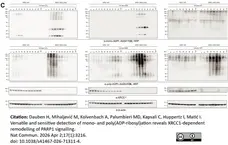
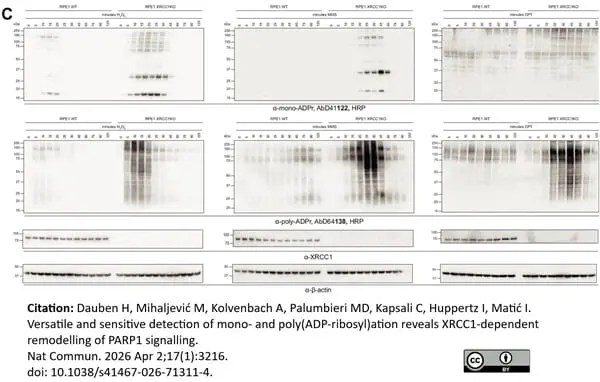
Human anti mono ADP ribose antibody, clone AbD41122 (TZA0118) conjugated to HRP via spycatcher HRP (TZC002P) used to detect ADP ribose by western blotting.
Image caption:
C. Immunoblot analysis of SDS cell extracts from continuously 150 μM H2O2, 1.8 mM MMS or 15 μM CPT-treated wild-type (WT) and XRCC1KO hTERT RPE1 cells for the indicated time points with the indicated antibodies. N = 3.
From: Dauben H, Mihaljević M, Kolvenbach A, Palumbieri MD, Kapsali C, Huppertz I, Matić I.
Versatile and sensitive detection of mono- and poly(ADP-ribosyl)ation reveals XRCC1-dependent remodelling of PARP1 signalling.
Nat Commun. 2026 Apr 2;17(1):3216.
doi: 10.1038/s41467-026-71311-4.
This image is from an open access article distributed under terms of a Creative Commons Attribution License.
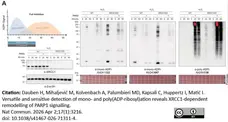
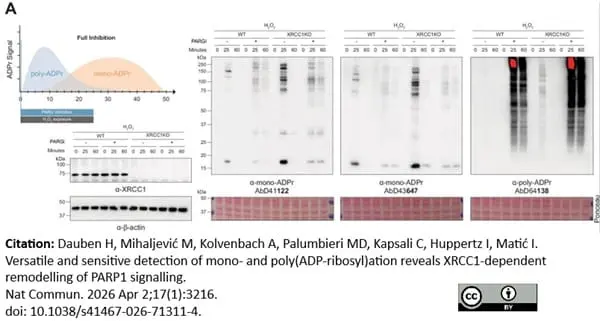
Human anti mono ADP ribose antibody, clone AbD41122 (TZA0118) conjugated to HRP via spycatcher HRP (TZC002P) used to detect ADP ribose by western blotting.
Image caption:
A. Illustration showing the experimental set-up for full PARG inhibition (left top). Immunoblot analysis of SDS cell extracts from 150 μM H2O2-treated wild-type (WT) and XRCC1KO hTERT RPE1 cells with and without 1 μM PARG inhibition for the indicated time points with the indicated antibodies (right). N = 3.
From: Dauben H, Mihaljević M, Kolvenbach A, Palumbieri MD, Kapsali C, Huppertz I, Matić I.
Versatile and sensitive detection of mono- and poly(ADP-ribosyl)ation reveals XRCC1-dependent remodelling of PARP1 signalling.
Nat Commun. 2026 Apr 2;17(1):3216.
doi: 10.1038/s41467-026-71311-4.
This image is from an open access article distributed under terms of a Creative Commons Attribution License.
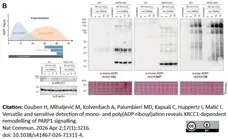
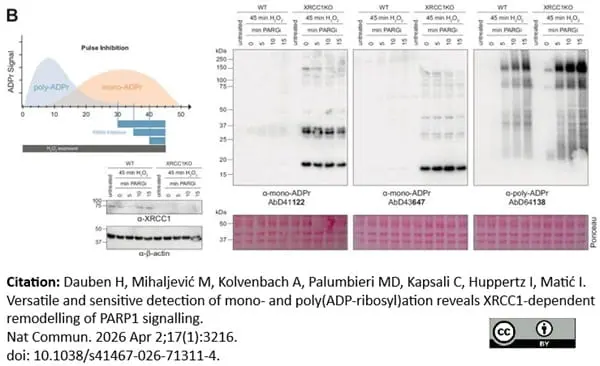
Human anti mono ADP ribose antibody, clone AbD41122 (TZA0118) conjugated to HRP via spycatcher HRP (TZC002P) used to detect ADP ribose by western blotting.
Image caption:
B. Illustration showing experimental set-up for pulse PARG inhibition (left top). Immunoblot analysis of SDS cell extracts from wild-type (WT) and XRCC1KO hTERT RPE1 cells with late PARG inhibition (10 μM) for the indicated time points before harvesting at 45 min after 150 μM H2O2-treatment with the indicated antibodies (right). N = 3.
From: Dauben H, Mihaljević M, Kolvenbach A, Palumbieri MD, Kapsali C, Huppertz I, Matić I.
Versatile and sensitive detection of mono- and poly(ADP-ribosyl)ation reveals XRCC1-dependent remodelling of PARP1 signalling.
Nat Commun. 2026 Apr 2;17(1):3216.
doi: 10.1038/s41467-026-71311-4.
This image is from an open access article distributed under terms of a Creative Commons Attribution License.
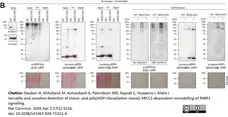
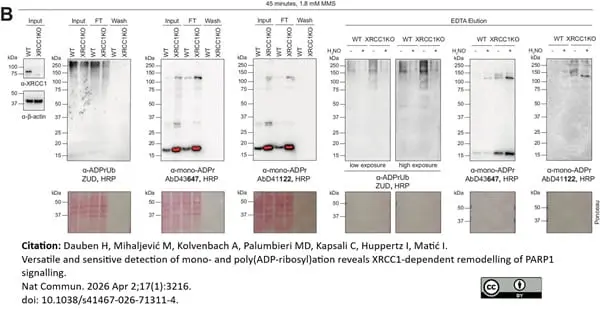
Human anti mono ADP ribose antibody, clone AbD41122 (TZA0118) conjugated to HRP via spycatcher HRP (TZC002P) used to detect ADP ribose by western blotting.
Image caption:
Immunoblot analysis of Streptavidin pulldown using biotin-coupled ZUD to enrich ADPrUb in 1.8 mM MMS treated hTERT RPE1 WT or XRCC1KO cells. Total cell lysates as Input, Elution performed with EDTA-containing non-denaturing buffer, to allow specific ADPrUb protein elution. Red colour represents a saturated signal. N = 3.
From: Dauben H, Mihaljević M, Kolvenbach A, Palumbieri MD, Kapsali C, Huppertz I, Matić I.
Versatile and sensitive detection of mono- and poly(ADP-ribosyl)ation reveals XRCC1-dependent remodelling of PARP1 signalling.
Nat Commun. 2026 Apr 2;17(1):3216.
doi: 10.1038/s41467-026-71311-4.
This image is from an open access article distributed under terms of a Creative Commons Attribution License.
Filter by Application:
WB IF FLA Reset| Anti mono-ADP-ribose antibody, clone AbD41122, recognizes mono-adenosine diphosphate (ADP)-ribosylation. ADP-ribosylation is a reversible post-translational modification that occurs in multicellular organisms as well as some lower unicellular eukaryotes, but is absent in prokaryotes and yeast (Bürkle 2005). ADP ribosylation has been shown to play critical roles in many physiological and pathological processes, including bacterial pathogenesis and signaling and metabolism to control chromatin-related processes including transcription and DNA repair (Bonfiglio et al. 2020, Bütepage et al. 2015). Members of the ADP-ribosyltransferase (ART) superfamily of proteins including the poly(ADP-ribose) polymerases (PARPs) subfamily, catalyze the transfer of ADP-ribose from nicotinamide adenine dinucleotide (NAD+) onto substrate protein via N-, O-, or S-glycosidic linkages. These transferases are able to transfer a single ADP-ribose residue to their substrate proteins, in a process known as mono-ADP-ribosylation (Bütepage et al. 2015). This anti mono-ADP-ribose antibody, clone AbD41122, is a high affinity mono-ADP-ribose antibody that has been affinity matured from the AbD33205 parental clone (TZA021). Compared to clone AbD43647 (TZA020), AbD41122 has a preference for protein mono-ADP-ribosylation, does not recognise free ADP-ribose and strongly recognizes histone H1 mono-ADP-ribosylation. Clone AbD41122 is tagged with a SpyTag at the C-terminus of the Fab heavy chain, enabling the user to couple to a SpyCatcher reagent for conversion to alternative formats in less than an hour. |
- Target Species
- Human
- Product Form
- A monovalent human recombinant Fab selected from the HuCAL® phage display library, expressed in a proprietary E. coli. strain. The antibody is tagged with a DYKDDDDK tag, a SpyTag version 2 (VPTIVMVDAYKRYK) and a His6-tag (HHHHHH) at the C-terminus of the antibody heavy chain. This antibody is supplied as a liquid.
- Preparation
- Recombinant Fab antibody expressed in E. coli and purified by affinity chromatography
- Source
- E. coli.
- Buffer Solution
- Phosphate buffered saline
- Preservative Stabilisers
- 0.0095% MIT
- Carrier Free
- Yes
- Immunogen
- KITPLKTS(ADPr)FKKKDQKRLGTGTLRGGK-(biotin)
- Approx. Protein Concentrations
- Total protein concentration 0.5 mg/ml
- Regulatory
- For research purposes only
- Guarantee
- 12 months from date of despatch
- Acknowledgements
- Bio-Rad has obtained the right for the manufacture and commercialization of the antibodies from Max-Planck-Innovation GmbH, the technology transfer office of the Max Planck Institute for Biology of Ageing. Further information on the Serine ADP-ribosylation technology used to generate and characterize the antibodies can be found here: Dauber et al. 2023 and Bonfiglio et al. 2020.
This product and/or its use is covered by claims of U.S. patents, and/or pending U.S. and non-U.S. patent applications owned by or under license to Bio-Rad Laboratories, Inc. See bio-rad.com/en-us/trademarks for details.
His-tag is a registered trademark of EMD Biosciences
This product is shipped at ambient temperature. It is recommended to aliquot and store at -20°C on receipt. When thawed, aliquot the sample as needed. Keep aliquots at 2-8°C for short term use (up to 4 weeks) and store the remaining aliquots at -20°C.
Avoid repeated freezing and thawing as this may denature the antibody. Storage in frost-free freezers is not recommended. Should this product contain a precipitate we recommend microcentrifugation before use.
Avoid repeated freezing and thawing as this may denature the antibody. Storage in frost-free freezers is not recommended. Should this product contain a precipitate we recommend microcentrifugation before use.
This product has been reported to work in the following applications. This information is derived from testing within our laboratories, peer-reviewed publications or personal communications from the originators. Please refer to references indicated for further information. For general protocol recommendations, please visit the antibody protocols page.
| Application Name | Verified | Min Dilution | Max Dilution |
|---|---|---|---|
| ELISA |  |
||
| Immunofluorescence | |
||
| Western Blotting | |
Where this product has not been tested for use in a particular technique this does not necessarily exclude its use in such procedures. Suggested working dilutions are given as a guide only. It is recommended that the user titrates the product for use in their own system using appropriate negative/positive controls.
References for Mono-ADP-Ribose antibody
-
Dauben, H. et al. (2026) Versatile and sensitive detection of mono- and poly(ADP-ribosyl)ation reveals XRCC1-dependent remodelling of PARP1 signalling.
Nat Commun. 17 (1): 3216.
Further Reading
-
Dauben, H. et al. (2023) A chemical biology/modular antibody platform for ADP-ribosylation signaling.
Trends Biochem Sci. 48 (10): 910-911. -
Bonfiglio, J.J & Matic, I. (2020) Site-Specific Serine Adp-Ribosylated Proteins And Peptides And Method For Producing The Same
World Intellectual Property Organization International Publication no. WO2020058277A1
TZA0118
 172237
If you cannot find the batch/lot you are looking for please contact our technical support team for assistance.
View more products with ADP-RIBOSE specificity
Please Note: All Products are "FOR RESEARCH PURPOSES ONLY"
View all Anti-Human ProductsAlways be the first to know.
When we launch new products and resources to help you achieve more in the lab.
Yes, sign me up