
Molecules of Equivalent Soluble Fluorochrome (MESF) Beads for Flow Cytometry
Overview
Flow cytometry is a powerful tool, but without standardization, fluorescence data can be difficult to compare across experiments, instruments, or time. There are several aspects to effective flow cytometry standardization, one of which is including MESF beads in experimental workflows. When validating assays, monitoring instrument performance, or publishing peer-reviewed data, MESF beads allow the move from relative fluorescence, such as median fluorescence intensity (MFI), to absolute quantification.
What Are MESF Beads?
MESF beads are calibration particles embedded with a known number of fluorophore molecules. Each bead population corresponds to a specific MESF value, allowing the:
- Creation of standard curves for fluorescence quantification
- Normalization of data across instruments and time points
- Report of fluorescence values in standardized units for reproducibility
- Instrument fluorescence detection threshold and instrument linearity
Why Use MESF Beads?
MESF beads are applicable in a variety of situations, as described in Table 1. Quantitative data reporting for fluorescent values is becoming more desirable for peer-reviewed publications; it makes the findings more robust and easier for the scientific community to interpret and replicate. For example, the guidelines for publishing flow cytometry results on extracellular vesicles (EVs) as outlined in The Minimum Information for Studies of Extracellular Vesicles (MISEV) and MIFlowCyt-EV recommend reporting in MESF values.
Table 1. Benefits of using MESF beads.
Benefit |
Description |
|---|---|
|
Standardize |
Compare fluorescence across different instruments, ideal when performing projects across multiple labs |
|
Quality control |
Compare fluorescence across time to monitor instrument performance |
|
Quantify |
Convert arbitrary units into meaningful MESF values |
|
Validate |
Support assay development and regulatory submissions |
|
Publish |
Report fluorescence in absolute terms for peer-reviewed studies |
How to Use MESF Beads
Using MESF beads is a simple three-step process:
1). Run the beads and your sample, which is labeled with the same fluorophore as the beads, on your flow cytometer using the same settings for both the beads and sample.
2). Plot a standard curve of median fluorescent intensity (MFI) versus MESF value for the bead populations.
3). Use this curve to determine the MESF value from your sample's MFI.
If MESF sample values differ between cytometers, check each instrument; confirm correct experimental setup, such as the correct detection filter is used, and use QC beads to confirm that each cytometer is operating within its expected range.
Differences may also result from lot-to-lot variation of reagents. If no issues are identified, data can be normalized to match MESF values across instruments.
Best Practices for Reliable Results
To get accurate data the most important factor is to maintain consistent instrument settings, such as laser power, and photomultiplier tube (PMT) or avalanche photodiode (APD) voltages should not be altered between running the calibration beads and samples of interest. Also, to obtain accurate readings, fluorescent samples should fall within the standard curve range.
MESF Range
Bio-Rad has three different MESF bead kits available (Table 2) for PE and FITC fluorophores. MESF beads help you achieve precision, consistency, and confidence in every experiment.
Table 2. MESF range and description.
Product |
Catalog number |
Description |
|---|---|---|
|
Quantum FITC-5 MESF (premixed) |
Two bottles: one blank and one containing a mix of beads labeled with five different FITC intensities |
|
|
Quantum FITC MESF |
Six bottles: one blank and five containing beads labeled with different FITC intensity |
|
|
Quantum R-PE MESF Medium level |
Five bottles: one blank and four containing beads labeled with different PE intensities. This medium intensity level spans the typical range for PE-conjugated antibodies against surface markers |
Flow Cytometry Resources
- Flow Cytometry Hub
- Multicolor Panel Builder
- Spectraviewer
- Flow Cytometry Design Tool
- Protocols
- Flow Cytometry Planner Tools
Flow Cytometry Products
- StarBright Dyes
- TrailBlazer Tag and StarBright Dye Label Kits
- Quantum Simply Cellular IgG beads
- Flow Cytometry Reagents
- Flow Cytometry Kits
Popular Resources
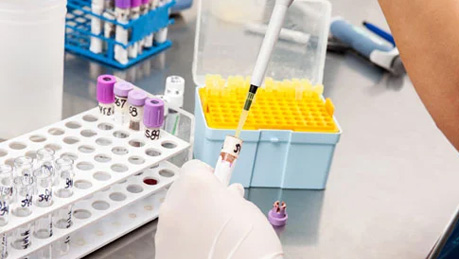
Blog: Sample Preparation in Flow Cytometry — Tips & Tricks
In this blog, we provide tips and advice on generating a high-quality sample for flow cytometry.
Quick Guide: How to Implement an Effective Flow Cytometry Gating Strategy
Download this quick guide to learn how to develop effective flow cytometry gating strategies, avoid common pitfalls such as false positives and missed rare populations, and generate reliable, reproducible data through a systematic approach to panel design and analysis.