Webinar: “Complex or not?” Immunoprecipitation (IP) Application
"Complex or not?" - Learn How to Use Immunoprecipitation to Analyze Protein-Protein Interactions and Protein Complexes
The “Complex or not?” webinar provides an overview of the immunoprecipitation (IP) procedure and hands-on-advice on how to design and control IP experiments. Special focus will be placed on helping you select reagents and elution methods for your experiments. To further assist you in mastering this technique the webinar will also cover common experimental pitfalls along with providing experimental troubleshooting advice. We recommend this webinar to IP novices and researchers with limited experience of using this technique.
This webinar will cover:
- IP procedure overview
- Experimental design (what beads to use, selecting the best antibody, elution methods)
- Best IP practices and controls
- Common pitfalls
- Setting up a co-immunoprecipitation experiment
- Troubleshooting tips
Presented by: Dr Rachael Preston (Development Scientist at Bio-Rad Laboratories)

Speaker Biography
Rachael graduated from the University of Glamorgan (United Kingdom) with a B.Sc. in Human Biology. She continued her education by obtaining a M.Sc. degree in Bioinformatics and a Ph.D. in Cancer Genetics from Cardiff University (United Kingdom). Her Ph.D. research, in the group of Dr. Andrew Tee, focused on characterizing the tumor suppression function of folliculin. Since leaving academic research, Rachael has worked as a development scientist; she has extensive experience in immunological techniques and antibody applications.
Related Pages
- 10 Tips for the western blot detection of IP samples
- Antibody binding affinities to Protein A and Protein G
- IP resources
- IP tested antibodies
- TidyBlot™ - for the Western blot detection of IP samples
- TidyBlot FAQs
- Western blot detection of IP samples
Popular Resources
Generate Western Blot Data You Can Trust
Best practices for image documentation, integrity, and verification.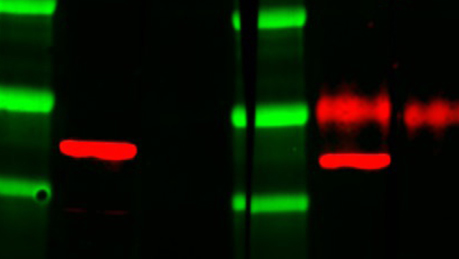
TidyBlot Western Blot Detection Reagent:HRP
TidyBlot Reagent:HRP is a western blotting detection reagent that specifically binds to native (non-reduced) antibodies.