CD227 antibody | C595 (NCRC48)
Mouse anti Human CD227:FITC
- Product Type
- Monoclonal Antibody
- Clone
- C595 (NCRC48)
- Isotype
- IgG3
- Specificity
- CD227
 Antibody Quality and Performance Guarantee


Filter by Application:
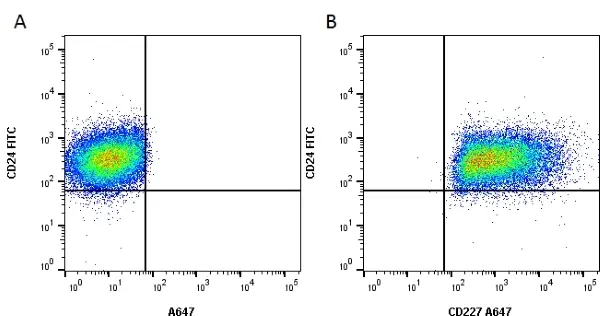
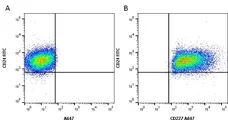
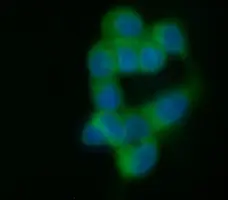
F E IF Reset| Mouse anti Human CD227 antibody, clone C595 (NCRC48) recognizes CD227, also known as mucin 1 which is a breast cancer associated mucin encoded by the Muc-1 gene. Mucins are a family of high molecular weight, heavily glycosylated proteins (glycoconjugates) produced by many epithelial tissues in vertebrates. CD227 is expressed on most secretory epithelium, including mammary gland and some hematopoietic cells. This protein is overexpressed abundantly in >90% breast carcinomas and metastases. Mouse anti Human CD227 antibody, clone C595 recognizes the peptide epitope ARG-PRO-ALA-PRO within the protein core of the mucin. |
- Target Species
- Human
- Product Form
- Purified IgG conjugated to Fluorescein Isothiocyanate Isomer 1 (FITC) - liquid
- Preparation
- Purified IgG prepared by affinity chromatography on Protein A from tissue culture supernatant
- Buffer Solution
- Phosphate buffered saline
- Preservative Stabilisers
- 0.09% sodium azide (NaN3)
1% bovine serum albumin - Immunogen
- Urinary MUC-1 mucin.
- Approx. Protein Concentrations
- IgG concentration 0.1 mg/ml
- Fusion Partners
- Spleen cells from immunised Balb/c mice were fused with cells of a mouse myeloma cell line.
- Max Ex/Em
-
Fluorophore Excitation Max (nm) Emission Max (nm) FITC 490 525 - Regulatory
- For research purposes only
- Guarantee
- 12 months from date of despatch
This product is shipped at ambient temperature. It is recommended to aliquot and store at -20°C on receipt. When thawed, aliquot the sample as needed. Keep aliquots at 2-8°C for short term use (up to 4 weeks) and store the remaining aliquots at -20°C.
Avoid repeated freezing and thawing as this may denature the antibody. Storage in frost-free freezers is not recommended. This product is photosensitive and should be protected from light.
Avoid repeated freezing and thawing as this may denature the antibody. Storage in frost-free freezers is not recommended. This product is photosensitive and should be protected from light.
This product has been reported to work in the following applications. This information is derived from testing within our laboratories, peer-reviewed publications or personal communications from the originators. Please refer to references indicated for further information. For general protocol recommendations, please visit the antibody protocols page.
| Application Name | Verified | Min Dilution | Max Dilution |
|---|---|---|---|
| Flow Cytometry |  |
Neat | 1/10 |
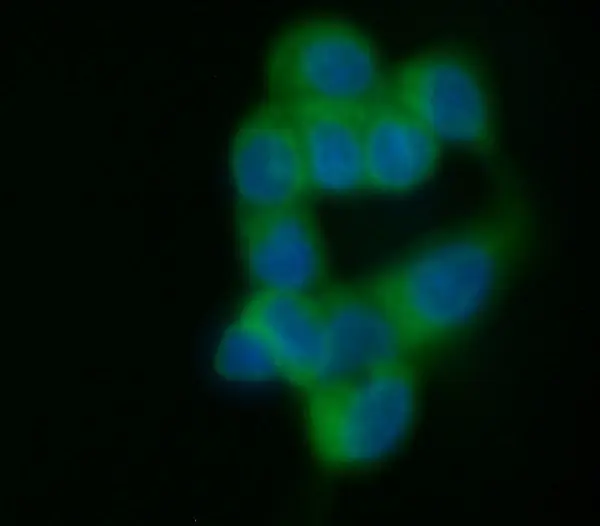
| Immunofluorescence | |
Where this product has not been tested for use in a particular technique this does not necessarily exclude its use in such procedures. Suggested working dilutions are given as a guide only. It is recommended that the user titrates the product for use in their own system using appropriate negative/positive controls.
- Flow Cytometry
- Use 10μl of the suggested working dilution to label 106 cells in 100μl
How to Use the Spectraviewer
Watch the Tool Tutorial Video ▸- Start by selecting the application you are interested in, with the option to select an instrument from the drop down menu or create a customized instrument
- Select the fluorophores or fluorescent proteins you want to include in your panel to check compatibility
- Select the lasers and filters you wish to include
- Select combined or multi-laser view to visualize the spectra
| Description | Product Code | Applications | Pack Size | List Price | Your Price | Quantity | |
|---|---|---|---|---|---|---|---|
| Human Seroblock | BUF070A | F | 50 Test | Log in | |||
| List Price | Your Price | ||||||
| Log in | |||||||
| Description | Human Seroblock | ||||||
| Human Seroblock | BUF070B | F | 200 Test | Log in | |||
| List Price | Your Price | ||||||
| Log in | |||||||
| Description | Human Seroblock | ||||||
Source Reference
-
Price, M.R. et al. (1990) C595--a monoclonal antibody against the protein core of human urinary epithelial mucin commonly expressed in breast carcinomas.
Br J Cancer. 61 (5): 681-6.
References for CD227 antibody
-
Price, M.R. et al. (1990) Immunological and structural features of the protein core of human polymorphic epithelial mucin.
Mol Immunol. 27 (8): 795-802. -
Price, M.R. et al. (1991) Purification of anti-epithelial mucin monoclonal antibodies by epitope affinity chromatography.
J Immunol Methods. 139 (1): 83-90. -
Denton, G. et al. (1995) Primary sequence determination and molecular modelling of the variable region of an antiMUC1 mucin monoclonal antibody.
Eur J Cancer. 31A (2): 214-21. -
Denton, G. et al. (1997) Production and characterization of a recombinant anti-MUC1 scFv reactive with human carcinomas.
Br J Cancer. 76 (5): 614-21. -
Murray, A. et al (2001) Production and characterization of 188Re-C595 antibody for radioimmunotherapy of transitional cell bladder cancer.
J Nucl Med. 42: 726-32. -
Huang, D.M. et al. (2004) Modulation of anti-adhesion molecule MUC-1 is associated with arctiin-induced growth inhibition in PC-3 cells.
Prostate. 2004 May 15;59(3): 260-7. -
Ragupathi, G. et al. (2005) Antibodies against tumor cell glycolipids and proteins, but not mucins, mediate complement-dependent cytotoxicity.
J Immunol. 174: 5706-12. -
Hisatsune, A. et al. (2011) Anti-MUC1 antibody inhibits EGF receptor signaling in cancer cells.
Biochem Biophys Res Commun. 405: 377-81.

View more products with CD227 specificity
Please Note: All Products are "FOR RESEARCH PURPOSES ONLY"
View all Anti-Human ProductsAlways be the first to know.
When we launch new products and resources to help you achieve more in the lab.
Yes, sign me up