
StarBright Dyes in IBEX
Introduction
Single-cell flow cytometry and genomics are expanding our understanding of cell-type diversity in many tissues. However, reliable methods for mapping these cells spatially, often referred to as “spatial biology”, to reveal how their location and interactions influence tissue function and disease are often more relevant.
IBEX (iterative bleaching extends multiplexity) is a cost-effective and accessible high-content imaging technique that uses commercially available reagents and microscopes for highly multiplexed spatial phenotyping in both animal and human tissues (Radtke et al. 2020).
The IBEX method relies on iterations of antibody staining and imaging followed by exposure to 1–10 mg/mL of lithium borohydride (LiBH4), a strong reducing agent, to eliminate fluorescence signal through dye inactivation. Some dyes also require the presence of light to fully bleach. The number of parameters that can be imaged per IBEX cycle is dependent on several variables, including microscope configuration, tissue autofluorescence, availability of conjugated antibodies, and overall panel design, but can be performed for up to 20 cycles. LiBH4-resistant dyes serve as a fiducial for image alignment across iterative cycles.
StarBright Compatibility with IBEX Staining Conditions
StarBright™ Dye–conjugated antibodies are ideal for use in microscopy, as they are bright and have narrow emission profiles.
Using flow cytometry and immunofluorescence imaging, the stability of StarBright Dyes treated with LiBH4 was measured to determine compatibility for IBEX. Representative flow cytometry and microscopy data are shown in Figures 1 and 2, showing the stability of StarBright Dyes under IBEX bleaching conditions.
As can be observed, StarBright Dyes were resistant to bleaching and the spectral profiles were retained. Table 1 shows all dyes tested so far, with residual fluorescence levels determined by flow cytometry at each condition compared to untreated samples.
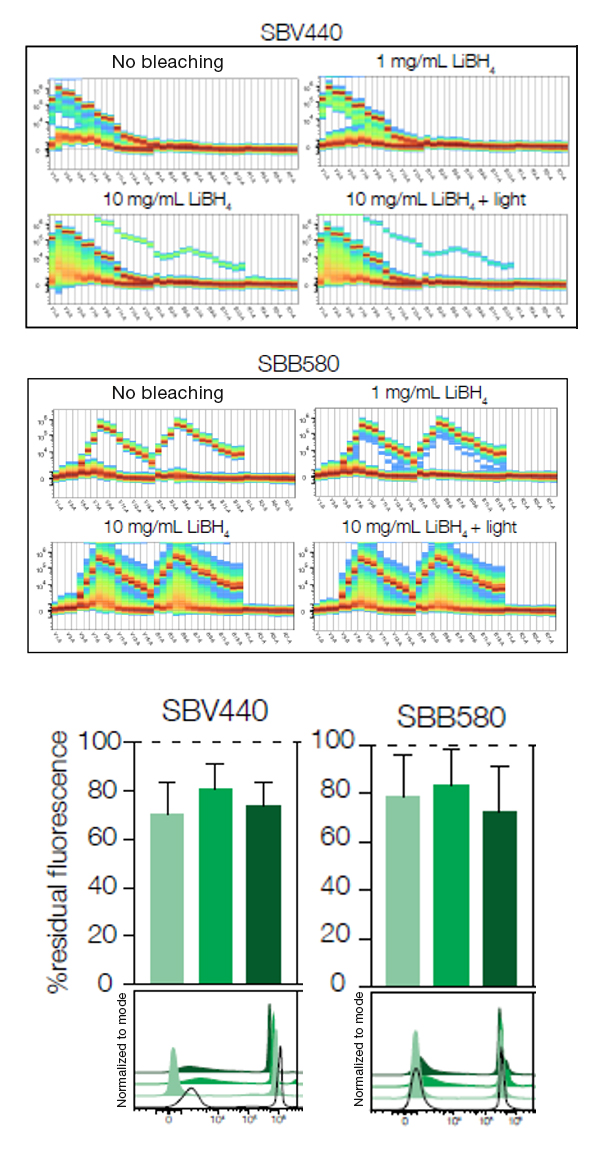
Fig. 1. StarBright Dyes are not sensitive to LiBH4 treatment
. Compensation beads were stained with StarBright Dyes, treated under the stated conditions, and analyzed by spectral flow cytometry. The relative fluorescence and spectral profiles were captured and compared to untreated stained beads. SBB, StarBright Blue. SBV, StarBright Violet. Data courtesy of A. Celant and G. Rocca, Lab Granucci, UniMiB.
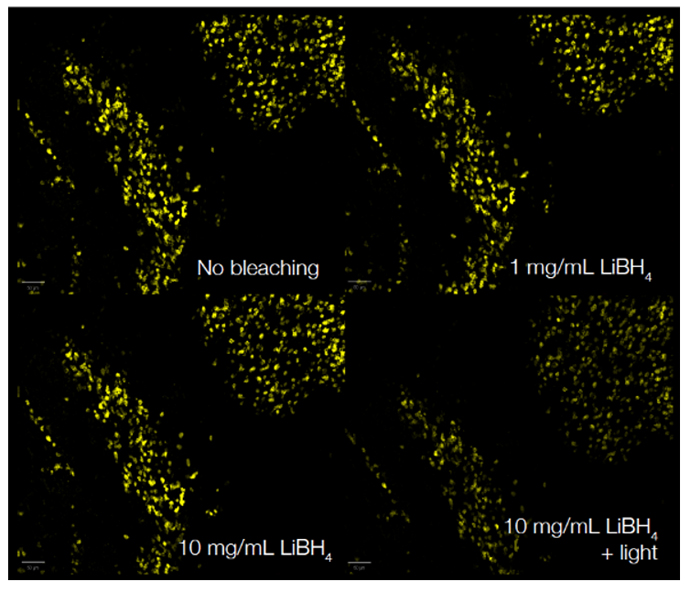
Fig. 2. StarBright Dyes are not sensitive to LiBH4 treatment. Murine colon cryosections prepared with the IBEX protocol were stained with CD3 StarBright Yellow 605, treated under the stated conditions, and analyzed by immunofluorescence microscopy. The images were captured using the same exposure settings and compared to untreated sections. Images courtesy of A. Celant and G. Rocca, Lab Granucci, UniMiB.
Table 1. StarBright Dyes tested with bleaching protocols.
StarBright Dye |
1mg/mL LiBH4 |
10 mg/mL LiBH4 |
10 mg/mL LiBH4 + light |
|---|---|---|---|
|
SBV440 |
70% |
80% |
75% |
|
SBV475 |
65% |
68% |
25% |
|
SBV515 |
78% |
65% |
30% |
|
SBV610 |
62% |
66% |
40% |
|
SBV710 |
61% |
58% |
10% |
|
SBB580 |
80% |
82% |
72% |
|
SBB675 |
72% |
73% |
75% |
|
SBY605 |
80% |
75% |
70% |
|
SBY665 |
89% |
75% |
70% |
|
SBR715 |
80% |
80% |
84% |
While the stability of most StarBright Dyes probably precludes them from being used in IBEX iterative staining under conditions that do not include photobleaching, unless included in the final round of staining, their stability actually makes them ideal to be used as a fiducial dye to allow sample alignment of each cycle of staining.
We compared the stability of StarBright Dyes to a commonly used fiducial dye, AF594. Not only were they less sensitive to treatment with LiBH4 (Figure 3), but they were significantly brighter than AF594. Furthermore, SBR715 and SBY605 staining was still robust after 10 bleaching rounds.
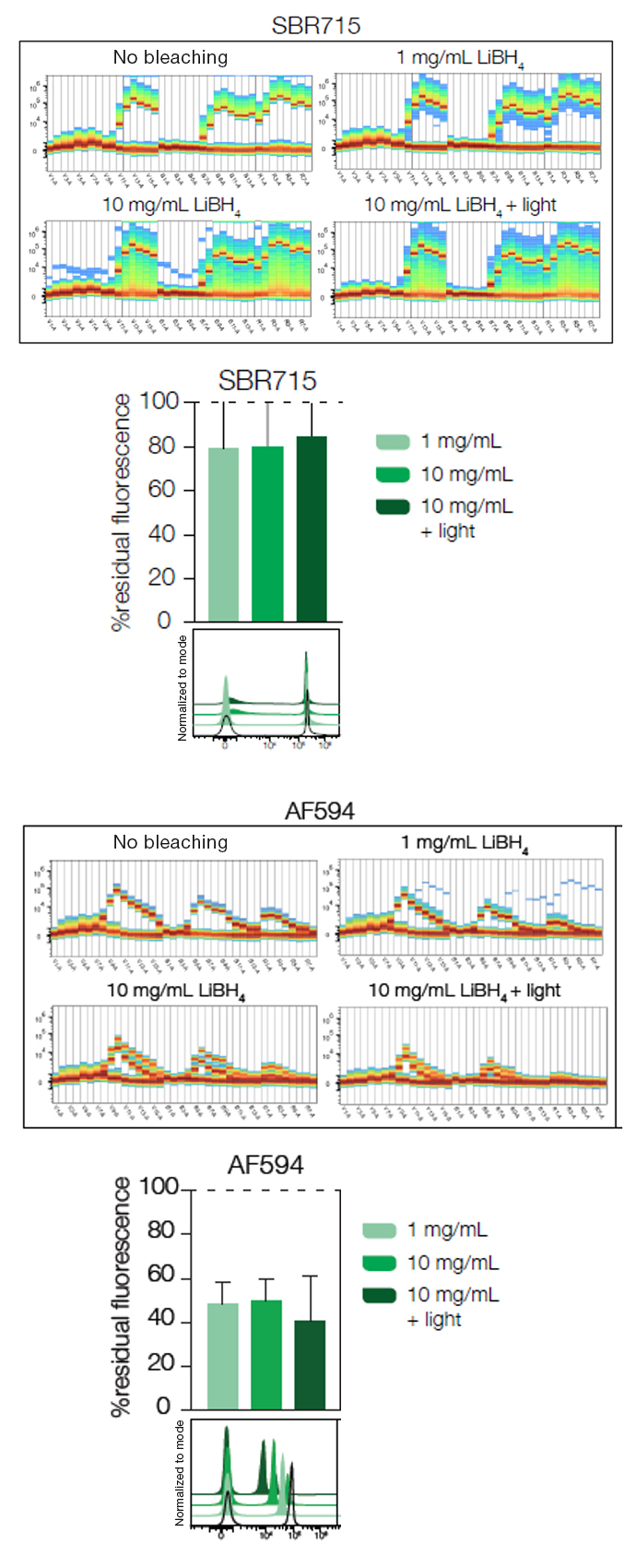
Fig. 3. StarBright Dyes are brighter than existing fiducial dyes.
Compensation beads were stained with StarBright Red 715 or AF594 and treated under the stated conditions before being analyzed by spectral flow cytometry. The relative fluorescence and spectral profiles were captured and compared to untreated stained beads. Data courtesy of A. Celant and G. Rocca, Lab Granucci, UniMiB.
Use of StarBright Dyes in Multiplex Cyclic Immunofluorescence
As proof of principle, StarBright Red 715 was included in a 4-cycle IBEX protocol where mouse colon was stained with seven markers and Hoechst. CD45RSBR715 (MCA1258SBR715) was included in every cycle as a fiducial and used to align the images. As can be seen in Figure 4, specific staining was observed in each cycle and staining from any cycle could be aligned, as could the entire panel.
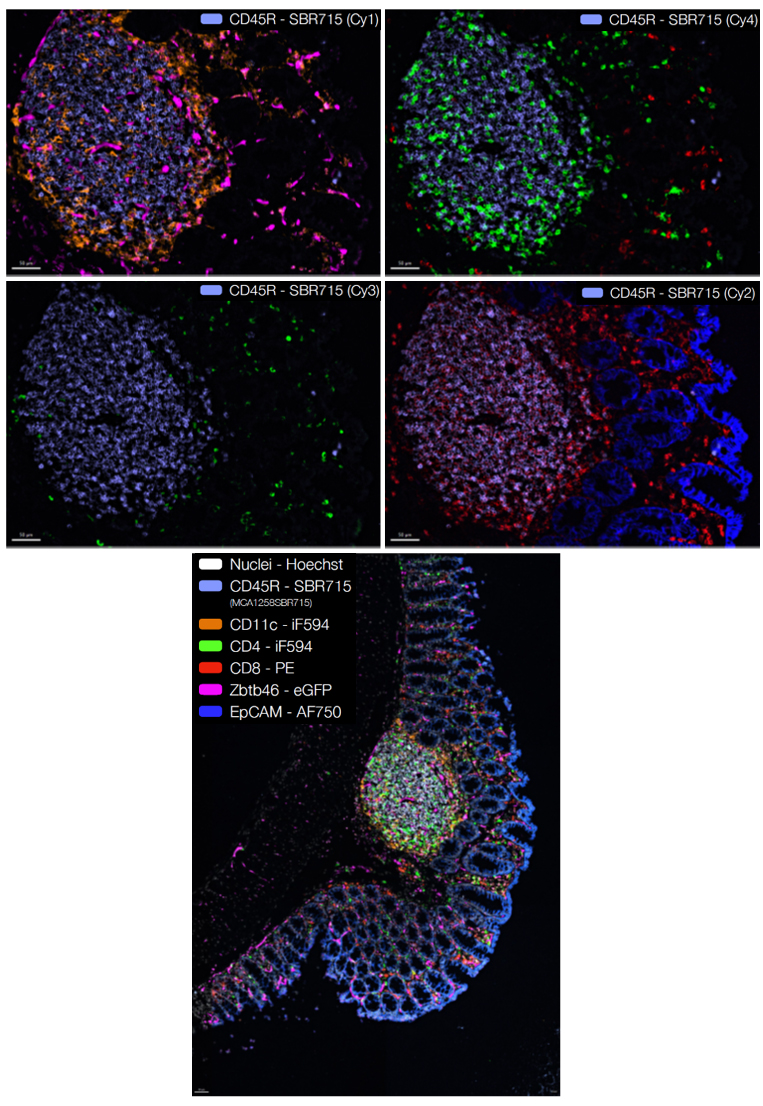
Fig. 4. StarBright Dyes are ideal as fiducial dyes in cyclic staining. Murine colon cryosections prepared with the IBEX protocol were stained with antibodies conjugated to StarBright Dyes and other common fluorophores in a cyclic staining protocol of four cycles to identify immune subsets. CD45RSBR715 was in every cycle as a fiducial to allow alignment after imaging. Images courtesy of A. Celant and G. Rocca, Lab Granucci, UniMiB.
While it is generally preferable to use directly labeled antibodies to avoid complications such as unwanted detection by the secondary of other directly conjugated antibodies, IBEX is compatible with indirect immunolabeling. To avoid complications from the use of secondary antibodies, TrailBlazer™ Tag and StarBright Dye Label Kits allow you to label any antibody with any of our StarBright Dyes to generate your own high-quality primary conjugates, expanding the multiplexing capabilities using StarBright Dyes.
Summary
StarBright Dyes, while developed for flow cytometry, are ideal fluorescent dyes for microscopy and spatial biology techniques such as IBEX. They are stable and many are resistant to photobleaching effects. Furthermore, their stability when treated with LiBH4 makes them ideal for use as a fiducial in the IBEX protocol, allowing easy image iteration alignment.
Information on the IBEX technique, publications, and a list of fluorophores tested can be found on the IBEX Imaging Community website.
Find out more about StarBright Dyes in other applications such as microscopy, flow cytometry, and western blot.
-
StarBright Dyes
If you are interested in purchasing StarBright Dyes that have not been conjugated to an antibody, simply complete and submit a short form and a member of our team will respond to your inquiry. -
StarBright Dye–Conjugated Antibodies
If you have a question about StarBright Dye–conjugated antibodies, simply complete and submit a short form and a member of our team will respond to your inquiry. -
StarBright Dyes — Collaboration
If you are interested in StarBright Dyes and have an idea for a collaborative project, simply complete our short form and a member of our team will respond.