
Recombinant Antibodies
Production Methods, Types, and Advantages
What Are Recombinant Antibodies?
Recombinant antibodies are laboratory-generated proteins designed to specifically recognize and bind to target molecules, known as antigens. Unlike traditional antibodies—often produced by immunizing animals—recombinant antibodies are created using advanced genetic engineering techniques. This method enables precise control over the antibody’s structure, specificity, and functionality, making them invaluable tools in research, diagnostics, and therapeutics.
How Are Recombinant Antibodies Made?
The creation of recombinant antibodies involves several key steps:
- Gene identification: scientists identify and isolate the genetic sequences that code for the desired antibody’s variable regions (the segments responsible for antigen binding).
- Cloning into expression vectors: these gene sequences are inserted into expression vectors—circular DNA molecules that can be introduced into host cells.
- Expression in host cells: host cells (such as bacteria, yeast, or mammalian cells) are genetically engineered to produce the antibody by expressing the inserted gene.
- Purification and characterization: the antibodies are purified from the host cells and thoroughly characterized to ensure their specificity, affinity, and stability.
Methods for Producing Recombinant Antibodies
There are several established techniques for generating recombinant antibodies, each offering unique advantages for different research and clinical needs. Two of the most widely used methods are phage display and cell culture.
Phage Display
Phage display is a powerful technique in which antibody gene fragments are inserted into bacteriophages—viruses that infect bacteria—so that the encoded antibody fragments are displayed on the phage surface. By exposing the phages to specific antigens, researchers can rapidly select those that bind best, enabling the isolation and optimization of highly specific recombinant antibodies. This method is particularly valued for its speed and the vast diversity of high-affinity antibodies that can be screened in a single experiment.
Bio-Rad Phage Display Recombinant Antibodies Technologies
The HuCAL® (Human Combinatorial Antibody Library) phage display process utilizes a synthetic library of human antibody gene fragments, allowing rapid selection and optimization of recombinant antibodies. This method enables precise tailoring of antibody specificity and affinity.
Bio‑Rad’s Pioneer™ Antibody Discovery Platform accelerates the path to therapeutic success with one of the world’s largest fully human phage display libraries—over 200 billion unique antibody sequences engineered for diversity, affinity, and developability. Powered by proprietary SpyDisplay technology, the Pioneer Platform rapidly delivers high‑quality antibody candidates tailored to the target.
Key benefits of both approaches include speed, flexibility in antibody design, and the ability to produce antibodies with high specificity and, for the Pioneer Platform, reduced risk of immune reactions in patients.
Phage display can be used to generate antibodies against any target. HuCAL and the Pioneer Platform have successfully generated more than 60,000 antibodies against different targets from challenging targets like GPCRs to ADCs, fusion proteins, bispecifics, toxins, and single amino acid differences between wild-type and mutant proteins.
Learn about Bio-Rad’s custom recombinant monoclonal antibody service
Cell Culture System
Recombinant antibodies can also be produced by introducing antibody genes into cultured host cells, such as bacteria, yeast, or mammalian cells. These cells are then grown under controlled laboratory conditions, where they express and secrete the desired antibodies.
Mammalian cell cultures are often preferred for producing full-length antibodies with human-like modifications, which are important for therapeutic applications. Bacterial and yeast systems, meanwhile, are useful for producing antibody fragments quickly and cost-effectively.
Each method offers distinct benefits in terms of scalability, speed, and the types of antibodies produced, allowing researchers to select the most suitable approach for their specific requirements.
Types of Recombinant Antibodies
Recombinant antibodies come in several forms, tailored to specific applications:
- Full-length recombinant antibodies: these mirror natural antibodies in structure and function but are produced entirely via recombinant DNA technology
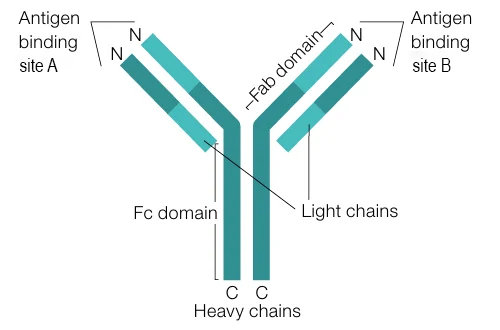
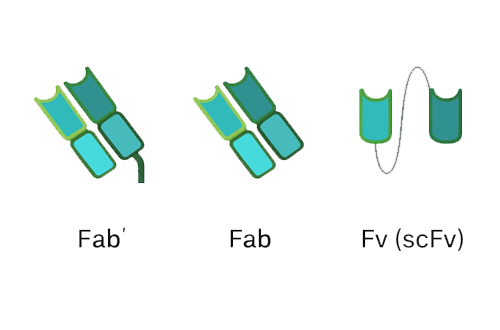
- Fragment antibodies: these include Fab (fragment antigen-binding), scFv (single-chain variable fragment), and others. They consist of only the antigen-binding regions, making them smaller and sometimes more versatile
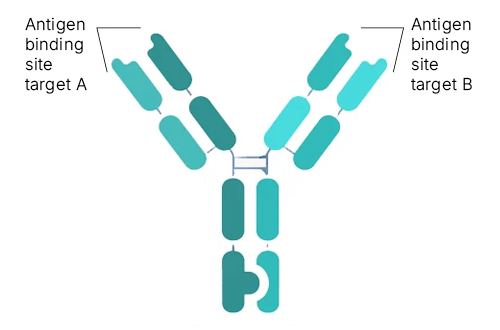
- Bispecific antibodies: engineered to bind two different antigens simultaneously, these are particularly useful in therapeutic applications
- Humanized and fully human antibodies: by using human genetic sequences, these antibodies reduce the risk of immune reactions when used in patients.
Advantages of Recombinant Over Conventional Antibodies
Recombinant antibodies offer several distinct advantages compared to traditional, animal-derived antibodies:
Feature |
Recombinant Antibodies |
Conventional (Animal-Derived) Antibodies |
|---|---|---|
|
Consistency and reproducibility |
Highly consistent between batches due to defined genetic sequences |
Variable results due to biological differences in animals |
|
Ethical considerations |
Significantly reduces animal use; promotes animal welfare |
Relies on immunizing and harvesting from animals |
|
Customization potential |
Can be precisely engineered for improved performance and specificity |
Limited opportunities for modification |
|
Specificity and affinity |
Genetic engineering enables optimization for high specificity and affinity |
May lack precision; dependent on animal immune response |
|
Immunogenicity |
Humanized/fully human antibodies reduce risk of immune reaction |
Higher risk of immune response in clinical use |
|
Performance in diagnostics and therapeutics |
Superior reliability and safety for research and medicine |
Potential issues with reproducibility and patient safety |
Recombinant antibodies represent a significant advance in biotechnology. Their precise engineering, ethical benefits, and superior performance make them the preferred choice for many applications, from laboratory research to the development of life-saving medicines.
Bio-Rad Recombinant Antibodies
Bio-Rad provides a variety of recombinant antibodies, including a new and expanding selection of monoclonals designed for flow cytometry. These antibodies are developed with a SpyTag that allows for easy, rapid conjugation to any of our 32 StarBright™ Dyes using the TrailBlazer™ StarBright Dye Label Kits, giving you more flexibility in panel design.
A spontaneous reaction between the SpyTag and the SpyCatcher-StarBright Dye in the labeling kit forms an irreversible covalent isopeptide bond, resulting in highly stable, labeled antibodies. The same SpyTag and SpyCatcher technology is used in our custom HuCAL recombinant antibody generation service.
The table below lists all available recombinant antibodies.
Recombinant Antibodies
| Description | Target | Format | Clone | Applications | Citations | Code |
|---|
Be the First to Receive Updates on Products and Resources
You'll receive regular communications featuring free lab resources such as application guides, posters, mini-reviews, protocols, practical tips, webinar invitations, special offers, and updates on new research tools and products.
You'll also get our specialist newsletters—including Fab Fragments, Flow. Sorted., and RiVETing—along with news on the latest antibody innovations, such as TrailBlazer™ Antibodies and StarBright™ Dyes.
During sign-up, you can choose your areas of interest so you only receive content relevant to your research, and you can unsubscribe at any time.
