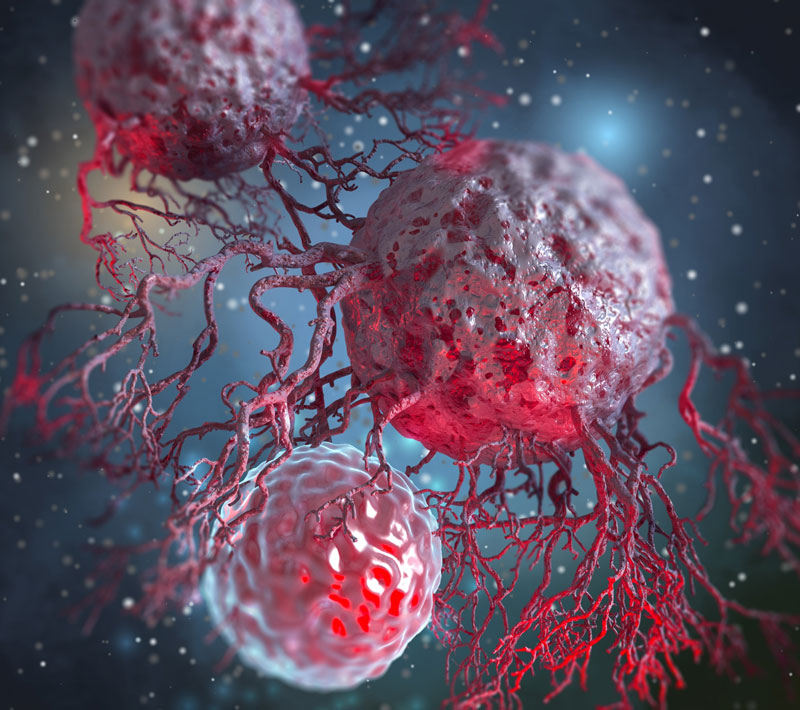
Cancer Shapeshifters: How Cell Plasticity Fuels Therapy Resistance
- Oct 26, 2026
- 4 min read
- Chloe Fenton, PhD
From the vicious werewolves of European folklore to the malevolent skin-walkers of Navajo legends, shapeshifters are one of the oldest and most widespread horror staples across cultures, infamous for their unsettling nature and eerie ability to walk among us undetected.
A typical monster can be seen coming, giving us the opportunity to fight or flee. But with a shapeshifter, you could be completely unaware that it is standing right beside you. Or worse, it could be within your very body.
This Halloween, we will focus on a shapeshifter that builds its lair a little too close to home—the shapeshifting cancer cells that can reside within us, continually transforming to evade detection and destruction.
What Is Cancer Cell Plasticity?
Many of us will already know that cancer’s first act of shapeshifting is transforming an innocent host cell into a murderous mutant, capable of uncontrolled proliferation and invasion in a process known as malignant transformation.
However, the nefarious metamorphosis does not stop there.
The ability of a cancer cell to adapt its phenotype, a phenomenon known as cancer cell plasticity, gives it the tools it needs to avoid being destroyed by the immune system or cancer therapies, travel throughout the body, and metastasize.
EMT and MET: How Cancer Cells Adapt and Spread
One key transformation a cancer cell can undergo is switching between epithelial and mesenchymal states.
During normal embryonic development, epithelial-mesenchymal transition (EMT) is necessary to allow tightly bound, static epithelial cells to become motile mesenchymal cells and disperse to new locations, enabling the construction of specific organs (Kim et al. 2017).
Unfortunately, tumor cells have learned to co-opt this process for their own sinister purposes. Specifically, EMT facilitates the acquisition of a migratory and invasive phenotype in cancer cells that helps them to spread to distant areas of the body, potentially giving rise to secondary tumors (Ghorbian 2025).
The converse, mesenchymal-epithelial transition (MET), allows cancer cells to put down roots and colonize a tissue, clinging together through cell-cell adhesions to form a tumor mass (Yao et al. 2011).
The transition from one state to the other is not a one-way process and, in fact, cancer cells can shift between the two to suit their needs.
The combination of EMT and MET enables the pervasive nature of cancer, allowing it to prowl through the body and lay claim to additional organs.
Scarier still, EMT has been associated with increased resistance to cancer treatments. This occurs via several mechanisms, for example, the mesenchymal phenotype has been shown to increase drug efflux, slow cell proliferation (with rapidly dividing cells typically being a target for therapies), and suppress apoptosis pathways (De Las Rivas et al. 2021).
EMT can also induce stemness in cancer cells, which drives drug resistance.
Cancer Stem Cells: Survival, Resistance, and Relapse
Cancer stem cells (CSCs) have the same self-renewal and pluripotent properties as typical stem cells, enabling them to differentiate into the various cancer cell phenotypes that constitute the tumor mass (Chu X et al. 2024).
CSCs pose a major threat because they are primary drivers of tumor development, growth, and persistence, and they can enhance invasion and metastasis.
Not only that, but these shapeshifters are notoriously hard to kill.
For one, they are one of the primary culprits responsible for radiation resistance and tumor relapse. Radiation therapy can effectively kill rapidly proliferating cells, however, CSCs are often quiescent, allowing them to dodge the destructive effects of the treatment. Furthermore, due to their high capacity for renewal, if even one CSC survives posttreatment, relapse can occur (Arnold et al. 2020).
The emergence of CSCs does not rely solely on EMT. Research has shown that normal mammary epithelial cells can shift into malicious CSCs seemingly at random, switching sides to contribute to the tumor’s survival and expansion (Ghorbian 2025).
Lineage Switching: How Cancer Cells Escape Targeted Therapy
The ability of a cancer cell to revert back to its stem-like state enables it to shift into different cell types. However, this is not the only method by which cells can change lineage; they can also directly transform from one fully differentiated cell type to the other, bypassing the need to return to the stem cell phenotype. This process is known as direct transdifferentiation.
The drivers behind this transdifferentiation vary depending on the cell type that they are morphing into—generally, it results from mechanisms such as epigenetic reprogramming and differential regulation of transcription factors to obtain the cell-specific traits of the identity they are appropriating (Fedele et al. 2024).
Unnervingly, cancer cells can implement this to be particularly treacherous by lineage switching as a means to escape therapeutic interventions.
For example, mutations that lead to the aberrant activation of the epidermal growth factor receptor (EGFR) are frequent in lung adenocarcinoma (LUAD). As a result, EGFR inhibitors are often employed as a targeted treatment.
However, in around 3–14% of patients treated with EGFR inhibitors, the cancer cells are able to transform into small-cell lung cancer cells, which no longer depend on EGFR signaling to survive and proliferate. In this way, the cancer can adapt to sidestep the effects of the treatment intervention (Wang et al. 2025).
Targeting Cancer Cell Plasticity to Overcome Therapy Resistance
While we have so far focused on the doom and gloom in the fight against cancer, scientists still have a trick or two up their sleeves to combat these cunning shapeshifters.
Many therapeutic approaches now aim to block or exploit cancer cell plasticity. For example, EMT inhibitors have been developed to block the transition to the invasive, motile phenotype, as well as inhibitors to block the key pathways associated with the maintenance of stemness in CSCs (Reka et al. 2012, Ning et al. 2013).
Furthermore, new strategies to manipulate metabolites in the tumor microenvironment to rewire cancer cells into a more favorable state for therapeutic intervention hold promise for the future (Fendt et al. 2020).
So, while cancerous shapeshifters may seem like a frightening beast, all is not lost— ongoing research and scientific advances could be the silver bullet we need to put a stop to them.
Are You Interested in Studying the Shapeshifting Abilities of Cancer Cells for Yourself?
Bio-Rad offers a comprehensive selection of cancer antibodies, proteins, and reagents for all of your research needs.
References
Arnold CR et al. (2020). The role of cancer stem cells in radiation resistance. Front Oncol 10, 164.
Chu X et al. (2024). Cancer stem cells: advances in knowledge and implications for cancer therapy. Signal Transduct Target Ther 9, 170.
De Las Rivas J et al. (2021). Cancer drug resistance induced by EMT: novel therapeutic strategies. Arch Toxicol 95, 2279–2297.
Fedele M et al. (2024). Subtype transdifferentiation in human cancer: the power of tissue plasticity in tumor progression. Cells 13, 350.
Fendt SM et al. (2020). Targeting metabolic plasticity and flexibility dynamics for cancer therapy. Cancer Discov 10, 1797–1807.
Ghorbian S (2025). Cancer cell plasticity and therapeutic resistance: mechanisms, crosstalk, and translational perspectives. Hereditas 162, 188.
Kim DH et al. (2017). Epithelial mesenchymal transition in embryonic development, tissue repair and cancer: a comprehensive overview. J Clin Med 7, 1.
Ning X et al. (2013). Therapeutic strategies targeting cancer stem cells. Cancer Biol Ther 14, 295–303.
Reka AK et al. (2012). Identifying inhibitors of epithelial-mesenchymal transition by connectivity-map based systems approach. J Thorac Oncol 6, 1784–1792.
Wang H et al. (2025). Transformation from EGFR-mutant lung adenocarcinoma to small-cell lung cancer: from clonal evolution to lineage reprogramming. Cancer Treat Rev 141, 103044.
Yao D et al. (2011). Mechanism of the mesenchymal-epithelial transition and its relationship with metastatic tumor formation. Mol Cancer Res 9, 1608–1620.