

The Role of Regulatory T Cells in the Fight against Lung Cancer
- Apr 23, 2025
- 5 min read
- Bio-Rad
Lung cancer is the most prevalent and deadliest form of cancer worldwide, with a recent study reporting 2.5 million new cases and 1.8 million deaths in a single year (Bray et al. 2024). Non-small cell lung cancer (NSCLC), which is caused by genetic mutations leading to uncontrolled cell growth, is the most common type of lung cancer, making up 80–85% of cases (Wu et al. 2023).
There are already several treatments available for NSCLC, including surgery, chemotherapy, and radiotherapy, and more recently targeted therapies and immunotherapies. Despite these advances, the survival rate remains low and patients commonly face challenges associated with different treatment approaches — patients who have surgery often battle with cancer recurrence; chemotherapeutic drugs and radiotherapy may have limited specificity causing damage to non-cancerous cells; targeted therapies against proteins involved in promoting cell growth and survival may not always be effective due to differences in the molecular make-up of individual cancers; and immunotherapies are costly and only effective in a small percentage of patients (Li et al. 2023, Horvath et al. 2020).
Therefore, researchers in the oncology space are on a mission to fully understand what drives the onset and progression of NSCLC to develop safer, more effective methods to outsmart this cancer.
There’s More to Tumors than Cancer Cells
We now know that tumors are not only made up of cancer cells, but also immune cells, non-immune cells, secreted molecules, and extracellular matrix proteins. Together, these elements create the tumor microenvironment (TME) (Figure 1), which varies between different cancers and even among individuals with the same cancer. The TME can play a key role in cancer prognosis, including those with NSCLC (Shimizu et al. 2013). Low-grade cancer lesions are detected by both the innate and adaptive immune system, but as the cancer progresses, the TME becomes immunosuppressive, allowing the tumor to escape immune detection and elimination (Visser and Joyce 2023).
T cells, essential players in the adaptive immune system, can be found as part of the TME, with specific subtypes influencing patient outcomes through distinct functions:
- Cytotoxic/CD8+ T cells can recognize markers that are specific to tumor cells and selectively remove these damaged cells (Wu et al. 2023)
- T helper/CD4+ T cells can differentiate into different subtypes to support effector immune cells in their primary role. Most commonly, CD4+ T cells support CD8+ T cells to perform their cytotoxic function (Tay et al. 2020). Immunotherapies aim to trigger the activity of CD4+ and CD8+ T cells to mediate an antitumor response (Ahmed et al. 2022)
- Regulatory T (Treg) cells ensure the body doesn’t launch an immune attack on its own cells. However, high levels of Tregs in the TME can contribute to a tumor’s ability to escape capture by the immune system, and reduce CD8+ T cell activity
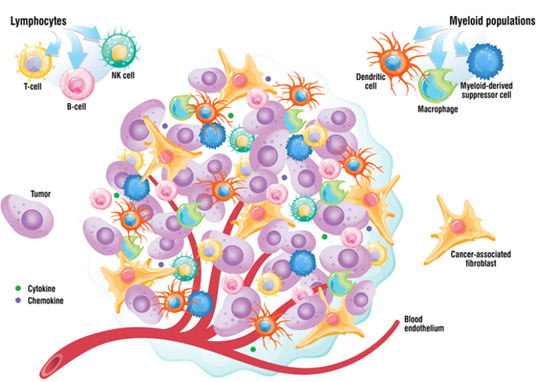
Fig. 1. The tumor microenvironment (TME). Taken from Zhang and Veeramachaneni 2022 (CC BY 4).
Tregs: A Barrier to Effective NSCLC Treatment
Tregs play a critical role in shaping the TME, with their influence extending beyond immune suppression, potentially undermining the effectiveness of NSCLC treatments. The most frequent cancer-promoting mutation in NSCLC is a mutation in the gene encoding Kirsten Rat Sarcoma (KRAS), known as KRAS-G12C, which results in sustained activation of signaling pathways that promote cell differentiation, migration, proliferation, and survival (Liguori et al. 2025).
KRAS inhibitors were approved for the treatment of NSCLC in 2021 and initially demonstrated an ability to control tumor progression by enhancing immune activation, while exhibiting a more favorable safety profile in comparison to traditional chemotherapy treatments. However, they ultimately failed to improve overall patient survival, and resistance emerged with prolonged treatment (Langen et al. 2023).
Additionally, preclinical studies investigating the combined therapeutic effect of KRAS and immune checkpoint inhibitors (ICIs), like anti-PD1, have so far shown that they were only effective in tumors that were already immunogenic. Since this strategy did not lead to improved outcomes in immune-resistant tumors, it suggests it might only be beneficial for a subset of KRAS-mutant NSCLC patients, highlighting the need for the development of additional combination treatment strategies for highly immune-refractory patients (Mugarza et al. 2022).
A recent study published in Science set out to explore why KRAS inhibitors and combination therapies have shown limited success, focusing on whether specific elements within the TME were hindering NSCLC treatment efficacy (Cole et al. 2024). Using imaging mass cytometry (IMC), this study analyzed immune cell populations in the lungs of NSCLC-affected mice treated with KRAS inhibitors, revealing that treatment led to changes in the cellular make-up of the TME, increasing the presence of macrophages, dendritic cells, and CD4+ and CD8+ T cells. Despite the presence of these cancer-combating cells in the TME, tumor growth persisted. Further analysis pointed to T cell exhaustion as a potential factor and led to the discovery of clusters of Tregs in the TME of mice treated with KRAS inhibitors. Further analysis of NSCLC patient samples showed similar patterns of Treg-rich environments, suggesting that these immune-suppressive communities may be a feature of lung tumors. This raised the question of whether depleting Tregs could enhance treatment responses.
To test this, the researchers combined a KRAS inhibitor with a CTLA-4 antibody, which depletes Tregs. This combination led to reduced tumor growth and an enhanced immune response as Treg removal allowed CD8+ T cells to function properly, ultimately resulting in prolonged survival. Building upon these findings, the researchers then went on to investigate the effect of combining KRAS-G12C inhibitors and ICIs with Treg depletion, which resulted in a sustained reduction in tumor growth and improved survival, offering a potential treatment strategy for tumors rich in CD4+ and CD8+ T cells and Tregs.
While this strategy holds promise, challenges remain regarding the effectiveness and safety of anti-CTLA-4 antibodies in depleting Tregs, with several monoclonal antibodies undergoing clinical and preclinical studies. Additionally, there are concerns regarding the enhanced toxicities seen in patients when these therapies are combined. Efforts to mitigate toxicity, such as localized delivery at a low dose, may improve the risk-benefit profile but also could impact efficacy. Nonetheless, this study suggested that spatial analysis of Treg-rich immune communities could help predict which patients might be resistant to KRAS inhibitors and ICIs, further supporting the case for combination treatments to enhance immune responses.
Targeting Tregs: A New Approach to Tackling NSCLC
Despite advances in KRAS-targeted therapy, NSCLC remains a serious adversary. This study identifies Tregs as a major obstacle to the success of KRAS inhibitors, demonstrating that targeting these cells could improve outcomes for patients with KRAS-G12C mutation-driven NSCLC. Understanding how Tregs shape the TME offers a crucial step toward developing more effective therapeutic strategies, maximizing patient survival in the ongoing fight against lung cancer.
Are You Interested in Studying Tregs?
Check out Bio-Rad's range of antibodies related to Treg identification and function.
References
Ahmed H et al. (2022). Role of T cells in cancer immunotherapy: Opportunities and challenges. Cancer Pathog Ther 1, 116–126.
Bray F et al. (2024). Global cancer statistics 2022: GLOBOCAN estimates of incidence and mortality worldwide for 36 cancers in 185 countries. CA Cancer J Clin 74, 229–263.
Cole M et al. (2024). Spatial multiplex analysis of lung cancer reveals that regulatory T cells attenuate KRAS-G12C inhibitor–induced immune responses. Sci Adv 10, eadl6464.
Horvath L et al. (2020). Overcoming immunotherapy resistance in non-small cell lung cancer (NSCLC) - novel approaches and future outlook. Mol Cancer 19, 141.
Langen A J et al. (2023). Sotorasib versus docetaxel for previously treated non-small-cell lung cancer with KRASG12Cmutation: a randomised, open-label, phase 3 trial. The Lancet 401, 733–746.
Li Y et al. (2023). Advances and challenges in the treatment of lung cancer. Biomed Pharmacother 169, 115891.
Liguori L et al. (2025). KRAS mutations in advanced non-small cell lung cancer: From biology to novel therapeutic strategies. Crit Rev Oncol Hematol 205, 104554.
Murgaza E et al. (2022) Therapeutic KRASG12C inhibition drives effective interferon-mediated antitumor immunity in immunogenic lung cancers. Sci Adv 8, eabm8780.
Shimizu K et al. (2013). Clinical significance of the tumor microenvironment in non-small cell lung cancer. Ann Transl Med 1, 20.
Tay R E et al. (2021). Revisiting the role of CD4+ T cells in cancer immunotherapy—new insights into old paradigms. Cancer Gene Ther 28, 5–17.
Visser K E and Joyce J A (2023). The evolving tumor microenvironment: From cancer initiation to metastatic outgrowth. Cancer Cell 41, 374–403.
Wu Y et al. (2023). T lymphocyte cell: A pivotal player in lung cancer. Front Immunol 14, 1102778.
Zhang J and Veeramachaneni N (2022) Targeting interleukin-1β and inflammation in lung cancer. Biomark Res 10, 5.