Voices of Women in Science: Professor Dawn Bowdish
- Feb 07, 2025
- 4 min read
- Chloe Fenton, PhD
As part of International Day of Women and Girls in Science, Bio-Rad invites researchers to share their own experiences of being a woman in science. In this article, we speak to Professor Dawn Bowdish about her career.
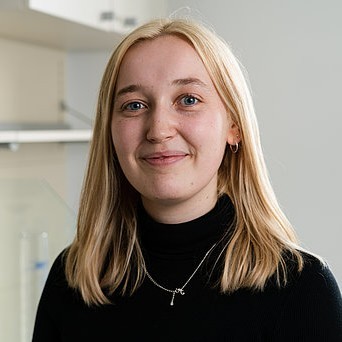
Dawn Bowdish is a Professor at McMaster University, Ontario, in the Department of Medicine. Her research focuses on macrophages and monocytes and how the immune system changes during ageing. She speaks ardently about empowering underrepresented communities and following your passions, without losing your own personality.

Prof Dawn Bowdish. Image courtesy of Dawn Bowdish.
Bio-Rad (BR): When did you first become interested in a career in science?
Dawn Bowdish (DB): When I was in high school, there was a co-op program where students could spend a half day working in a lab at McMaster University. At that point, I wasn’t really interested in science, but someone told me that it was very difficult to get into and I probably wouldn’t be good enough. That made me desperate to get in, and once I was there, I realized that lab life was the life for me.
I loved the fact that you got to discover new things. I loved that the postdoc who I worked with could have impassioned arguments with her boss without getting in trouble. I loved the fact that someone would pay for you travel the world to present your work and that you could take coffee breaks whenever you liked. And I just loved every moment of working in the lab. After all these years, I still love my job and love being a scientist.
BR: Can you describe your career path?
DB: After my high school co-op experience, I knew I wanted to be a scientist, but I didn’t really know what field. The very first lecture I had on my first day of university inspired me to go into infectious disease. My microbiology lecturer was brilliant. He talked about how infectious diseases changed society, changed, art, and changed the health of whole populations. At that point, I became fascinated by the evolutionary battle between our immune systems and microbes and decided that that’s what I wanted to do with my life. After that, I did my PhD in Vancouver with Prof Bob Hancock and did my post doctoral fellowship in Oxford with Prof Siamon Gordon. I joined McMaster in 2009. It’s been an absolute joy working and building a career here.
BR: Have you encountered any challenges along the way and if so, how did you overcome them?
DB: At various points, I thought my career was over because I had some pretty big fails in my research. I had a particularly devastating event in my postdoc where I realized I’d been working for a year on an artifact. Science teaches you resilience, however, and I picked myself up and carried on.
BR: Can you tell us about your current research?
DB: I study how the ageing immune response changes, and how that changes the interactions we have with the microbes that live on us and in us and infect us. I love studying immunology because there is no disease and no body system that doesn’t involve the immune system. This has given me a chance to collaborate with all sorts of people and to study everything, from the immunology of pregnancy to the immunology of old age.
BR: What has been your career highlight to date?
DB: I have more than one. I remember jumping up and down on a Saturday morning when I opened the New York Times and saw that Carl Zimmer had covered some of our research on the evolution of macrophage scavenger receptors and how that impacts our ability to deal with air pollution.
My lab was also able to make contributions during the COVID pandemic. Because of our expertise in the ageing immune system, we collaborated on Canada’s largest study of COVID infections and vaccinations in long-term care and retirement communities. Our findings were used to help inform vaccine policy. It felt good to be able to help older adults during these dark times.
BR: Are there any scientists who have inspired you?
DB: So many. I recently wrote a one-woman show for the Hamilton fringe festival called ‘The Perils of Being Born in the Fall’. It featured the findings of a mid-century ophthalmologist, Dame Ida Mann, that ultimately led to a race to develop a vaccine against rubella. She was a pretty feisty lady with strong opinions, and I admire her greatly. I’ve learned from my PhD supervisor the benefits of clear science communication, and that has been a huge advantage during my career. From my postdoc supervisor, I learned about kindness and collaboration and wanting to get good science done more than wanting to get credit. I try to harness that in all my dealings with scientists and the larger community.
BR: What advice would you give to women looking to pursue a career in science?
DB: I know that it feels overwhelming to be starting your career at the time you might be thinking about starting a family, but the time in which your children are small is actually a very short part of your total career and probably not the biggest obstacle that women in science face. It does get easier, I promise. Ask for help if you need it and give help if you can give it.
Also, make sure that you advocate for other underrepresented groups. Science is better if it is diverse. Don’t be afraid to pursue questions that apply to the community you come from and to use stories to illustrate the importance of your work. It’s OK to have a personality and let that personality shine through the work you do.
Thank you, Professor Dawn Bowdish, for sharing your advice and inspiring career journey with us. We hope your story will encourage the next generation of female scientists to pursue their goals.
Want to Hear from More Inspiring Women in Science?
Take a look at the other interviews in our Voices of Women in Science series to learn about the challenges women often face and the advice they give to overcome them.