Voices of Women in Science: Professor Ana Domingos
- Mar 10, 2025
- 3 min read
- Chloe Fenton, PhD
As part of International Day of Women and Girls in Science, Bio-Rad invites researchers to share their own experiences of being a woman in science. In this article, we speak to Professor Ana Domingos about her career.
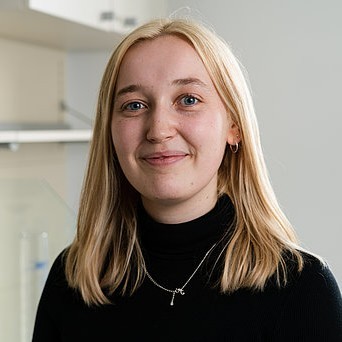
Ana Domingos is a Professor of Neuroscience at the University of Oxford, United Kingdom, in the Department of Physiology, Anatomy, and Genetics. Her research focuses on how the interaction between sympathetic neurons and immune cells controls metabolism and mediates obesity. She speaks passionately about maintaining curiosity and creativity in your scientific journey.

Prof Ana Domingos. Image courtesy of Ana Domingos.
Bio-Rad (BR): When did you first become interested in a career in science?
Ana Domingos (AD): From an early age, I was fascinated by the unknown. I was drawn to the thrill of discovery. My interest in basic science truly solidified when I realized it was a field that valued both creativity and problem-solving. The idea that I could contribute to expanding human knowledge was incredibly compelling.
BR: Can you describe your career path?
AD: My career was not entirely linear. I initially studied mathematics in Lisbon before shifting my focus to neuroscience. I pursued my PhD at Rockefeller University, where I worked on olfactory neuroscience under Leslie Vosshall. For my postdoctoral research, I studied metabolic signals and brain circuitry supervised by Jeffrey Friedman.
Over time, my work evolved to explore the neurobiological mechanisms of obesity. I established my own lab, first in Portugal and later at the University of Oxford, where I continue to investigate sympathetic neural networks and their role in metabolism.
BR: Have you encountered any challenges along the way and if so, how did you overcome them?
AD: I overcame obstacles by letting the quality of my work, discoveries, and data speak for themselves. As a PI, I now foster an open scientific environment, aiming for synergy and symbiosis.
BR: Can you tell us about your current research?
AD: My lab focuses on the neural and immune interactions that regulate metabolism, particularly in the context of obesity. We explore how sympathetic neurons interact with adipose tissue and immune cells to influence fat-burning and energy balance. Our discoveries have implications for expanding the field of neuroimmunometabolism with a view to developing the next generation of anti-obesity therapies.
BR: What has been your career highlight to date?
AD: One of the most fulfilling moments was when our team visualized sympathetic neurons in white adipose tissue for the first time, confirming what had only been hypothesized before. This breakthrough provided new insights into how the sympathetic nervous system controls metabolism.
More personally, mentoring young, first-generation scientists has been a rewarding part of my career, as I see the next generation push boundaries and explore new ideas.
BR: Are there any scientists who have inspired you?
AD: Absolutely. I have been fortunate to work with and learn from brilliant mentors, including my supervisors, Leslie Vosshall and Jeffrey Friedman.
More generally, every day I’m inspired by both the upcoming and the established scientists in the many research groups at the Department of Physiology, Anatomy & Genetics here at the University of Oxford, alongside some of the many speakers who visit the department to share their findings and journeys.
BR: What advice would you give to women looking to pursue a career in science?
AD: Follow your curiosity and passion. Science thrives on hunches that lead to passion projects, which lead to insights and questioning the status quo. Seek out mentors and peers who support your growth. Be persistent in the face of inevitable setbacks, believe in your work, embrace adventure, and Nullius in verba.
Thank you, Professor Ana Domingos, for taking the time to speak with us and inspire the next generation of female scientists to be tenacious and innovative in the pursuit of science.
Want to Hear from More Inspiring Women in Science?
Take a look at the other interviews in our Voices of Women in Science series to learn about the challenges women often face and the advice they give to overcome them.